Cordless Drill Buying Guide for Home Repairs, Assembly, and Everyday DIY Use
A cordless drill is often the first serious power tool people buy, and it is also one of the easiest to buy for the wrong reasons. Packaging tends to emphasize voltage, speed, and torque in ways that make bigger numbers feel safer, but most homeowners do not regret buying a drill because it lacked headline power. They regret buying one that feels heavy, awkward, poorly balanced, or tied to a battery system that becomes expensive to expand. In real use, a drill has to handle furniture assembly, pilot holes, shelving, hardware installation, light repairs, and occasional weekend projects without becoming tiring or unpredictable. The best choice is not always the most powerful model or the cheapest starter kit. It is the one that matches your likely jobs, gives you enough control to avoid stripped fasteners and rough drilling, and fits into a long-term tool setup without wasting money on performance you will rarely use.
What most homeowners actually need from a cordless drill
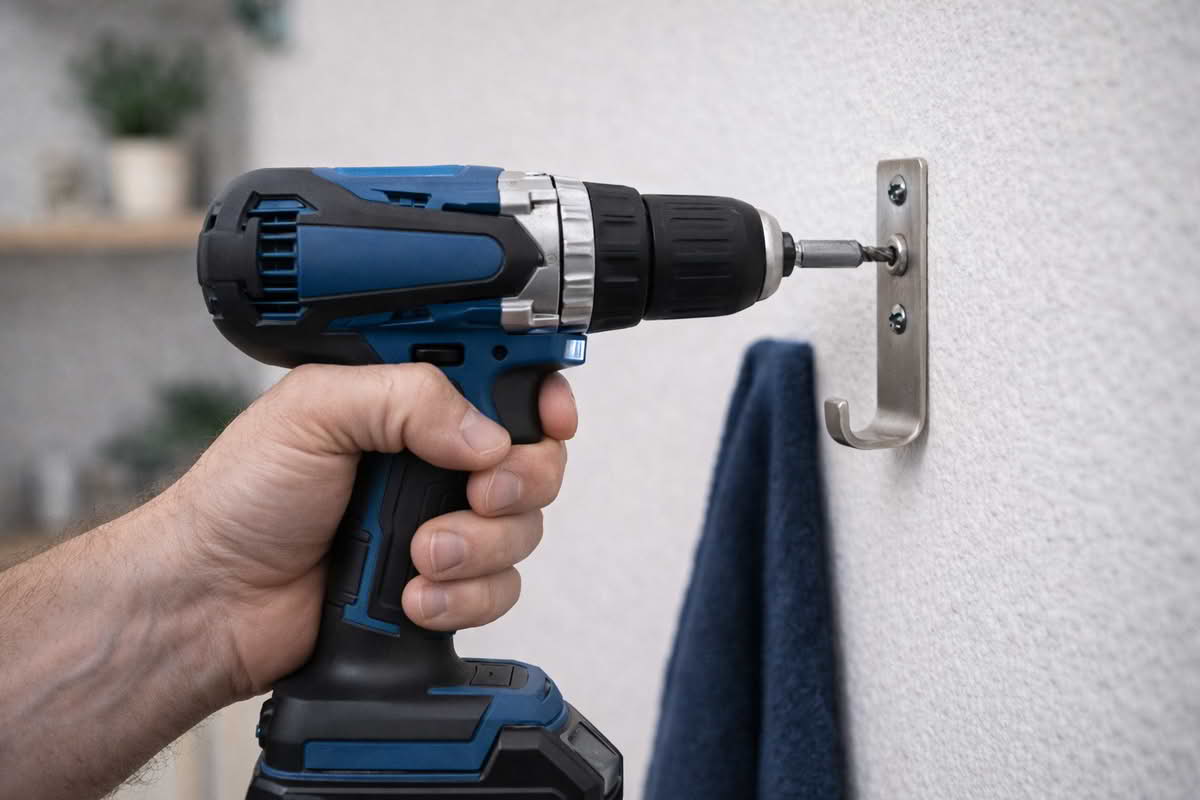
A cordless drill is usually asked to do a fairly predictable set of jobs. For most homes, that includes assembling furniture, driving medium-size screws, drilling pilot holes, hanging wall hardware, installing curtain rods, tightening loose hinges, and handling minor fixes that come up a few times a month rather than every day. That means the most useful drill is rarely the one built for the most demanding construction work. It is the one that makes routine tasks feel controlled, comfortable, and repeatable.
Control starts with the clutch. Many first-time buyers focus on raw power and ignore the clutch settings, even though those settings do more to prevent stripped screws and overdriven fasteners during ordinary home use. A drill with a usable clutch gives you a better chance of stopping at the right depth when working with softer materials, cabinet hardware, particleboard furniture, or drywall anchors. Without that control, extra power can become a drawback rather than an advantage.
Chuck size and grip quality also matter more than buyers often expect. The chuck should hold bits securely and tighten without excessive effort. In everyday work, problems such as bits slipping, wobbling, or loosening under repeated use create more frustration than slightly slower drilling speed. A good drill should feel dependable when switching between small pilot bits, driver bits, and occasional larger accessories for light-duty projects.
Most households need a drill that handles assembly, hanging, pilot holes, and simple repairs with steady control.
Clutch settings often matter more for real home use than raw torque figures.
A secure chuck and predictable trigger response reduce stripped screws and awkward drilling starts.
Comfort and balance matter because many home jobs involve working overhead, at arm's length, or in cramped spaces.
Trigger feel is another overlooked part of usability. On paper, variable-speed control sounds standard across the category, but in practice some drills are much easier to feather gently than others. That matters when starting a screw without walking across the surface, when drilling into tile-adjacent areas with caution, or when working in a tight cabinet where a sudden burst of speed can do more harm than good. A drill that feels easy to modulate usually creates fewer mistakes and less hesitation.
Weight and balance become especially important over time. Many household projects involve holding a drill at awkward angles rather than bracing it perfectly on a workbench. Installing closet hardware, mounting shelves, working near ceiling height, or reaching behind appliances all make a heavy front-loaded tool feel worse than it did in the store. A lighter or more compact drill may give up some peak output, but it often feels more useful in the kinds of positions homeowners actually encounter.
The practical standard for a good cordless drill is simple: it should feel predictable when driving screws, capable enough for basic drilling, and comfortable enough that you do not avoid using it. If it does those three things well, it will probably solve far more of your real projects than a bulkier model chosen mainly for larger numbers on the box.
For most homeowners, a cordless drill earns its place through control, comfort, and reliable everyday use rather than maximum headline power.
Size, power, and battery platform tradeoffs
Choosing a cordless drill usually means balancing three factors that pull against one another: size, power, and battery commitment. A smaller drill is easier to maneuver, less tiring to hold, and often a better fit for household projects. A more powerful drill may handle larger bits, denser materials, and repeated heavy work with more ease, but it usually adds weight and bulk. The battery platform matters because the first drill often becomes the entry point into a larger system of tools, chargers, and replacement batteries.
This is where buyers often overcorrect. They imagine future projects that are larger and harder than anything they have actually done, then buy a heavier drill “just in case.” Sometimes that makes sense, especially if deck work, workshop use, or regular drilling into thicker framing materials is already part of the plan. But for many households, that extra size creates daily friction without delivering much practical value. A drill that feels too large for shelf brackets, furniture, and indoor maintenance can be technically capable while still being the wrong tool to own first.
Battery platform choice deserves more attention than one-tool specs. If the drill comes with a battery system that has good availability, reasonable replacement cost, and logical expansion into matching tools, it may be a better long-term choice even if another drill offers slightly higher performance numbers. Homeowners rarely stop at one cordless tool forever. Once you own a compatible charger and battery, future purchases such as impact drivers, work lights, inflators, or saws become easier and often more affordable. A drill that locks you into an awkward or expensive ecosystem can end up costing more over time than its purchase price suggests.
Compact size usually improves everyday usability, especially for indoor repairs and overhead work.
Extra power is only valuable when your projects regularly demand it.
The battery platform shapes long-term cost and tool expansion more than many first-time buyers expect.
A slightly less powerful drill in a better system can be the smarter ownership decision.
Battery size also affects the ownership experience. Larger batteries can extend runtime, but they increase overall weight and may make a balanced drill feel nose-heavy or awkward. For many home users, runtime is not the limiting factor because projects are short and intermittent. In that case, a smaller battery can make more sense for comfort and storage, especially if the kit includes a second battery or charging is convenient. The best drill setup is not the one that runs longest in theory. It is the one that feels natural during the tasks you actually perform.
Charger speed and kit composition matter too. A lower-cost kit may look attractive, but if it includes only one battery and a slow charger, the real value can be weaker than it appears. On the other hand, some premium kits bundle extras that are unnecessary for casual users. The useful question is whether the kit removes friction from normal ownership. A second battery, a practical case, and a well-matched charger may matter more than a minor performance bump that only appears in more demanding work.
Another overlooked tradeoff is storage. A household drill often lives in a closet, utility shelf, garage cabinet, or under-workbench bin rather than in a dedicated workshop. A bulky kit with oversized charger blocks, loose accessories, and an awkward case may look generous, but it can become inconvenient enough that setup and cleanup feel harder than they should. A well-sized drill kit with logical storage is more likely to stay organized and ready to use.
In long-term ownership, the better drill is often the one that makes expansion sensible and routine tasks easier, not the one that wins the specification race. Raw capability matters, but only when it is paired with balance, comfort, and a platform that remains practical after the first few months of ownership.
When to choose compact, brushless, or budget models
Once you narrow the field to cordless drills that seem broadly appropriate, the next question is what kind of buyer you are. Compact drills make the most sense when convenience, maneuverability, and lighter indoor use matter most. They are especially practical for renters, first-time homeowners, apartment dwellers, and anyone whose tasks revolve around hardware installation, assembly, and light drilling rather than sustained heavy-duty work. Their main strength is that they feel approachable and easy to live with, which often means they get used more often.
Brushless drills appeal to buyers who expect more frequent use, better efficiency, or longer tool life. The term can sound more dramatic than its practical benefit for casual users, but it is not meaningless. A brushless model can provide smoother power delivery, improved battery efficiency, and less wear in repeated use. That matters more when your projects are frequent enough that performance and runtime accumulate into real differences. For very occasional users, a brushless upgrade may be nice rather than necessary. For more committed DIY use, it can be a worthwhile step up.
Budget cordless drills are not automatically bad choices. In fact, they can make sense when expectations are realistic and the drill will mostly cover furniture, minor repairs, and occasional hole drilling. The problem is that some budget options become false economy when they cut too deeply into chuck quality, trigger control, battery reliability, or platform depth. A cheap drill that feels rough, drains quickly, or leaves you with few compatible future tools may end up costing more through replacement or frustration than a modestly better kit would have.
Compact drills are usually the strongest first choice for indoor work, lighter tasks, and users who value comfort over maximum output.
Brushless drills are most attractive when the drill will see regular use or serve as part of a growing cordless tool system.
Budget drills can be reasonable for light tasks, but only when the core usability and battery support are still acceptable.
The right choice depends less on label category and more on how often the drill will be used and how far the platform may expand.
It is also important to separate drill jobs from impact-driver jobs. Many buyers expect a cordless drill to do everything related to drilling and fastening. That works up to a point, but repeated long screw driving, tougher lag-style fastening, and more demanding deck or framing work often push a drill into tasks better suited to an impact driver. If your needs are mostly mixed but home-oriented, a cordless drill remains the best first purchase because it covers both drilling and moderate driving. If fastening becomes a larger share of your projects later, that is usually the moment to add a second tool rather than to overbuy the first drill.
There is also a regret pattern around “future-proofing.” Buyers sometimes assume they should skip homeowner-friendly models and jump straight to something larger, brushless, and premium to avoid upgrading later. Sometimes that works. But it can also lead to a first drill that feels oversized and underused for years. A better way to think about longevity is whether the tool will keep serving a role. A compact drill can remain the inside-the-house, quick-grab, assembly-friendly option even after you add heavier tools later. That makes it easier to buy appropriately for present use without feeling short-sighted.
The lowest-regret purchase is usually the one that lines up with the jobs you will actually do in the next year, while still fitting a battery platform you would not mind expanding. That may be a compact homeowner drill, a brushless step-up model, or a carefully chosen budget kit. What matters is whether it feels coherent as an ownership decision rather than exciting only at the moment of purchase.
Final Recommendations — choose the drill you will actually want to use
A good cordless drill should feel comfortable, predictable, and expandable. For most readers, the best starting point is not the most powerful tool on the shelf. It is the drill that handles household projects cleanly, offers enough clutch control for screw driving, and belongs to a battery system that still makes sense after the first project is finished. Power matters, but it should support usability rather than overwhelm it.
Choose a compact cordless drill if your work is mostly assembly, hanging, repairs, and light drilling around the home.
Choose a brushless model if you expect more frequent DIY use and want better efficiency within a tool platform you may expand.
Choose a budget drill only when the core kit still offers acceptable chuck quality, battery support, and everyday control.
Prioritize balance, clutch usefulness, and platform logic over torque-heavy marketing and oversized kits.
The lowest-regret cordless drill is usually the one that feels ready for ordinary work, not the one that promises the most dramatic capability. If it stays comfortable in awkward positions, makes screw driving easier instead of rougher, and fits naturally into your storage and battery system, it will earn far more real use than a heavier model bought mainly for reassurance.