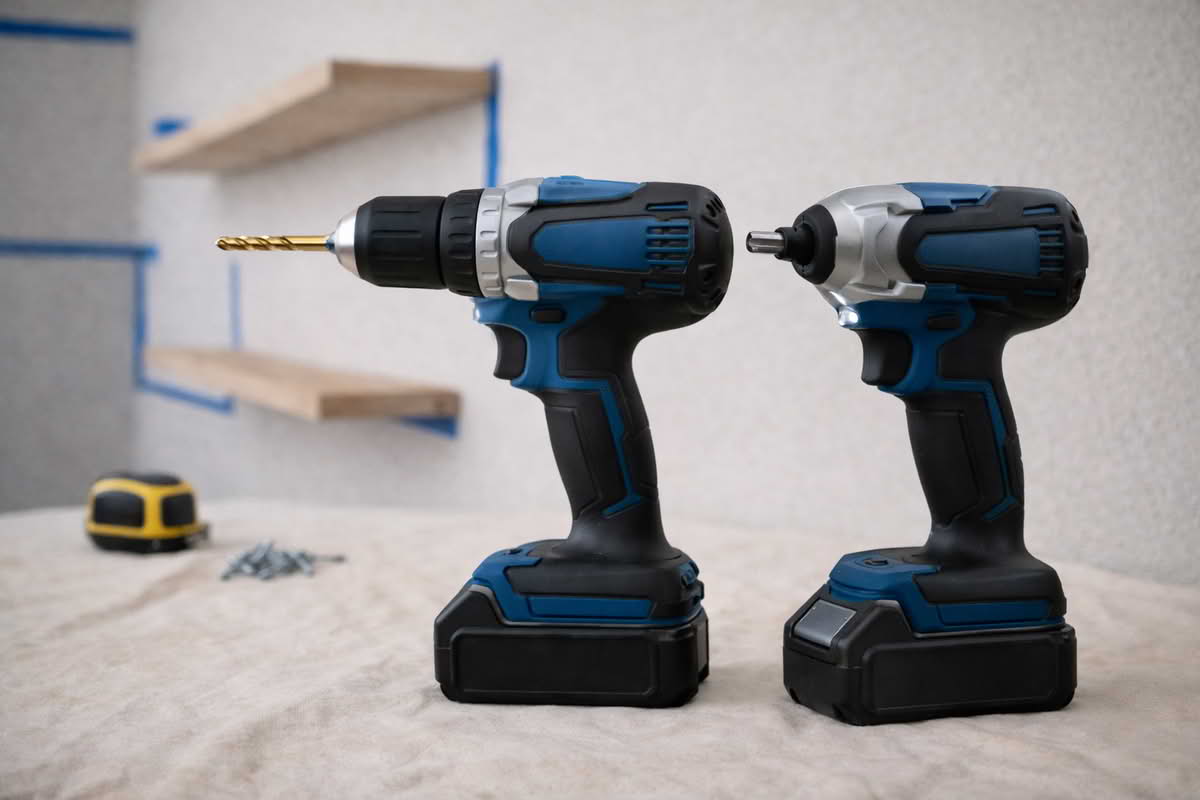
Drill and Driver Combo Kit Buying Guide for Home Projects and First Tool Systems
Drill and driver combo kits are often the first purchase where a buyer stops thinking about a single tool and starts choosing a cordless system. That makes the decision more important than it looks. A combo kit can be excellent value when both tools are genuinely useful, the batteries are practical, and the platform is worth expanding later. It can also be a disappointing shortcut if one tool feels underpowered, the batteries are too small, or the entire kit is built to look complete without actually handling common home projects well. The core question is not just whether you should buy a drill and an impact driver together. It is whether buying them together gives you a better ownership path than buying one stronger tool first. This guide focuses on when combo kits make sense, how to judge real value beyond the bundle price, and how to choose a kit that supports actual home repair, assembly, installation, and DIY work without forcing immediate upgrades.
Why combo kits can make more sense than one tool
A drill and driver combo kit makes the most sense when you already know that your projects involve both drilling and fastening in meaningful amounts. That sounds obvious, but many buyers still start by trying to force one tool to cover everything. A cordless drill can drill holes and drive screws reasonably well, which is why it remains the best first standalone tool for many households. But once projects begin to include longer screws, repeated fastening, shelving installations, deck repairs, outdoor builds, or room-by-room upgrades, separating those roles between a drill and an impact driver starts to feel less like a luxury and more like a smoother way to work.
The biggest advantage of a combo kit is workflow. Instead of swapping bits constantly between drilling and driving, you can leave a drill bit in the drill and a driver bit in the impact driver. That sounds like a small convenience until you spend an afternoon hanging storage systems, building furniture, installing wall cleats, or assembling backyard structures. The time savings are real, but the larger benefit is mental rhythm. Projects move more smoothly when each tool keeps its own job and you are not stopping every few minutes to reconfigure one tool for the next step.
Combo kits also make sense because they usually establish a battery platform all at once. If the drill and driver share batteries, charger, and case, the kit can create a cleaner entry point into cordless ownership than piecing together separate purchases later. For buyers who know they will eventually want other cordless tools, that matters. The first purchase becomes the foundation for future saws, lights, inflators, sanders, or outdoor tools rather than a temporary stopgap.
Combo kits are most useful when projects regularly involve both hole drilling and repeated screw driving.
Keeping a bit in each tool saves time and reduces the friction of constant switching.
A combo kit often creates a cleaner entry into a cordless battery system than buying tools one at a time.
The real benefit is not just bundle pricing, but smoother project flow and better long-term platform logic.
That said, combo kits are not automatically the smarter buy. Some households simply do not need two tools immediately. If your tasks are still mostly limited to small repairs, furniture assembly, curtain rods, and occasional pilot holes, a single well-chosen drill may be enough for a while. The risk of buying a combo kit too early is that you may pay for an impact driver that sits unused, or commit to a battery platform before you know what kind of projects you actually take on. The better reason to buy the kit is not fear of missing out. It is a realistic expectation that both tools will be used within ordinary ownership.
There is also a cost-of-delay angle. Buyers sometimes purchase a drill first, then quickly realize that their projects would be easier with a driver too. At that point, buying the second tool separately can cost more than a thoughtfully chosen combo kit would have at the start. When that pattern seems likely, the combo purchase becomes more compelling. The category works best when it anticipates real usage, not just theoretical value.
A good combo kit improves workflow by letting one tool stay set up for drilling while the other stays ready for fastening.
What actually determines combo kit value
Combo kit value is often misunderstood because buyers focus on the number of included items rather than the usefulness of the included items. A two-tool kit may come with one or two batteries, a charger, a bag or case, and occasionally accessory bits. None of that matters much if the drill is awkward, the driver is underwhelming, or the batteries are too small to make the system pleasant to live with. The better way to judge value is to ask whether the kit removes future friction or simply compresses a few compromises into one package.
Tool balance matters first. Some combo kits are built around a strong drill but a mediocre driver, or the opposite. Others keep both tools at a similar quality level, which is usually a better sign of thoughtful design. Since the whole point of the kit is to use both tools together, the weaker tool often defines how satisfied you will be with the purchase. If one tool feels noticeably like a placeholder, the combo may not be as good a value as it first appears.
Battery setup is the next major factor. One battery can keep a kit affordable, but it also reduces the practical advantage of owning two cordless tools because the system becomes a rotation exercise. Two batteries create a more usable kit, especially when drilling and driving happen in the same project. Battery capacity matters too. Larger batteries can improve runtime, but they also add weight. For many homeowners, two moderate batteries are more useful than one large pack because they preserve comfort while keeping both tools available.
True combo value depends on the quality balance between both tools, not just the bundle discount.
Two usable tools with practical batteries usually beat a larger-looking kit built around one weak link.
Battery count can matter as much as battery size because two tools are less useful when they must share one pack constantly.
A charger, case, and accessories add value only when the core tools already make sense.
Charger quality and recharge speed also affect ownership more than they seem to at first. A slow charger may be fine for infrequent use, but it can make a combo kit feel less convenient during longer project days. A better charger does not need to be extreme to matter. It simply needs to keep the battery system from becoming a bottleneck. In the same way, a carry bag only helps when it organizes the kit well enough that batteries, charger, and both tools remain easy to store and retrieve.
Platform depth is another hidden value driver. A combo kit can be the cheapest way into a cordless ecosystem, but that only matters if the ecosystem itself is practical. If replacement batteries are expensive, future bare tools are hard to find, or the lineup does not expand in logical directions, the initial savings can fade quickly. By contrast, a combo kit tied to a well-supported platform may stay valuable long after the first project because it makes future tool additions cleaner and cheaper.
Buyers should also be careful with included accessories. Some kits add a handful of drill bits or driver bits to create the feeling of completeness. That can be useful when the included accessories are decent and thoughtfully selected. But accessory bundles are often not the real source of value. The tools and battery setup are. If a kit looks attractive mainly because of a crowded box, it is worth stepping back and asking whether those extras would still matter if they were removed. A strong kit remains appealing even without the filler.
Long-term value comes from how many separate problems the kit solves. If it gives you a good drill, a genuinely useful driver, enough battery coverage for real tasks, and a platform worth keeping, it is doing more than bundling. It is establishing a working system. That is why some simple two-tool kits outperform larger-looking bundles in actual ownership.
Choosing between homeowner, premium, and value kits
Most drill and driver combo kits fall into three broad ownership profiles: homeowner-focused kits, premium or pro-leaning kits, and value kits. Homeowner-focused kits usually strike the best balance for most readers. They aim for usable power, manageable size, and enough battery support for regular home projects without excessive weight or cost. These kits are often the smartest fit for shelving, fixture installation, furniture, basic repairs, outdoor projects, and general DIY work that happens often enough to justify two tools but not so often that maximum output is the main concern.
Premium kits make more sense when the tools will see frequent use or serve as the foundation of a larger cordless platform. These kits may offer more refined ergonomics, stronger brushless performance, better battery efficiency, or higher-quality chargers and cases. They can be good long-term value when the extra performance will actually be used. But they also carry a risk of overbuying. If your projects remain occasional and moderate, the extra cost may mostly buy reassurance rather than better day-to-day outcomes.
Value kits appeal because they lower the barrier to entry. For some buyers, that is a perfectly reasonable reason to choose one. A value kit can be a smart purchase when the projects are lighter, the expectations are realistic, and the platform still looks viable. The problem is that some value kits save money in ways that reduce the whole point of the combo. If both tools feel bulky and rough, if the batteries are too small or too few, or if the platform does not seem worth expanding later, the lower entry price can quickly turn into a dead-end purchase.
Homeowner-focused kits usually offer the best balance of comfort, practicality, and platform value for mixed home projects.
Premium kits make more sense when the tools will be used often enough to justify better performance and efficiency.
Value kits can work well when expectations are moderate and the cordless platform still looks usable beyond the first purchase.
The best category is the one that matches your real project frequency, not the one that feels most ambitious at checkout.
It is also worth considering where the kit will live and how often it will be grabbed quickly. A homeowner kit that stores neatly and feels light enough to carry around the house may be more useful in practice than a more powerful kit that feels oversized indoors. This matters because a combo kit often becomes the default project set for years. If it is easy to retrieve, easy to hold, and easy to understand, it tends to stay active rather than becoming a garage-only purchase that comes out only for larger jobs.
Another question is whether you expect the combo kit to remain the whole system or just the beginning. If it is the beginning, platform depth matters more. You may want to see how easily the system expands into matching saws, lights, inflators, or outdoor tools. If it is mostly meant to cover a few years of common projects without much growth, the kit itself can matter more than the long tail of the platform. This distinction helps clarify whether you are buying a toolkit or buying an entry ticket into a tool family.
The lowest-regret path is usually to choose the kit that feels most coherent for the next stage of your actual home life. If you know projects are piling up, a balanced homeowner combo kit can be the cleanest and most efficient answer. If you already work heavily enough to appreciate stronger performance, a premium kit may pay off. If the need is real but the workload is light, a value kit can be justified, but only if it still clears the basic thresholds of tool quality and battery practicality.
Final Recommendations — choose the combo that creates a usable system
A good drill and driver combo kit should do more than look efficient on the shelf. It should give you two tools that genuinely improve workflow, batteries that make both tools practical to use, and a cordless platform that still feels sensible after the first few projects. For most readers, the best kit is the one that balances drill usefulness, impact-driver control, and battery value without leaning too hard on bundle theatrics.
Choose a homeowner-focused combo kit if you already expect both drilling and fastening to be regular parts of your projects.
Choose a premium kit if the tools will see frequent use and you want stronger long-term value within a growing platform.
Choose a value kit only when the batteries, platform, and weaker tool still look good enough to avoid fast regret.
Prioritize balanced tool quality, two-tool workflow, and battery practicality over accessory-heavy packaging.
The lowest-regret combo kit is usually the one that feels complete without being bloated. If both tools are worth owning, the batteries are sufficient, and the system fits the projects you are actually likely to do, the kit will remain useful long after the appeal of the initial discount has faded.