Shoe Rack and Entry Storage Buying Guide: How to Control Everyday Footwear Without Crowding the Door
Entryway shoe storage looks simple until the wrong system starts fighting the way the household actually comes and goes. Many buyers count the number of shoes on the floor, buy a rack with roughly enough slots, and then realize later that boots do not fit, family pairs rotate too quickly, wet shoes have nowhere practical to air out, or the storage itself blocks the walkway and makes the entrance feel tighter. Good shoe rack and entry storage should do more than get footwear off the floor. It should support daily movement, help contain dirt and visual clutter, and match the actual mix of sneakers, work shoes, sandals, boots, and seasonal pairs that pass through the door. Whether the space is a narrow hallway, a front-door corner, or a fuller mudroom zone, the right system is the one that stays easy to use on rushed mornings and messy afternoons instead of looking organized only when nobody is home.
Daily Flow and Footwear Mix Matter More Than Theoretical Capacity
The most common mistake in entry shoe storage is assuming the main question is how many pairs need to fit. Capacity matters, but it is rarely the deciding factor by itself. Entry zones are transitional spaces, which means the storage has to support movement as much as containment. A system that technically holds twelve pairs can still be a poor choice if it forces people to step around it, makes it hard to grab everyday shoes quickly, or leaves no sensible place for wet boots, guest footwear, or the half-pair someone kicked off in a hurry.
Footwear type changes everything. Slim flats, children's shoes, running shoes, hiking boots, work boots, and house slippers do not all behave the same way in storage. Buyers often end up disappointed because a rack advertised for a certain number of pairs assumes a narrow, low-profile shoe mix that does not reflect real household use. Once bulkier footwear enters the picture, true capacity drops. This is especially noticeable in family homes, where one rack may need to handle adult sneakers, kids' shoes, winter boots, and occasional guest pairs all at once.
Daily turnover matters just as much as size. The shoes worn every day should be easy to reach and easy to return without much thought. If the system requires opening a cabinet door, lifting another pair, or negotiating a cramped lower shelf every single time, people gradually stop using it well. This is one reason simple entry storage often outperforms more complicated options. A solution that looks slightly less polished but gets used consistently is usually better than one that appears tidier yet adds small daily frustrations.
Choose entry shoe storage around the kinds of shoes the household actually wears most, not just the total number of pairs.
Choose easy-access storage for current-use footwear instead of burying everyday pairs behind slower-moving categories.
Choose a format that preserves walkway comfort, because entry storage that crowds the door is solving one problem by creating another.
The entry itself should shape the solution. A narrow hallway near the front door needs much different storage than a larger mudroom with dedicated floor space. In tighter spaces, depth becomes a serious constraint. A shoe rack that projects only a little too far can make the entrance feel cluttered every time someone passes through. In larger mudroom zones, the challenge is often more about managing multiple household members and categories without the floor turning into an overlap of shoes, bags, outerwear, and seasonal gear.
Another overlooked issue is how much footwear really belongs in the entry at one time. Not every pair in the household needs front-line access. The strongest systems usually separate current-use shoes from overflow or seasonal pairs stored elsewhere. When buyers try to store the entire household collection at the door, even a good storage product starts to fail because the zone is being asked to do too much. The entry works better when it supports the shoes people are actually rotating through this week, not the whole wardrobe.
Entry shoe storage works best when it matches the daily flow of the household instead of maximizing pair count at the expense of movement and access.
Open Racks, Benches, and Closed Storage Solve Different Entry Problems
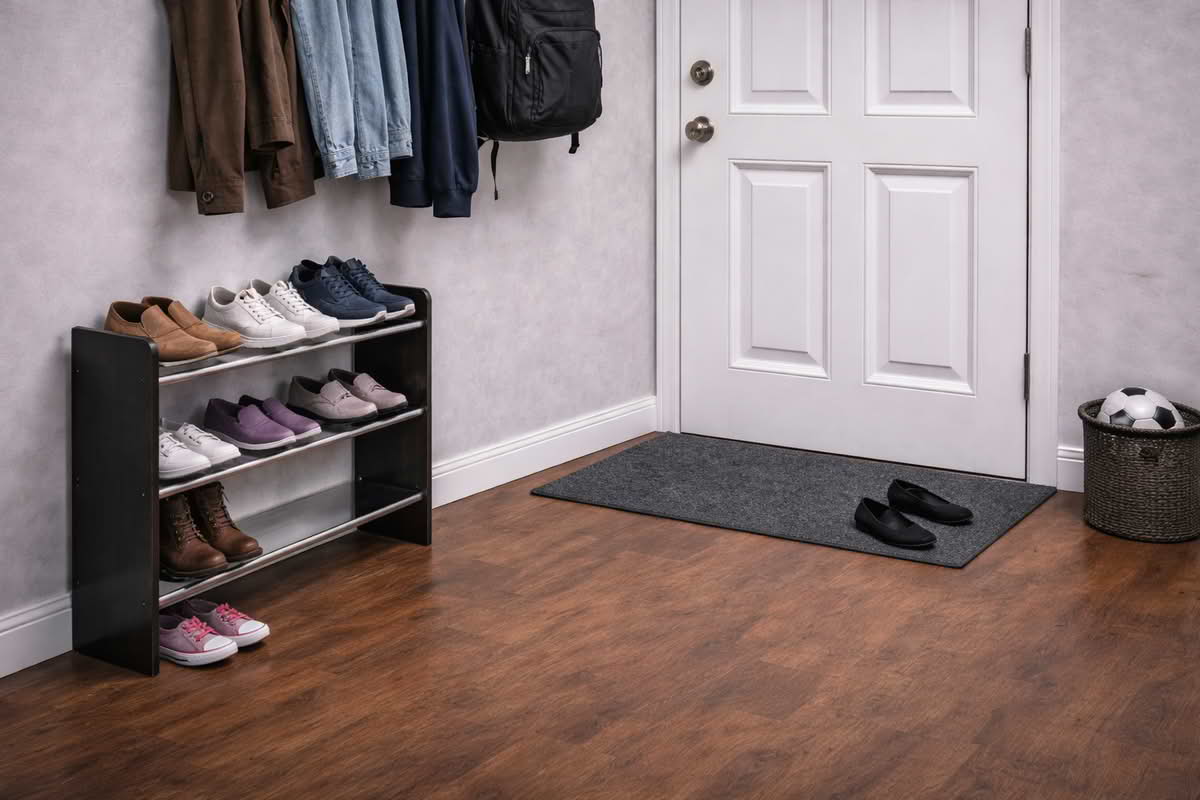
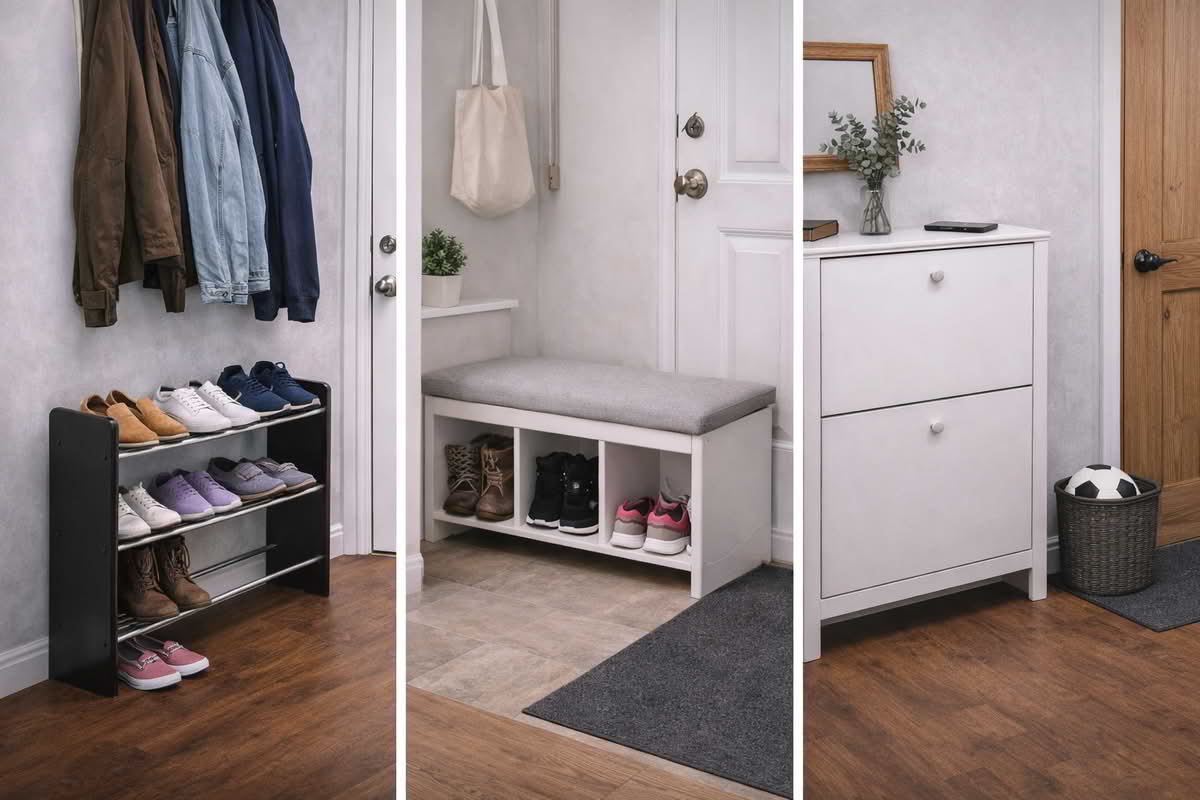
Once the footwear mix and room constraints are clear, the next question is which format best suits the job. Open shoe racks are often the most practical choice for day-to-day entry use because they make shoes visible, ventilated, and easy to return. That matters in households where people move quickly, where shoes come in dusty or damp, or where several family members need a system that works without much explanation. Open racks also make it easier to see when the zone is overfilling, which can help prevent the entry from silently becoming a pile-up area.
Their weakness is visual exposure. Even when neatly arranged, shoes are still irregular and can make an entry feel busy if too many pairs remain out at once. Open racks work best when the household keeps the entry collection limited and reasonably current. They are also more forgiving in mudrooms, side entrances, and less formal entry spaces than they are in narrow foyers or front rooms where visual calm matters more.
Shoe benches solve a slightly different problem by combining a sitting surface with storage below. That can be very useful in entry zones where putting on shoes is part of the daily routine, especially for children, older adults, or homes where boots and outdoor shoes are common. A bench also helps an entry feel more complete as a transition zone rather than just a corner where shoes happen to collect. The tradeoff is that bench storage often works best for a limited number of pairs. Once too many shoes gather underneath, the visual benefit starts to disappear.
Choose open shoe racks when fast access, ventilation, and easy return matter more than concealment.
Choose shoe benches when the entry benefits from a sitting surface and the household can keep the visible shoe count reasonably controlled.
Choose storage formats based on the room's role, not just on which piece seems to hold the most footwear.
Closed shoe cabinets and more concealed entry storage work well when the main goal is visual cleanup. They are often attractive in formal entries, apartments, and hallways where exposed shoes make the whole space feel untidy. These systems can create a calmer look, but they should be evaluated by real shoe fit and daily effort, not just by the promise of hidden storage. Some cabinets are best suited to slimmer shoes and may feel cramped with larger sneakers, boots, or mixed family footwear. Others become awkward when people have to bend, sort, and reorganize too much just to put shoes away.
Mudroom-style shoe organizers sit somewhere between these categories. They may combine cubbies, trays, benches, and open shelf storage in a more structured zone. These are useful when the entry needs to handle more than footwear alone, especially in back-door or garage-entry areas where mud, bags, and seasonal layers all arrive together. But they also ask for more floor area and more commitment. A full mudroom organizer in a too-small entry can feel like oversized furniture rather than a practical solution.
Another important tradeoff is boot handling. Many shoe racks are strong for low-profile pairs but weak for taller footwear. Households that regularly deal with rain boots, work boots, or winter footwear often need either open lower zones, adjustable shelves, or a separate boot strategy instead of assuming the main rack can handle everything cleanly. One of the easiest ways an entry system becomes frustrating is when the biggest, dirtiest footwear category never quite fits where it is supposed to go.
Open racks, benches, and closed shoe storage each solve different problems. The better choice depends on whether the priority is access, seating, concealment, or a mix of all three.
In practice, many homes do best with a hybrid approach. A smaller open zone for current-use shoes and a more contained zone for overflow or less-frequent pairs often creates a better result than one single format trying to serve every purpose. This is especially true in family households, where the entry is less a display space and more a high-traffic landing area that needs quick, believable order.
Cleanliness, Visibility, and Long-Term Use Determine Whether the System Lasts
Entry shoe storage has to deal with something many other storage categories do not: dirt, moisture, and repeated short-cycle use. Shoes come in from outside carrying grit, water, and debris, which means the storage should be chosen with cleaning and maintenance in mind. A product that looks refined but is annoying to wipe down or awkward to clear out during seasonal changes can quietly become a poor fit even if it seemed ideal at purchase.
This is why open, easy-clean surfaces often perform better than buyers first expect in hard-working entry zones. They may not conceal shoes, but they make it much easier to sweep beneath, wipe shelves, and let damp footwear air out. Closed systems can still work very well, especially in more formal spaces, but the household needs to be realistic about whether they are storing mostly dry indoor pairs or using the entry as the primary landing area for weather-exposed footwear. The right answer depends on how the door is actually used.
Visibility matters too. If the entry storage hides too much or makes shoes hard to identify quickly, everyday pairs tend to migrate back to the floor. At the same time, too much open storage can make the whole area look busier than it should. The best balance usually comes from deciding which shoes deserve immediate visibility and which can be stored more discreetly. Daily-use pairs benefit from easy recognition and retrieval. Seasonal, dress, or less-used shoes often do not need front-line status at all.
Choose easy-clean entry storage when the household regularly tracks in moisture, dust, or seasonal mess.
Choose visible storage for high-use shoes so the system supports real routines instead of encouraging floor clutter.
Choose some level of concealment or overflow control when exposed footwear would make the entry feel constantly overfull.
Long-term success also depends on category discipline. Entry storage is one of the easiest places in the home for overflow to accumulate because the zone feels active and justified. Shoes linger there past their season, guest pairs never get moved, and older footwear stays because there is technically still room. A good product cannot fully solve that by itself. But the better storage systems make it obvious when the zone is carrying too much and easy to reset when needed. In contrast, poorly fitted systems often let clutter build gradually until the entry feels permanently crowded.
Household size changes the best answer as well. A single-person or two-person entry can often stay organized with a compact rack or bench. A family entry usually needs more deliberate zoning and stronger assumptions about seasonal overflow. What works beautifully for a minimalist apartment entry may collapse immediately in a house where several people arrive with backpacks, wet shoes, and rotating outdoor gear. This is why the strongest buying decisions are grounded less in the product photo and more in the actual behavior the storage has to survive.
In the long run, good shoe rack and entry storage works because it supports small repeated actions: stepping in, taking shoes off, finding the right pair, putting them back, cleaning around them, and rotating them seasonally. If those actions remain easy, the system has a real chance of lasting. If the storage complicates those actions even slightly, the entry tends to drift back toward floor clutter. That difference is what separates a convincing everyday solution from one that only looks organized when carefully arranged.
Final Recommendations — Choosing Entry Shoe Storage With Less Daily Friction
The right shoe rack and entry storage is the one that fits the room, the footwear mix, and the daily rhythm of the household. Buyers usually get the best result when they treat the entry as a high-use transition zone rather than as a place to store the entire household shoe collection. That mindset makes it much easier to choose between open racks, benches, cabinets, and hybrid solutions without overloading the door area.
Choose compact open shoe racks when daily access, airflow, and quick return matter most.
Choose shoe benches when the household benefits from seated shoe changes and the visible pair count can stay controlled.
Choose closed shoe cabinets when visual calm matters more and the footwear mix is compatible with more concealed storage.
Choose mudroom-style organizers or hybrid setups when the entry needs to handle several people, changing seasons, and more than just shoes.
A low-regret entry storage purchase should make the door area easier to move through, easier to clean, and easier to reset after ordinary days. When access, room fit, and realistic footwear habits all align, shoe storage stops being a recurring entryway problem and becomes a stable part of a cleaner household routine.