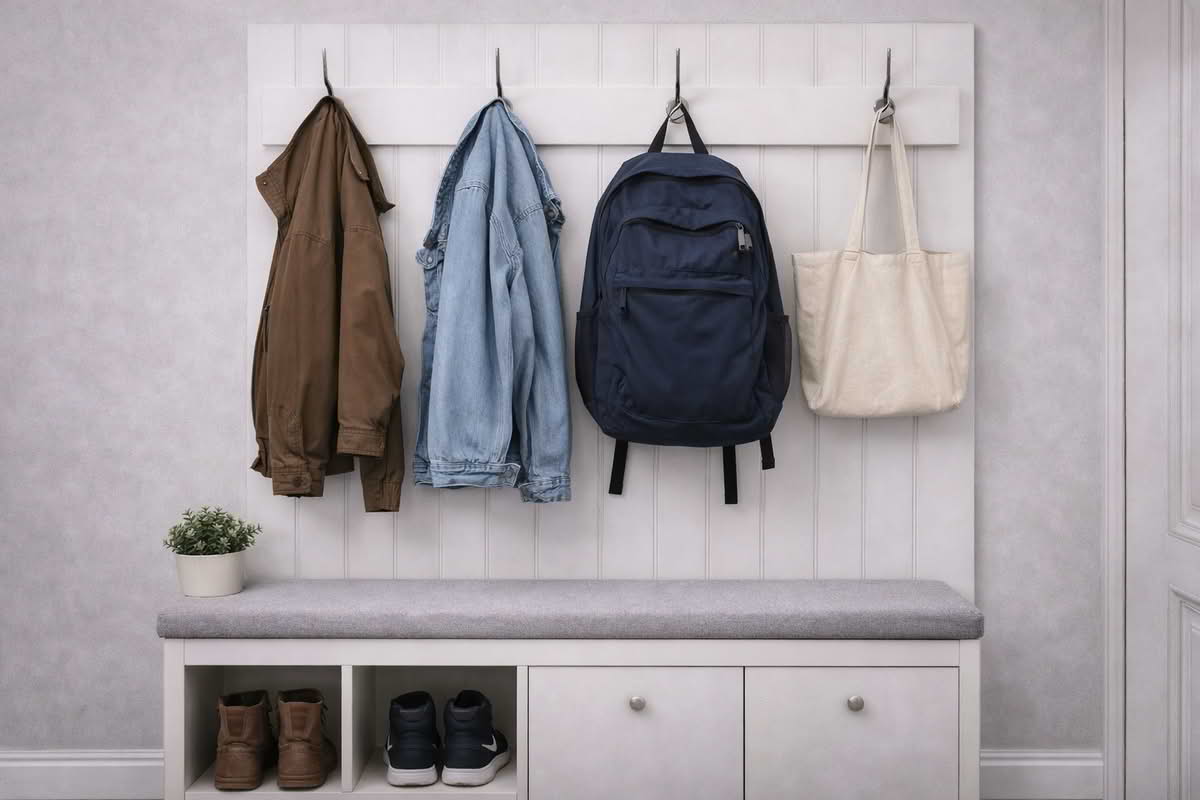
Coat Rack and Hook Buying Guide: How to Add Everyday Storage Without Creating Wall Clutter
Coat racks and entry hooks seem like easy fixes for jackets, bags, and daily grab-and-go items, but they often become clutter magnets when the wrong format is chosen. Buyers install a few hooks or bring in a freestanding rack expecting immediate order, then discover that the unit tips under real household weight, the hooks are spaced too tightly, bulky winter coats overwhelm the entry, or the whole setup turns into a wall of hanging overflow that never quite resets. Good coat storage should do more than provide somewhere to hang things. It should support the flow of people through the space, fit the kinds of outerwear and accessories the household actually uses, and make it easier to put items away without turning the entry into a visual holding zone. Whether the room needs a compact hook rail, a freestanding coat tree, or a fuller hall-tree-style solution, the best choice is the one that stays manageable after ordinary days, bad weather, and rushed routines.
What Needs to Hang and How Often Should Shape the Choice
The first mistake in this category is assuming coat storage is only about coats. In most homes, entry hooks and racks end up carrying much more than outerwear. Tote bags, backpacks, hats, umbrellas, dog leashes, scarves, purses, and light seasonal gear all start competing for the same few hanging points. That matters because a system that works well for one or two jackets may fail quickly once real household habits take over. A buying decision should begin with what is actually entering the space each day, not just with the product label.
Use frequency matters just as much as item type. Daily jackets, bags, and grab-and-go layers need the easiest positions. These are the items people will hang up quickly while walking in, often one-handed, sometimes while carrying groceries, managing children, or rushing out again. If the storage is too awkward, too high, or too crowded, those items end up on chairs, benches, or the floor. Lower-frequency pieces such as guest coats, formal outerwear, or out-of-season accessories can tolerate less prominent or less convenient storage. When those categories get mixed together, even a decent rack starts to feel overstuffed.
Clothing bulk also changes what works. Summer layers, lightweight bags, and baseball caps behave very differently from puffy winter coats, structured backpacks, and thick scarves. A rack or hook rail that looks spacious in mild-weather conditions may feel unusable once heavier cold-weather gear arrives. This is one reason buyers are often disappointed by dense hook layouts. More hooks do not necessarily create more practical storage if the household uses bulky items that need breathing room to hang without covering everything beside them.
Choose coat storage around the real mix of coats, bags, and daily accessories instead of assuming the unit will only hold outerwear.
Choose the most accessible positions for current-use items rather than giving every category equal placement.
Choose spacing and format with seasonal bulk in mind, because winter storage often reveals weaknesses that lighter weather hides.
Household size changes the equation too. A small apartment entry for one or two adults may work well with a compact wall-mounted hook rack. A family entrance handling school bags, rain jackets, sports layers, and daily turnover often needs more deliberate zoning. The wrong storage in a larger household does not simply look messy. It actively creates friction because everyone competes for the same hanging space. That is why the right answer often depends less on décor style and more on how many people are using the entry at the busiest time of day.
Another overlooked issue is how long things are expected to stay. Entry coat storage works best when it supports active-use items, not long-term parking for every outerwear category in the home. If the storage has to hold daily jackets plus backup coats plus guest layers plus extra bags, the entry usually becomes overloaded. A stronger approach is to let the entry handle the current rotation while slower-moving items live elsewhere. This keeps the hanging system believable and easier to reset.
Coat storage works better when hook spacing and placement are chosen around real daily-use items such as jackets, backpacks, and bags rather than around a simple item count.
Freestanding, Wall-Mounted, and Hall-Tree Formats Solve Different Problems
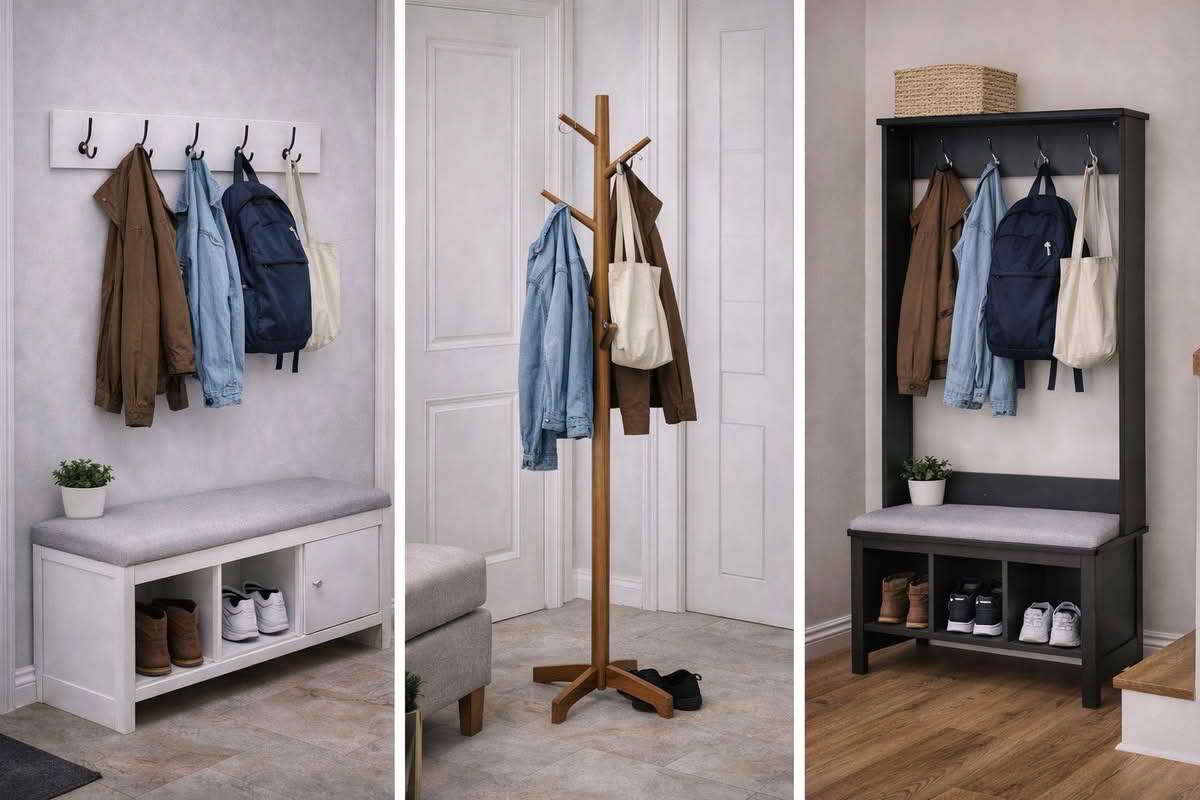
Once the storage role is clear, the next question is which format actually suits the space. Wall-mounted hook racks are often the cleanest answer in small entries because they use vertical wall area without taking much floor space. They can work especially well in narrow hallways, apartment entries, or mud-adjacent side doors where circulation needs to stay clear. Their strength is efficiency. Their weakness is that they depend heavily on good spacing, solid mounting, and some restraint about what gets hung there. A hook rail can quickly become cluttered if asked to carry too many bulky items in one compressed section of wall.
Freestanding coat racks solve a different problem. They can add storage without wall installation and work well in rentals, flexible rooms, or spaces where the best location is not tied neatly to one open wall. They are also easier to reposition if the entry changes seasonally or if the first location proves inconvenient. But freestanding racks introduce their own risks. They need enough base stability to handle uneven loading, and they often become visually dominant if placed in a small room. A coat tree that seems compact when empty may feel much larger once coats and bags spread outward from it.
Hall trees and entry towers sit between simple hooks and larger furniture. They often combine hanging hooks with bench seating, cubbies, or lower shoe storage. That can be a strong solution when the entry needs to do several jobs at once. A hall tree can create clearer zones for coats, shoes, and bags than separate pieces scattered around the space. The tradeoff is footprint and commitment. These systems ask for more floor area and are less forgiving if the chosen size or layout is wrong. In a tight entry, a hall tree can feel like oversized furniture even when the storage idea itself is sound.
Choose wall-mounted hooks when floor space is limited and the storage needs are relatively controlled.
Choose freestanding coat racks when flexibility matters and wall installation is less practical.
Choose hall-tree-style storage when the entry needs a combined solution for coats, bags, and lower storage in one zone.
Hook style matters inside every format. Single hooks can work well for lighter categories or more spaced-out layouts, but double hooks often create better efficiency when the household uses both coats and smaller accessories together. That said, a denser double-hook layout is not automatically better. When bulky jackets occupy the upper hook and bags crowd the lower one, the whole system can become harder to use. Practical spacing often matters more than the raw number of hanging points.
Height also needs deliberate thought. Hooks placed too high may look tidy in a staged photo but discourage use by children or shorter adults. Hooks placed too low can cause long coats or bags to drag against benches, shoes, or the floor. In family-oriented entries, a mix of heights can make a system much more believable. It creates a natural place for children's items or smaller accessories without forcing everything onto one crowded line.
Another consideration is what sits below the hanging storage. Wall-mounted hook systems often benefit from a bench, shelf, or shoe zone beneath them so the entry feels organized as a whole rather than as an isolated set of hooks. Freestanding racks, by contrast, usually need more surrounding floor discipline because they do not automatically create a structured landing zone underneath. This is why some buyers discover that a coat rack solves only half the problem. Hanging storage works best when the rest of the entry supports it.
Different coat storage formats suit different rooms. Wall hooks save floor space, freestanding racks add flexibility, and hall trees combine several entry functions in one footprint.
Spacing, Load, and Long-Term Maintenance Matter More Than Hook Count
A coat storage system succeeds when it remains easy to use after days of ordinary life, not just when it is first installed. This is where load support and maintenance logic become more important than many buyers expect. Hooks and racks live in one of the roughest storage zones in the home. Items get dropped on them quickly, overloaded in bad weather, and left hanging for longer than intended. A product that feels acceptable with a few lightweight garments may become frustrating once bags, wet coats, scarves, and seasonal layers all accumulate in the same zone.
Spacing is the biggest overlooked factor. Buyers often assume more hooks equal better storage, but tightly packed hooks can make the system much less usable. Bulky coats overlap, bag straps tangle, and people stop reaching for the designated hook because nearby items are in the way. A smaller number of well-spaced hooks often performs better than a long strip of cramped ones. This is especially true in colder climates or family homes where outerwear tends to be thicker and more layered.
Load handling matters too. Freestanding racks need enough stability that they do not lean or feel unsettled when one side carries more weight. Wall-mounted systems need believable support because entry storage is rarely loaded evenly or gently. A household does not hang items with perfect balance. People drop one heavy backpack on one hook, stack coats together during a storm, or leave an umbrella and tote bag in the same place. The storage should be chosen for that imperfect reality, not for an idealized even load.
Choose fewer, better-spaced hooks rather than maximizing hook count at the expense of usability.
Choose stronger construction when the system will regularly hold backpacks, heavier coats, or wet-weather gear.
Choose entry storage that can tolerate imperfect household behavior instead of requiring constant rebalancing and correction.
Maintenance is also a visual issue. Coats and bags are large, irregular objects, so even an organized entry can look chaotic if the hanging storage is constantly overfull. This is one reason rotating storage matters. The best coat racks and hook systems usually support a current-use layer, not a complete outerwear archive. If the entry remains crowded year-round, the system will feel inadequate no matter how well built it is. A better long-term outcome often comes from limiting what belongs there and moving overflow to closets or secondary storage.
Surface durability deserves some thought as well. Entry items are often damp, dirty, or abrasive. Hooks may be pulled, scratched, or hit by zippers and metal hardware. Easy-to-clean, resilient finishes usually create a better ownership experience than delicate-looking surfaces that show wear quickly. In visible entries, buyers often focus on style first, but style that does not hold up under daily friction can quietly become disappointing.
In the long run, good coat rack and hook storage supports a simple behavior loop: walk in, hang things quickly, find them easily later, and reset the space without effort. Systems that make any part of that loop harder tend to accumulate clutter around them. Systems that make it easier gradually become part of the household rhythm. That difference is why the best choice is rarely the one with the most decorative detail or the most hooks. It is the one that fits the room, the load, and the real pace of daily life.
Final Recommendations — Choosing Coat Storage That Still Works After the First Week
The right coat rack or hook system is the one that matches the entry size, the household load, and the level of visual exposure the space can comfortably handle. Buyers usually get the best results when they think in terms of daily-use hanging storage rather than permanent holding space for every coat and bag in the home. That approach makes it much easier to choose between wall-mounted hooks, freestanding racks, and fuller hall-tree solutions.
Choose wall-mounted hook racks when you need efficient vertical storage and want to preserve floor space in tighter entries.
Choose freestanding coat racks when flexibility matters and the household load is moderate enough for a stable open-format solution.
Choose hall trees when the entry needs a more complete landing zone with coats, bags, shoes, or bench storage working together.
Choose spacing and structure around bulky real-world items, because practical load handling matters more than having the highest hook count.
A low-regret coat storage purchase should make the entry feel easier to move through, easier to reset, and easier to live with in every season. When hook spacing, load support, and room fit all align, coat storage becomes a useful part of the entry system instead of just another place where household clutter gathers.