Mudroom Bench Buying Guide: How to Add Seating and Storage Without Crowding the Entry
A mudroom bench seems like an easy upgrade because it promises two things at once: a place to sit and a place to store the daily clutter that gathers by the door. But many benches solve only half the problem. Buyers often choose a piece that looks attractive in a staged entry, then discover it is too shallow to be useful, too bulky for the walkway, too flimsy for repeated daily use, or poorly designed for the shoes, bags, and seasonal gear the household actually needs to manage. A good mudroom bench should do more than fill an empty wall. It should support shoe changes, contain some of the mess that arrives from outside, and fit the rhythm of the household without turning the entry into a crowded furniture zone. Whether you need open shoe storage, concealed compartments, or a narrow bench for a tighter space, the right choice is the one that remains practical on wet days, busy mornings, and ordinary afternoons when nobody is carefully styling the room.
Seating Needs and Entry Behavior Should Shape the Bench First
The first mistake in this category is treating a mudroom bench mainly as decorative furniture with bonus storage. In reality, the seating function often determines whether the piece will be genuinely useful. If the bench is too narrow, too tall, too low, or placed where sitting feels awkward, people stop using it for its intended purpose. Once that happens, it tends to become just another horizontal surface near the door, which means bags, packages, and loose items start landing on top while shoes continue spreading underneath.
A bench works best when it supports the specific kind of entry behavior a household repeats every day. In some homes, that means sitting down to put on work shoes, children's boots, or rain gear. In others, it means quickly removing shoes at the door and using the bench only occasionally. These are different use cases. A family mudroom with school backpacks, changing footwear, and seasonal outerwear demands more from a bench than a quieter side entry used by one or two adults. Buyers often underestimate this difference and choose a bench based on appearance or rough width instead of on how much real use the seat will see.
The best mudroom benches also respect movement. Entry zones are transition spaces, which means the bench must support sitting without blocking circulation. A bench that looks proportional against a wall can still feel intrusive if it projects too far into a narrow hallway or crowds the path between the door, closet, and adjoining room. This is one reason narrow mudroom benches can outperform larger statement pieces in smaller homes. The goal is not simply to add a seat. It is to add a seat that improves the flow instead of competing with it.
Choose a bench based on how often people will actually sit there, not just on whether the room seems to need one.
Choose a size that supports shoe changes without turning the bench into a walkway obstacle.
Choose proportions around the real entry traffic pattern instead of the amount of blank wall available.
Household makeup matters too. A bench used by children, older adults, or anyone regularly changing boots and outdoor gear will likely see more real seat use than a bench in a light-use front foyer. That should influence how sturdy and accessible the piece needs to be. A lightly decorative bench may be acceptable in a low-traffic entry, but it will feel inadequate in a busy mudroom that deals with constant motion and repeated daily use.
Another overlooked factor is whether the bench is expected to be a standalone solution or part of a larger entry system. A bench paired with hooks, cubbies, or shoe storage can work extremely well because it creates a full landing zone. A bench by itself may help with seating, but not necessarily with the coat, bag, and footwear clutter surrounding it. The best results often come when the bench is chosen as one layer in the entry system rather than as a single object expected to solve everything.
A good mudroom bench improves entry flow by providing a believable place to sit without narrowing the path through the space.
Open Storage, Closed Storage, and Size Fit Solve Different Problems
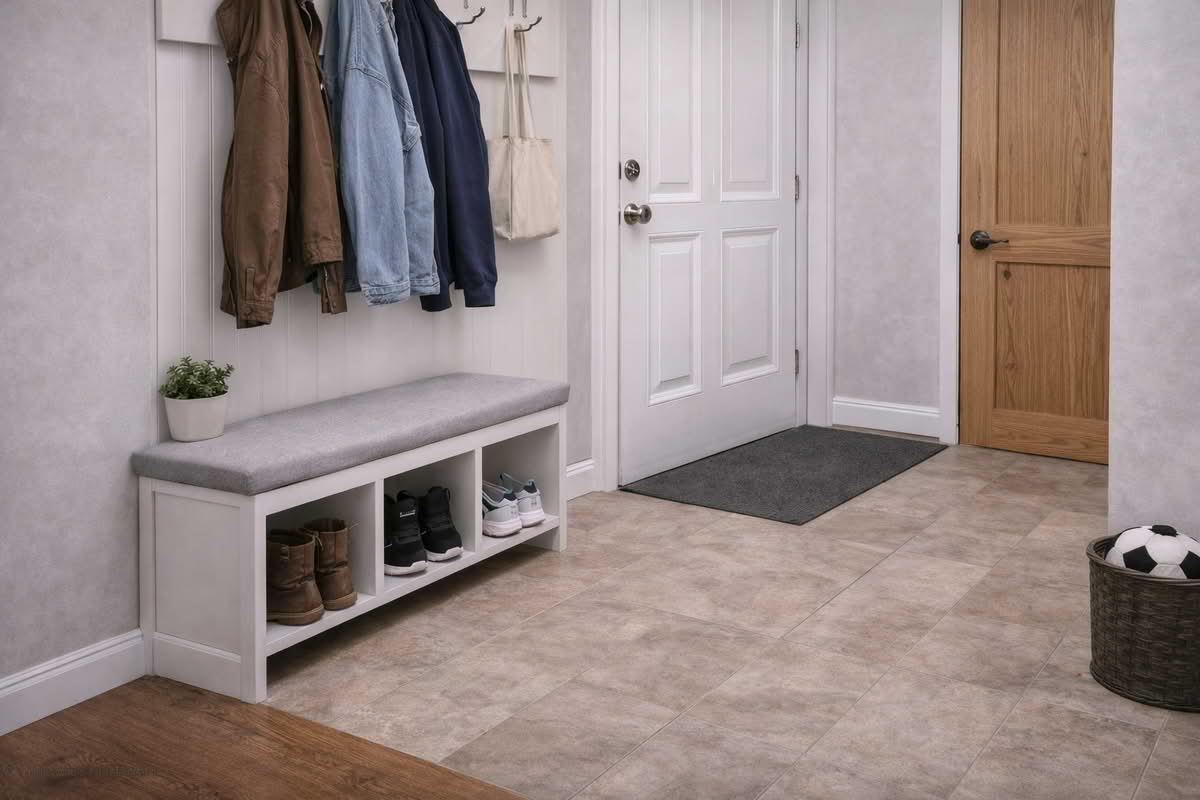
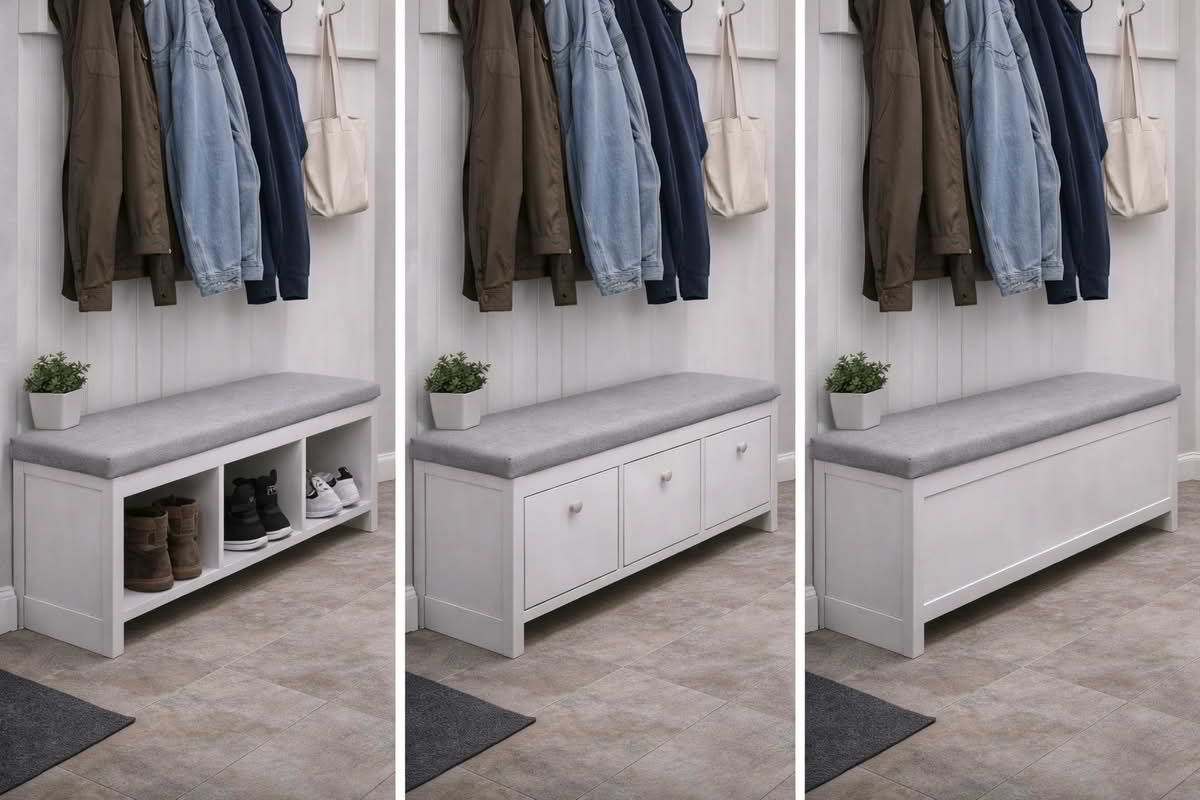
Once the seating role is clear, the next question is how the bench should store things. Open lower shelving or cubbies are often the most practical option for everyday shoes because they keep footwear visible, easy to return, and easier to air out after wet or dirty use. In hard-working mudrooms, this can be a major advantage. People are more likely to use open shoe storage consistently because it creates very little friction. The tradeoff is visual exposure. Open storage works best when the household can keep the number of shoes at the bench reasonably controlled.
Closed storage benches solve a different problem. Lift-top compartments, drawers, or cabinet-style bases can hide the visual clutter that open entry storage sometimes creates. That makes them attractive in front entries, smaller homes, or spaces where the bench is more visible from the rest of the house. But concealment should not be confused with better functionality. Hidden compartments often work better for slower-moving items such as seasonal accessories, reusable bags, or occasionally used gear than for shoes that need to be grabbed and returned every day. When a bench forces too much lifting, sorting, or digging, people stop using the storage well.
Shoe-bench hybrids sit between these approaches. They combine a usable seat with a limited amount of visible shoe storage below, which can be excellent when the goal is to support a smaller current-use rotation. These designs work especially well in entries that need one simple multi-use piece without expanding into a full mudroom furniture setup. The limitation is that capacity is usually more modest than buyers first imagine. Once too many pairs collect under the bench, even a smart design starts to look crowded.
Choose open lower storage when fast access, ventilation, and believable daily use matter more than concealment.
Choose closed storage when the room needs visual calm and the stored items do not need constant in-and-out access.
Choose combined shoe-bench styles when the entry needs a practical all-in-one piece but the daily footwear load is still manageable.
Width and depth deserve close attention here. Wider benches can support more seating and more storage, but they also increase the risk of turning the entry into a furniture-heavy zone. In long mudrooms, that may be perfectly acceptable. In narrower entries, it often is not. Depth is even more important. A bench that is just a little too deep can make an entry feel cramped in every ordinary moment, even if it seemed reasonable when first measured. A slightly narrower or shallower bench is often the lower-regret choice when space is tight.
Storage format should also reflect the types of items involved. Open cubbies may handle everyday sneakers and children's shoes well, but taller boots may need a different strategy. Closed compartments can hold gloves, hats, and dog-walking accessories neatly, but they may be awkward for damp items that should not be sealed away immediately. The strongest bench decisions match the storage style to the category, rather than assuming one bench design will handle every kind of entry clutter equally well.
Another quiet source of disappointment is overestimating what should live inside the bench. The bench works best when it supports a small number of current-use categories. Once it is asked to store all shoes, all winter accessories, school gear, and miscellaneous entry overflow, the system usually becomes harder to maintain. Benches are most effective when they stay focused rather than trying to replace the rest of the mudroom.
Open and closed bench storage solve different entry problems. The better choice depends on whether the priority is daily access, visual calm, or a balance of both.
Durability, Cleaning, and Long-Term Use Matter More Than a Styled Look
Mudroom furniture works harder than many other storage pieces because it deals with weather, repeated sitting, dirt, and the abrupt pace of entry life. That makes durability one of the most important factors in this category. A bench that feels fine in a calm hallway may not hold up well when used for muddy boots, heavy backpacks, repeated leaning, and quick seating changes. Buyers often focus on style or storage layout first, but the better long-term experience usually comes from choosing a bench built for more strain than the room seems to suggest.
Surface behavior matters. A cushioned bench can feel more comfortable and more finished, especially in visible entries, but it also introduces more maintenance. In homes with wet weather, pets, children, or frequent entry use, a cushion may show wear or collect dirt faster than buyers expect. A hard bench top can be easier to wipe clean and less fussy, though some households may still prefer a removable cushion for comfort. The better choice depends on whether the bench is closer to a decorative foyer piece or a truly working mudroom station.
Easy cleaning matters throughout the bench, not just on top. Mudroom storage often deals with wet soles, dust, and debris that settle beneath or inside the unit. Open lower shelves make this visible and easier to address. Closed benches may look tidier from the outside, but can collect grit in less obvious ways if they are hard to clear or wipe down. This is why the best bench is not always the most polished-looking piece. It is often the one that still feels easy to live with after several messy weeks.
Choose sturdier bench construction when the piece will be used for real daily seating, heavier bags, or family entry traffic.
Choose easy-clean surfaces when wet shoes, dust, and weather are routine parts of the entry.
Choose cushions only when their comfort benefit outweighs the extra maintenance the household will realistically accept.
Long-term success also depends on whether the bench encourages the right behavior. A well-chosen mudroom bench makes it easier to sit, easier to contain the current-use items nearby, and easier to reset the area at the end of the day. A poorly chosen one becomes another horizontal surface for dropped bags, mail, and miscellaneous overflow. This is why some benches that seem practical on paper fail in daily life: they create a seat, but not a believable entry routine around it.
Visual calm is a factor as well. Mudroom benches often live in spaces that are partially visible from kitchens, hallways, or living areas. That means the bench needs to handle disorder without making the entire house feel visually cluttered. Open storage can still look controlled if the categories are limited. Closed storage can still look heavy if the bench is oversized. The strongest result usually comes from matching the bench to the scale and tone of the room rather than choosing the largest storage piece that fits.
In the long run, good mudroom benches work because they stay believable. They support the actual acts of sitting, removing shoes, storing a limited current-use layer, and keeping the entry reasonably clear. When those functions stay easy, the bench becomes part of the routine. When they do not, it becomes furniture that looks like storage but does not really solve the problem. That difference matters more than small stylistic details because mudroom benches live or die by repeated daily use.
Final Recommendations — Choosing a Mudroom Bench That Holds Up to Real Life
The right mudroom bench is the one that fits the entry, supports real shoe-changing behavior, and offers the right amount of storage without crowding the room. Buyers usually get the best result when they treat the bench as part seat, part storage tool, and part traffic-management piece rather than as simple accent furniture with a storage bonus.
Choose open-storage mudroom benches when the household needs fast everyday shoe access and easy cleanup.
Choose closed or partially concealed storage benches when the entry benefits from a calmer look and the stored items are not all high-frequency.
Choose narrower benches when preserving walkway comfort matters more than maximizing storage inside one piece.
Choose stronger, easier-clean designs when the bench will serve as a real daily mudroom station instead of a light-use foyer seat.
A low-regret mudroom bench should make the entry easier to use on busy days, not just look organized when everything is perfectly put away. When size, storage style, seating comfort, and durability all align, a mudroom bench becomes a practical anchor for the space rather than another bulky object trying to contain too much.