Garment Rack and Wardrobe Buying Guide: How to Add Clothing Storage Without Creating a Temporary-Looking Mess
Garment racks and portable wardrobes are often bought in response to a clear storage problem: not enough closet space, too much seasonal overflow, a rental with limited built-in storage, or a guest room that needs to do several jobs at once. But these products are easy to buy badly. Many people choose whatever seems large enough, only to discover that the rack bows under normal clothing weight, the footprint overwhelms the room, the cover makes access annoying, or the whole setup feels like a stopgap that never integrates into daily life. Good freestanding clothing storage should do more than create one extra bar for hangers. It should match the kinds of garments you own, the room where it will live, and the level of stability and visual order you need over time. Whether you need a rolling rack, a covered portable wardrobe, or a heavier-duty open system, the best choice is the one that supports real clothing habits without turning overflow storage into a permanent source of friction.
The Storage Role and Garment Type Should Decide the Format
The first mistake in this category is treating every garment rack or portable wardrobe as though it solves the same problem. In practice, these products sit at the intersection of several different needs. Some buyers need overflow hanging space for everyday clothing. Some need temporary garment storage during a move, renovation, or closet update. Others need an ongoing wardrobe substitute in a room with no built-in closet at all. Those are not identical situations, and they do not call for the same kind of product.
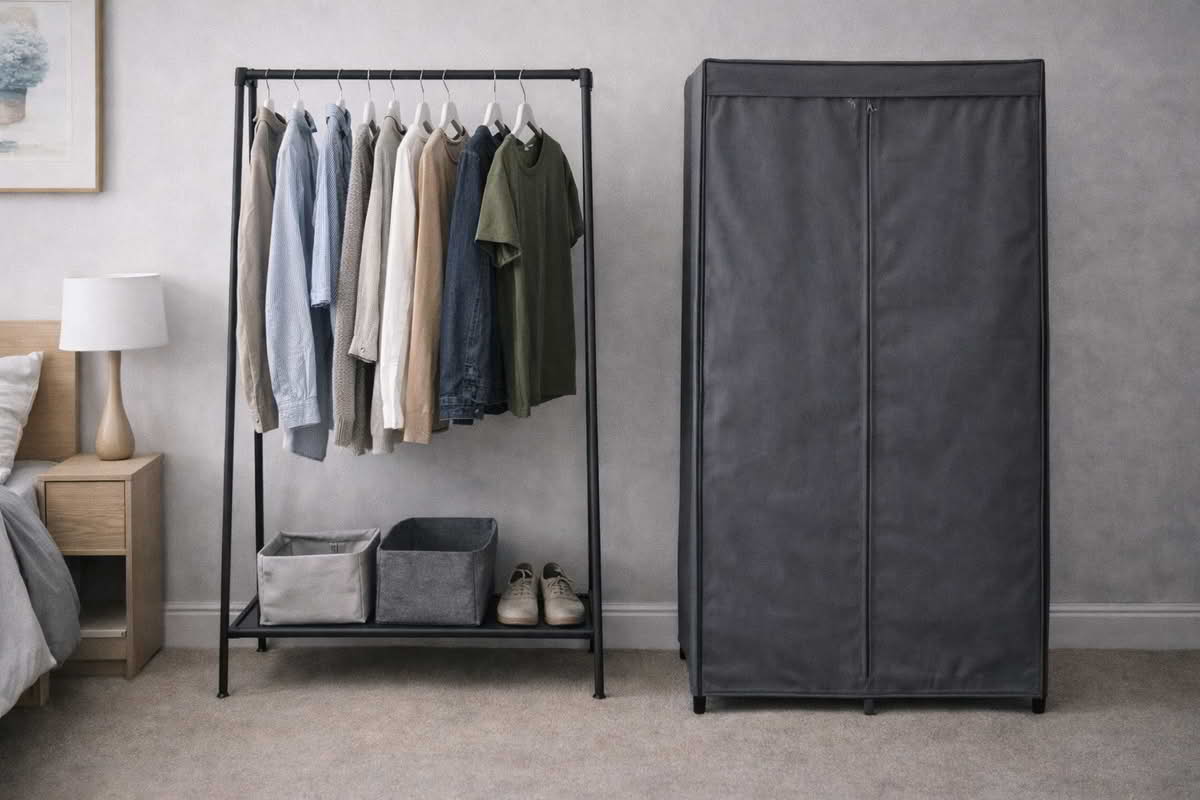
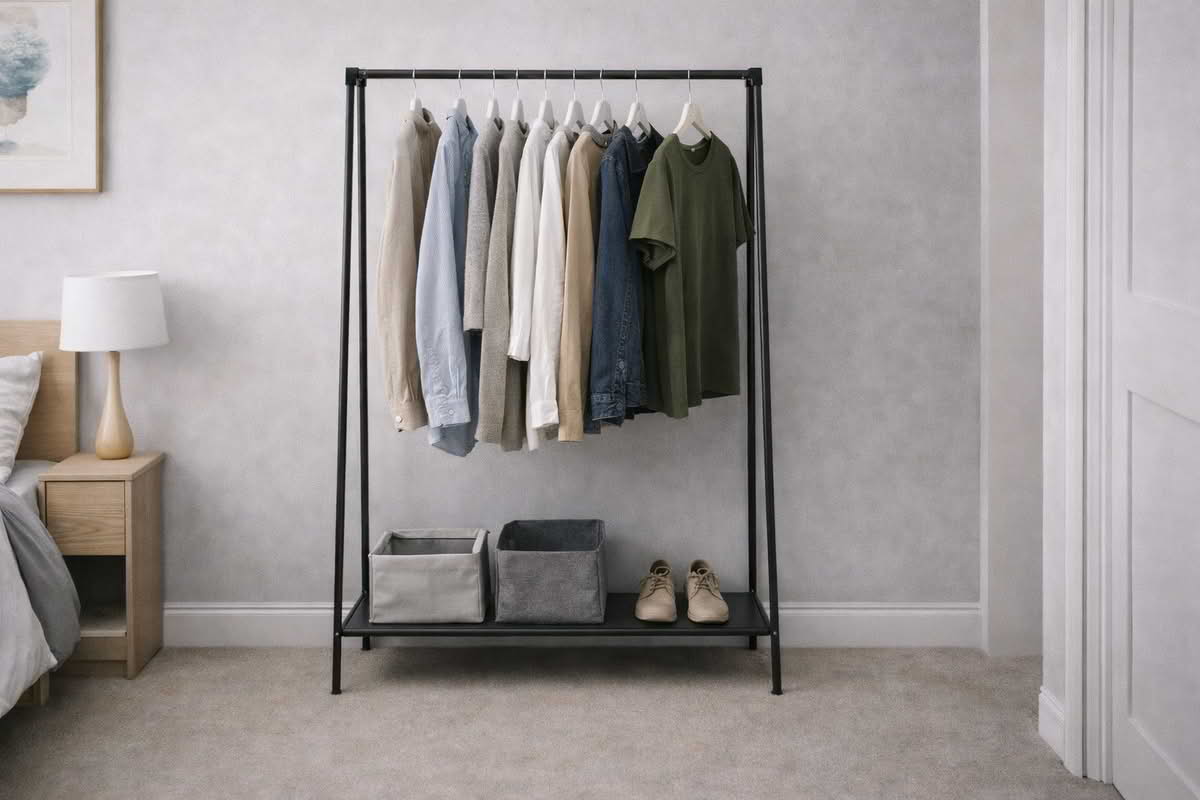
Open garment racks are often best when visibility and quick access matter. They work well for everyday rotation, outfit planning, guest-room overflow, or clothing categories that benefit from being seen and reached easily. A rolling rack can also make sense in flexible rooms where storage has to move occasionally. But open racks leave clothes exposed, which means the system quickly becomes part of the room visually. That can be helpful in some spaces and annoying in others. The cleaner the clothing category and the more disciplined the wardrobe habits, the better open racks tend to age.
Covered portable wardrobes solve a different problem. They trade some ease of access for more visual concealment and a bit more protection from dust. That makes them useful for seasonal storage, rental situations, mixed-use rooms, or spaces where exposed clothing would make the room feel untidy. The tradeoff is that covered storage can increase friction. If opening and closing the unit feels awkward, people often stop using it well. What looked like a tidy wardrobe solution can slowly become a concealed pile of garments that are harder to manage.
Choose open garment racks when daily visibility and quick hanger access matter more than concealment.
Choose covered portable wardrobes when the room needs visual calm or the clothing category is slower moving.
Choose the format around the storage job, not just around whichever product looks largest or least expensive.
Garment type matters just as much as the room. Shirts, lighter jackets, blouses, and shorter garments are easier to store on many freestanding racks than long coats, dresses, or heavier winter pieces. A double-rail design can be very efficient for shorter garments because it makes better use of vertical space. But it often works poorly if the clothing mix includes too many longer pieces. Likewise, a single high rail can look simple and flexible, yet waste space if most garments are short enough to benefit from two tiers.
Buyers also tend to underestimate how much clothing they expect one rack to carry. “Overflow storage” sounds modest until it becomes half a seasonal wardrobe, a week's laundry backlog, several coats, and a row of bags or shoe bins underneath. That is why it helps to decide whether the unit is meant for active daily clothes, transitional overflow, or longer-term storage. A product that works well in one of those roles may feel poorly chosen in the others.
Garment racks and portable wardrobes solve different problems. Open systems favor visibility and quick access, while covered units often suit concealed overflow or slower-moving storage better.
Stability, Capacity, and Room Fit Matter More Than Extra Hanging Width
Once the storage role is clear, the next question is whether the unit can support the real load without becoming unstable or visually intrusive. This is where many buyers focus too much on width and too little on frame quality. A wide garment rack can seem like better value because it promises more hanging space, but additional width only helps if the frame remains rigid under weight. When clothing is concentrated toward the center or one side, a lightly built rack can begin to flex, sway, or feel less trustworthy than expected.
Heavier garments expose weak construction quickly. Winter coats, denim, heavy knits, layered outfits, and bag storage all place more demand on a rack than a few lightweight shirts. A rack chosen for occasional-use garments may feel overwhelmed when pressed into service for daily household storage. This is especially common when buyers assume a rack advertised for “closet overflow” will behave like a permanent closet system. It may not. The better approach is to choose more structural margin than you think you need when the rack is likely to evolve into a long-term piece of furniture.
Base design matters too. Some racks use narrow footprints that save floor space, but those same dimensions can reduce confidence once the bar is fully loaded or when the unit is moved. Broader or more thoughtfully braced bases often feel less precarious, especially in homes with children, pets, or high-traffic rooms. Stability is not only about total weight capacity. It is also about how planted the unit feels in ordinary use. A rack that technically holds clothing but never feels settled may still become an everyday annoyance.
Choose stronger frames when the rack will hold coats, heavy garments, or larger clothing loads over time.
Choose width only after considering whether the structure can support a realistic, unevenly distributed wardrobe.
Choose more planted base designs when the rack will live in active rooms or serve as long-term clothing storage.
Room fit deserves equal attention. A garment rack may provide needed storage but still be the wrong choice if it dominates the room. In smaller bedrooms, offices, or guest spaces, freestanding clothing storage becomes part of the visual architecture whether you intend it to or not. That means depth, height, and openness matter. A rack that projects too far into the room can make circulation worse. A tall covered wardrobe may fit the floor area while still feeling bulky beside a bed or dresser. A double-rail unit may create efficient hanging density but make the room feel busier than a simpler single-rail setup.
Wheels introduce another tradeoff. Rolling garment racks are useful when flexibility matters, such as in shared rooms, temporary wardrobes, or spaces that need occasional rearrangement. But mobility should not be confused with better overall performance. Wheels add height, can introduce wobble, and only help if the unit will actually be moved on a surface that supports smooth rolling. In many homes, a fixed or more stable rack is the better long-term choice once the unit finds its permanent place.
Lower storage zones also matter. Some racks include shelves, bottom rails, or space for shoe bins and boxes. This can be useful when the goal is to create a more complete wardrobe station. But it can also tempt buyers to overload the base until the entire unit feels crowded. Freestanding clothing storage works best when lower storage complements the hanging function rather than turning the area beneath the rack into another uncontrolled pile.
A good garment storage setup needs more than enough hanging width. Stability, base design, and room clearance determine whether the unit feels useful or intrusive in daily life.
Visibility, Protection, and Long-Term Use Determine Whether the Setup Holds Up
Garment racks and portable wardrobes often start as temporary solutions, but many remain in place far longer than expected. That makes long-term usability more important than buyers sometimes realize. A unit may be acceptable for two weeks of extra laundry overflow and deeply irritating after six months of daily living. This is why visibility and protection should be treated as core tradeoffs rather than secondary details.
Open racks are strong for visibility. They make it easier to see what is available, maintain a limited working wardrobe, and reduce the problem of forgotten clothes hidden behind doors. For people who dress from a smaller rotation, curate outfits actively, or need a quick-access overflow area beside the main closet, that openness can genuinely improve daily use. The downside is that visual clutter becomes unavoidable if too many garments, mixed hanger types, or extra accessories accumulate. Open clothing storage is at its best when the volume remains intentional.
Covered wardrobes shift that balance toward concealment and some environmental protection. They can be better for seasonal garments, guest-room clothing storage, overflow in multi-use rooms, or situations where a cleaner visual surface matters. But concealment should not be mistaken for effortless organization. If the cover makes access slow or the interior becomes too dense, the unit may simply hide disorder rather than resolve it. The best covered systems are the ones used for categories that do not need constant in-and-out movement.
Use open racks for active clothing categories that benefit from clear visibility and easy reach.
Use covered wardrobes for slower-moving garments or rooms where exposed clothing would create too much visual noise.
Use restraint in both formats, because overloading is one of the fastest ways freestanding clothing storage starts to fail.
Another long-term question is whether the unit supports realistic maintenance. Clothing storage that requires constant rebalancing, sorting, or cover management tends to become frustrating quickly. People are more likely to keep using a garment rack well if the system makes the right behavior easy. That may mean leaving some breathing room on the bar instead of packing it tightly. It may mean dedicating the rack to one category, such as coats, workwear, or seasonal overflow, rather than trying to use it as a substitute for an entire closet.
Visual integration matters too, especially in bedrooms and living-adjacent spaces. A garment rack is not just storage. It is also room furniture by default. That does not mean it must look decorative, but it should feel proportionate and deliberate rather than improvised. Repeated hangers, a limited clothing palette, and some category discipline can make a simple rack feel calm. Without that, even a structurally solid rack can contribute to the sense that the room is carrying unresolved overflow rather than purposeful storage.
Portable wardrobes have their own version of this problem. They often look cleaner from a distance, but if they occupy too much wall space or feel bulky relative to the room, they can still create visual heaviness. The better fit is usually the one that solves the storage problem while leaving the room readable. This is especially important in smaller homes and rentals, where freestanding storage can easily start competing with the furniture and circulation the room already needs.
In the long run, the best garment rack and wardrobe purchases are the ones that stay in their lane. They solve a defined clothing storage problem, fit the room, and support ordinary daily use without asking to be treated like a fully built-in closet system. When those expectations stay realistic, freestanding clothing storage can be genuinely useful. When they do not, the unit often becomes a visible reminder that the room never quite found a stable storage plan.
Final Recommendations — Choosing Freestanding Clothing Storage With Less Regret Later
The right garment rack or portable wardrobe is the one that matches the clothing category, the room, and the level of permanence you actually need. Buyers usually get better results when they decide first whether the unit is for active daily clothing, protected overflow, or a more complete closet substitute. Once that role is clear, choosing between open racks, covered wardrobes, and heavier-duty multi-rail systems becomes much easier.
Choose rolling garment racks when flexibility and lighter daily clothing storage matter more than maximum structural permanence.
Choose heavy-duty open racks when the load includes coats, heavier garments, or longer-term everyday use.
Choose covered portable wardrobes when concealment and moderate dust protection matter more than constant instant access.
Choose double-rail systems when most garments are shorter and you genuinely need denser vertical hanging efficiency.
A low-regret freestanding clothing storage purchase should make the room easier to live in, not just provide one more place to hang things. When garment type, structural strength, room fit, and daily access all align, a rack or wardrobe can become a practical extension of the home's storage system instead of a temporary-looking compromise that never quite settles in.