Closet Organizer Buying Guide: How to Build Storage That Makes a Closet Easier to Use
Closet organizers are often sold as fast fixes for clutter, but many of them simply move the problem into a more structured shape. Buyers add hanging shelves, drawers, rods, or modular panels and expect the closet to feel instantly solved, only to discover that the layout wastes vertical space, reduces useful hanging room, or creates compartments that do not match the clothes and accessories they actually own. A good closet organizer does more than add parts to an empty opening. It should improve visibility, reduce pile-up, and support the real mix of hanging garments, folded clothing, shoes, bags, and seasonal overflow that a household needs to manage every day. Whether you are working with a reach-in closet, a small bedroom closet, or a larger wardrobe zone, the best system is the one that matches your storage behavior and keeps the space easier to maintain instead of becoming a more expensive version of the same clutter.
Layout Comes Before Products in Any Good Closet Organizer Plan
The biggest mistake in this category is buying organizer components before understanding how the closet actually needs to function. Buyers often start with a product format they like, such as hanging shelves, drawer towers, cubbies, or a modular kit, and then try to force the closet to conform. That usually leads to awkward compromises. Hanging clothes become cramped, folded items end up in stacks that slump forward, or small accessories take over shelf space that should have been reserved for bulkier categories. A better approach starts with the closet layout itself.
Every closet contains a mix of storage behaviors. Some items need full hanging height. Some work well folded. Some need quick grab-and-return access. Others are seasonal and can live farther back or higher up. A good organizer should reflect these differences rather than treating the closet as a generic box that just needs more compartments. That means looking honestly at what percentage of the closet should remain hanging space, what should move to shelves or bins, and which categories are causing the real problem. In many closets, the issue is not a lack of storage parts. It is a mismatch between the current layout and the type of clothing being stored.
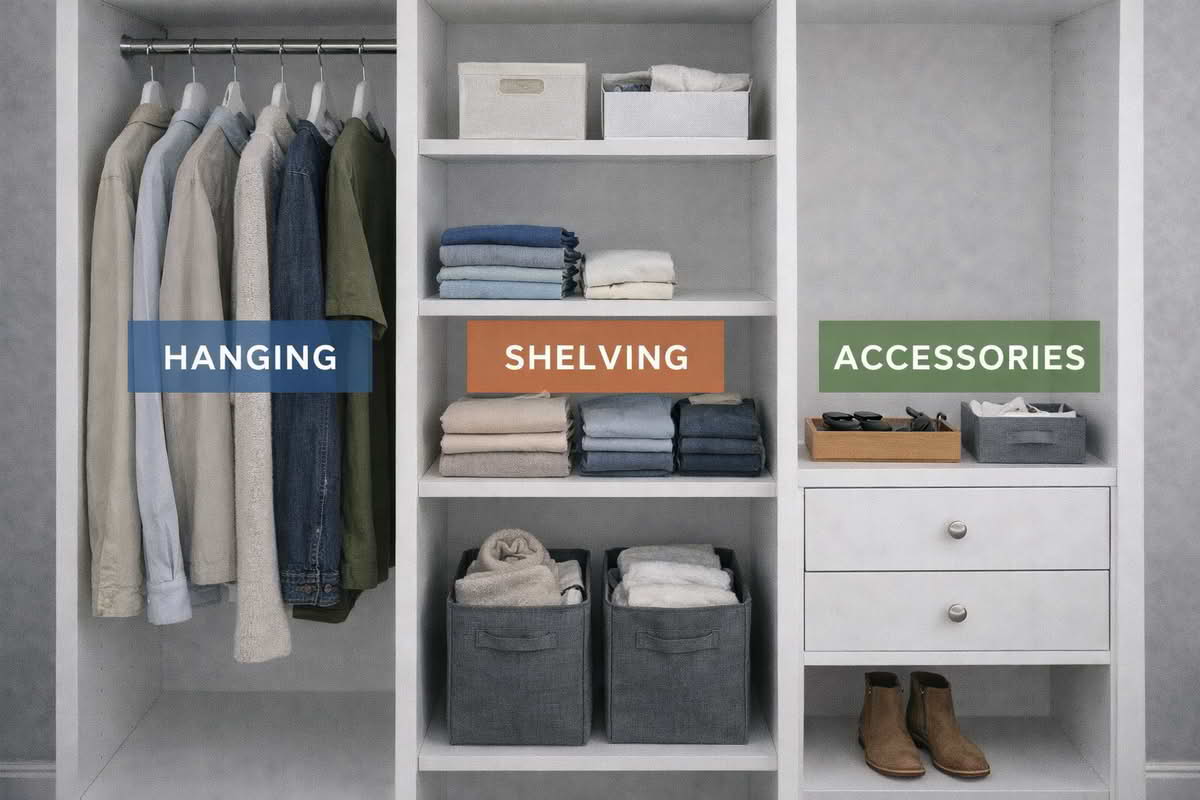
Reach-in closets especially benefit from this kind of planning because the space is limited and every inch matters. A system that adds too many shelves can reduce hanging efficiency. A system that keeps only one long rod may waste vertical space if most garments are shirts, folded pants, or shorter items. The strongest closet organizer decisions come from dividing the space into functional zones rather than assuming more hardware will automatically create order. One section may need shorter double hanging. Another may need shelving for sweaters or denim. Another may need bins or baskets for accessories. The right answer depends on the wardrobe, not the marketing photo.
Choose a closet organizer only after identifying how much of the space should stay dedicated to hanging clothes.
Choose zone-based layouts when the closet stores several different categories instead of one uniform clothing type.
Choose organizer formats around your actual wardrobe mix rather than around a showroom-style arrangement.
Width, depth, and door style also matter more than buyers sometimes expect. Sliding-door closets restrict how much of the opening can be used at once, which makes category placement more important. Narrow reach-in closets often benefit from fewer, better-defined storage zones rather than dense all-over organization. Walk-in closets may allow more components, but they can still become inefficient if too much space is given to shallow decorative shelving instead of practical clothing storage. In either case, the organizer should serve the geometry of the closet rather than ignoring it.
Another quiet source of regret is failing to account for future adjustment. Closets evolve as seasons change, routines shift, or one person's wardrobe expands while another's contracts. A system that is too rigid can look impressive at installation and then become inconvenient once clothing categories move around. This is why even highly structured organizers tend to work better when they leave some room to adapt instead of filling every inch with a fixed idea of what the closet should be.
Closet organizers work better when the space is divided into functional zones for hanging clothes, folded items, and accessories instead of treating the closet as one repeated storage pattern.
Hanging Space, Shelving, and Modularity Need the Right Balance
Once the basic layout is clear, the next question is which organizer format best supports it. This is where many buyers lean too heavily in one direction. Hanging organizers are useful for adding low-commitment shelf space, especially in rental settings or smaller closets where drilling or built-in components are not ideal. But hanging shelves also use rod space and often perform best only for lighter folded items, accessories, or softer categories. They can become misshapen or visually messy if overloaded with denim, bulky sweaters, or mixed categories that do not stack neatly.
Shelf-based systems solve a different problem. They can create stronger visual structure and better category separation for folded clothing, bins, handbags, or storage baskets. But they also introduce a classic closet tradeoff: every shelf section usually means less hanging room. Buyers sometimes discover too late that they built a closet that looks organized on paper but now requires folding far more clothing than they realistically want to maintain. That is not a minor inconvenience. It changes whether the system remains organized after ordinary workweeks, laundry cycles, and rushed mornings.
Modular closet systems are appealing because they promise a more custom result. They can be excellent when the closet has predictable dimensions and the user is confident about how the space should function. A modular system can combine double hanging, open shelving, drawers, and accessory storage in a cleaner overall layout than ad hoc add-ons. The risk is that modular systems can encourage overbuilding. Buyers add more towers, drawers, or shelves because the options are available, not because the closet needs them. The result can be a busier, less flexible space that feels more finished but not necessarily more usable.
Choose hanging organizers when you need lower-commitment folded storage and the wardrobe will not overload soft shelf sections.
Choose shelf-based systems when folded clothing, bags, or bins genuinely deserve more dedicated space than hanging garments.
Choose modular closet systems when the layout is reasonably clear and you want a more integrated long-term storage plan.
Drawer components deserve similar caution. Drawers can be very useful in closets for smaller clothing, undergarments, accessories, or categories that disappear visually on open shelves. But drawers also consume space and add a layer of daily friction if used for items that would be easier to see and grab from open bins or folded stacks. In some closets, a few drawers improve the system significantly. In others, they simply crowd out more useful open storage. The right choice depends on whether concealment or visibility matters more for the specific categories being stored.
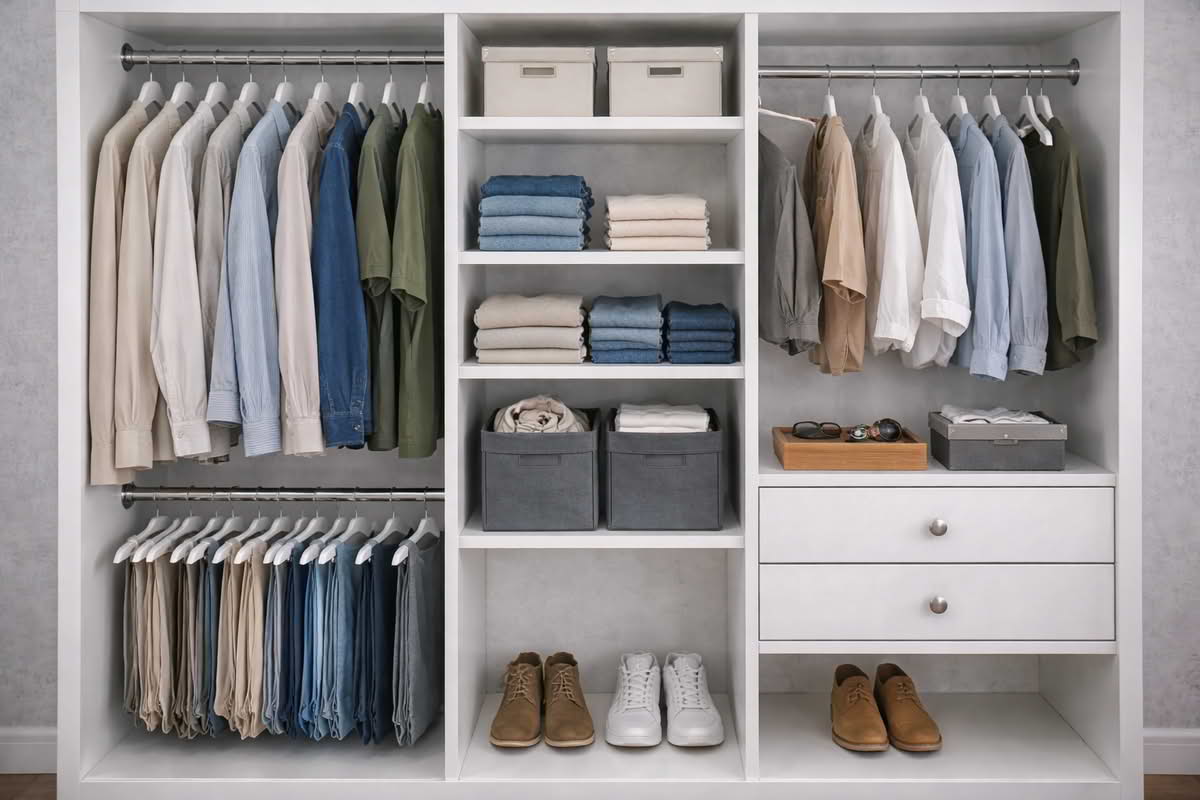
Double hanging often delivers better efficiency than buyers expect, especially for shirts, blouses, shorter jackets, and many everyday garments. Long hanging should be used deliberately for dresses, coats, or items that truly need the vertical space. One of the most reliable ways to improve a closet is to reclaim excess long-hang area that is doing very little work. At the same time, overcommitting to double hanging can make the closet feel cramped if longer pieces have nowhere sensible to go. The better layout usually mixes both rather than assuming one format should dominate.
The best closet organizers balance hanging space and shelving according to the actual wardrobe instead of maximizing one format at the expense of the other.
Another overlooked point is shelf depth and reach. Deep shelves can appear helpful, but they often create hidden stacks and forgotten items in the back. Slightly shallower storage with baskets or bins may keep clothing and accessories easier to manage. Closet organizers are at their best when they increase visibility and access, not when they pack more things into less understandable layers. This is especially important in small-space closets where morning convenience matters as much as total capacity.
Maintenance, Visibility, and Long-Term Fit Matter More Than Initial Neatness
A closet organizer should not be judged only by how it looks right after installation. It should be judged by whether it still works after several weeks of daily dressing, laundry turnover, rushed mornings, seasonal changes, and imperfect human habits. This is where many organizer systems fail. They create a tidy snapshot but rely on a level of folding discipline, spacing precision, or category restraint that ordinary households do not maintain consistently. Good closet organization lowers maintenance friction. It does not raise it.
Visibility is central to that. Clothes and accessories are easier to manage when you can see them clearly without digging through piles or shifting multiple layers. Open shelves, bins, and hanging zones often support better daily use than overly concealed systems in which categories disappear behind doors, deep drawers, or stacked containers. That does not mean everything should stay exposed. It means concealed storage should be reserved for the categories that genuinely benefit from it, while daily-use clothing remains easy to scan and access.
This is also why baskets, bins, and labeled zones matter inside closet organizer systems. An organizer frame alone rarely solves smaller-category clutter. Belts, scarves, sleepwear, workout gear, seasonal accessories, and miscellaneous clothing overflow tend to spread unless they have containment. But containment should support the closet's logic rather than interrupt it. A closet full of mismatched bins may technically be organized, yet still feel visually noisy and difficult to maintain. Repeated container sizes and a limited number of category types usually produce better long-term results.
Use organizer layouts that keep the highest-frequency clothing categories visible and easy to reach.
Use bins or baskets for smaller categories that would otherwise spread across shelves or floor space.
Use repeated formats and simple zones so the closet stays maintainable after normal laundry and daily use.
Small-space closets especially need this kind of discipline. When a closet is tight, every poorly chosen component adds friction. A shelf section that sticks out too far, a hanging organizer that crowds the rod, or a drawer tower that blocks adjacent access can all make the closet feel more complicated instead of more efficient. In smaller closets, the best organizer is often the most restrained one: enough structure to support categories, but not so much that the opening becomes overbuilt.
Long-term fit also depends on whether the system can adapt to changes in season and lifestyle. A closet that stores bulky sweaters in colder months may need more shelf or bin space part of the year and more hanging room later. One person's closet may shift toward workwear, another toward casual clothing, athletic gear, or accessories. A rigid organizer can become annoying if it assumes the wardrobe will never change. Some level of flexibility, whether through adjustable shelves, movable bins, or open zones that can be reassigned, usually creates a lower-regret result.
In the end, the best closet organizer systems are rarely the most crowded or the most elaborate. They are the ones that understand what should hang, what should fold, what needs containment, and what can be stored elsewhere entirely. When the system fits real behavior instead of idealized styling, the closet becomes easier to reset, easier to see, and easier to live with over time.
Final Recommendations — Choosing a Closet Organizer With Less Friction Later
The right closet organizer is the one that matches your wardrobe mix, your closet geometry, and the level of maintenance you can realistically sustain. Buyers usually get the best result when they plan the closet in zones first and then choose organizer components to support those zones, rather than buying a kit and hoping the layout works itself out later.
Choose hanging closet organizers when you need flexible folded storage and want a lower-commitment solution for lighter categories.
Choose shelf-based closet organizers when folded clothing, handbags, and contained accessories deserve more permanent dedicated space.
Choose modular closet systems when you want a more integrated layout and have a clear understanding of how the closet should function long term.
Choose simpler, more restrained setups when the closet is small and daily ease matters more than adding every possible component.
A low-regret closet organizer should make the closet easier to use on ordinary days, not just look better after installation. When layout, hanging space, shelving, and category control all work together, closet organization becomes less about squeezing in more parts and more about building a system that stays functional over time.