Clothes Storage Buying Guide: How to Store Everyday and Seasonal Clothing Without Creating Piles
Clothes storage becomes frustrating when the system asks more discipline than daily life can realistically provide. Many buyers respond to overflowing drawers, crowded closets, or seasonal clutter by adding bins, shelves, boxes, or hanging organizers one piece at a time. The result often looks like more storage, but not better storage. Sweaters slump into stacks that are hard to maintain, off-season clothing disappears into unlabeled containers, and overflow solutions begin to compete with the closet instead of supporting it. Good clothes storage should make clothing easier to sort, easier to see, and easier to put away without turning every laundry cycle into a reorganization project. Whether you are dealing with folded clothing, seasonal rotation, limited closet space, or general wardrobe overflow, the right solution is the one that matches how you actually handle clothes week after week, not the one that looks neat only on the day it is set up.
Category and Access Patterns Should Drive Clothes Storage Choices
The most common mistake in clothes storage is treating all clothing as though it should be stored the same way. In reality, clothing categories behave very differently. Everyday shirts, workout clothes, socks, sleepwear, sweaters, bulky outerwear, seasonal pieces, and occasional-use garments do not all benefit from the same storage format. Buyers often end up frustrated because they choose a product type first and then try to force every category into it. That usually creates piles, overstuffed bins, or systems that work for one season but not the next.
A better starting point is access frequency. Clothes used several times each week need fast, low-friction storage that supports easy retrieval and easy return. These categories often work best in drawers, open shelf zones, divided folded storage, or clearly grouped bins that do not require unstacking or opening multiple layers. Lower-frequency clothing, such as off-season sweaters, formalwear, guest linens, specialty gear, or archived baby clothes, can tolerate slower access because it is not part of the daily routine. Those categories are much better candidates for contained storage, higher shelves, or more protected long-term bins.
The second issue is clothing behavior. Soft, compressible items such as T-shirts and knitwear can work well in shelf organizers, drawer systems, or stackable storage that keeps categories separated. Structured items such as jackets, delicate garments, and pieces that wrinkle easily often perform better hanging or in looser storage formats that do not crush them. This is where many households create their own storage problems. They ask one format to do too many things, then wonder why the system feels unstable. Clothing storage becomes easier when the format fits the way the garment behaves instead of only the amount of space available.
Choose storage by clothing category and use frequency rather than trying to solve the entire wardrobe with one format.
Choose fast-access storage for everyday clothes that move through the laundry cycle constantly.
Choose more protected or contained storage for lower-frequency categories that do not need to stay immediately reachable.
Space constraints also change what counts as a good solution. In a small bedroom or apartment, clothes storage often has to work beyond the closet. That may mean under-bed solutions, stackable shelf systems, storage benches, wardrobe add-ons, or contained bins that live in visible parts of the room. In larger closets, the challenge is often not finding any space at all, but using it more intentionally so folded clothing, hanging clothing, and seasonal overflow do not interfere with one another. The strongest decisions usually come from understanding which problem you actually have: not enough total space, poor category separation, or no seasonal rotation plan.
Another overlooked point is who uses the storage. A system that works for a highly sorted wardrobe may fail in a shared closet, a child’s room, or a household where multiple people handle laundry differently. Clothes storage should reduce decision-making, not increase it. If the system depends on very exact folding, precise stacking, or remembering overly specific categories, it may not hold up in normal use. Practical systems are easier to maintain because they align with real habits instead of ideal ones.
Clothes storage works better when categories are separated by frequency and garment type instead of being forced into one generic system.
Containers, Shelves, and Seasonal Rotation Need Different Storage Logic
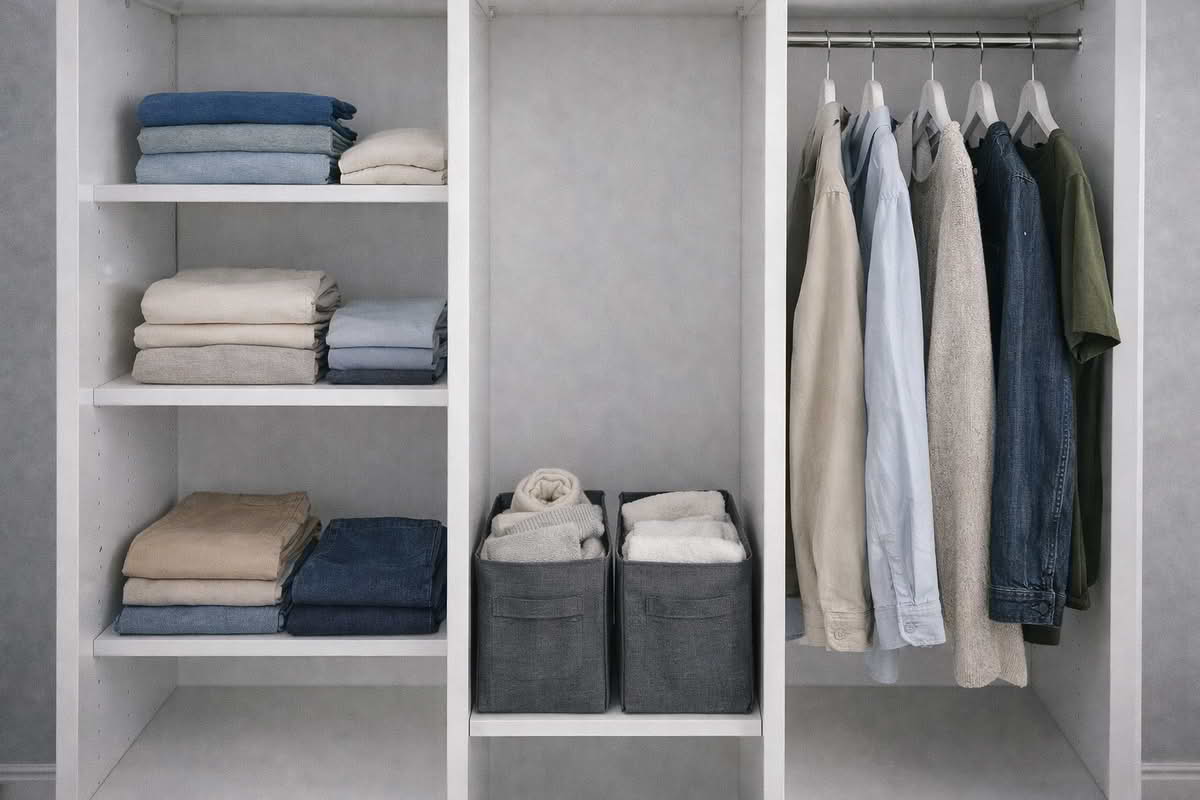
Once the clothing categories are clear, the next question is which storage formats actually support them. Folded-clothing storage often looks simple, but shelf stacks are one of the easiest systems to overload. Neat folded piles can work well when categories are limited and the shelf depth is reasonable. But once the stacks get too tall or too numerous, visibility drops and the pile begins to collapse into a slow-moving clothing avalanche. This is why open shelves usually perform better when paired with dividers, bins, or a limited number of repeatable categories instead of being treated as blank horizontal surfaces for unlimited stacking.
Shelf-based organizers are useful when they create better control, especially for sweaters, denim, activewear, handbags, or accessories that do not need to hang. But shelf storage should be evaluated honestly. Buyers sometimes build systems that shift too many clothing categories into folded storage without asking whether they are actually willing to maintain that much folding discipline. A solution that looks organized but requires more labor every laundry day is often not a lasting solution. It is just a temporary improvement before the piles return.
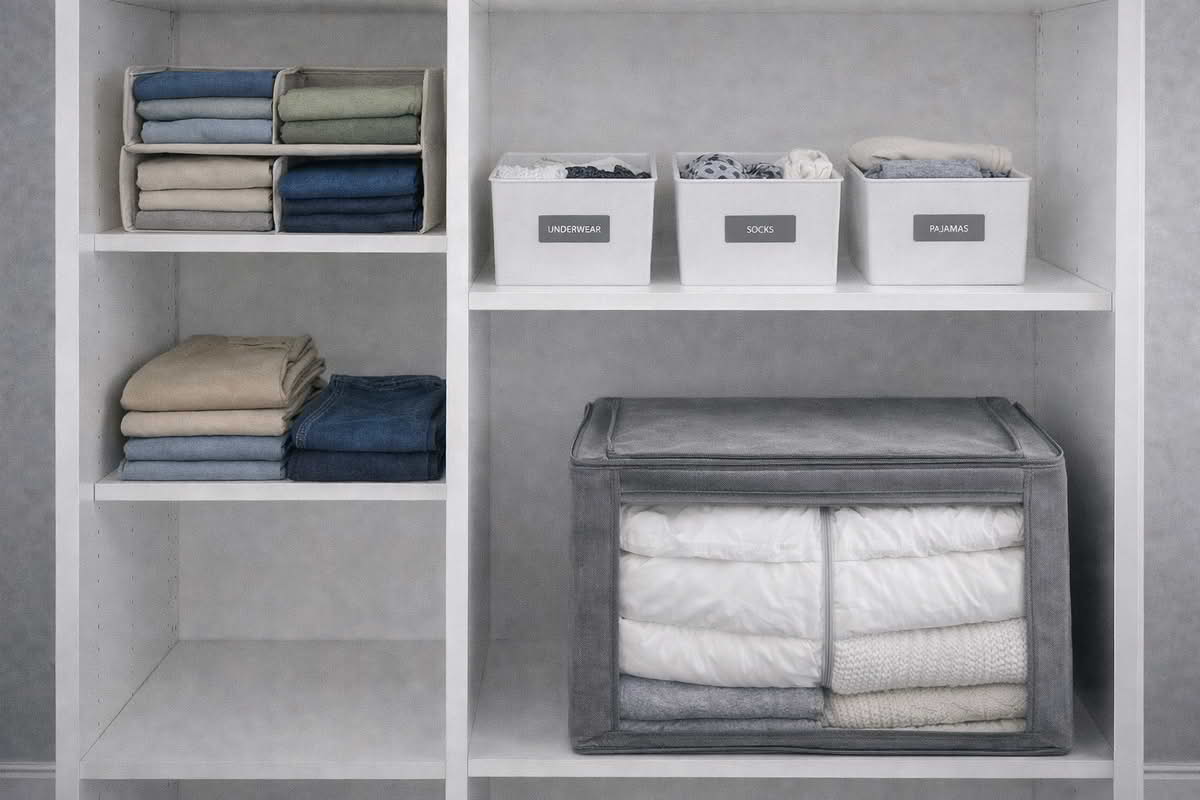
Containers and bins solve a different problem. They are often best for seasonal storage, grouped specialty categories, or softer clothing items that can be contained without needing perfect visual display. Sweater bins, fabric clothing organizers, and stackable clothes containers can all work well when they preserve category boundaries and make it easy to move clothing in and out during transitions. The problem comes when bins become too deep, too opaque, or too numerous. Then the system starts to hide clothing rather than organize it.
Choose shelf storage when clothing categories are stable enough to stay tidy without constant restacking.
Choose bins or contained organizers when category separation matters more than instant visual display.
Choose storage depths that keep clothing visible and retrievable instead of burying items in compressed layers.
Seasonal rotation deserves its own logic because it is one of the main reasons clothes storage gets out of control. Many households keep warm-weather and cold-weather wardrobes mixed together all year, which forces prime closet and drawer space to carry too many categories at once. A better approach is to decide which items truly deserve immediate access this season and which can be stored more protectively elsewhere. Seasonal garment storage works best when it is clearly labeled, reasonably easy to access, and sized around consistent clothing groups rather than one oversized catch-all container.
Soft-sided clothing storage can work well for seasonal items when the garments are compressible and the storage area is relatively clean and dry. Hard-sided bins make more sense when dust protection, stacking, or room-to-room movement matter more. Neither is universally better. The right choice depends on whether the clothes need shape retention, how often the container will move, and where it will live. A closet shelf, under-bed zone, top wardrobe space, or basement shelf all create different demands.
Stackable clothing organizers are appealing because they promise more vertical use of space, but they must be judged by access as much as by capacity. A stackable system that traps frequently worn items under other containers may technically hold more clothing while making the daily routine worse. The more often the category is used, the more important direct access becomes. In many cases, stackability is best reserved for slower-moving items rather than for the core daily wardrobe.
Different clothing categories usually need different storage formats. Shelves, bins, and seasonal containers each solve a different part of the clothes storage problem.
Visibility, Maintenance, and Long-Term Fit Matter More Than Maximum Capacity
Clothes storage often fails because it optimizes for how much can fit instead of how easy the system is to maintain. Buyers understandably want more capacity, especially in small closets and shared spaces, but dense storage is not automatically good storage. If clothing is hard to see, difficult to retrieve, or annoying to return, the system gradually trains people to stop using it properly. That is how tidy storage slowly turns back into floor piles, chair draping, and half-folded stacks.
Visibility is especially important for clothing because wardrobe decisions are repetitive. When items can be scanned easily, people are more likely to use the full category instead of wearing the few things on top. This is one reason shallow bins, clear-front organizers, shelf dividers, and open categories often outperform deeper storage solutions for frequently used clothing. The goal is not only to contain garments. It is to make them legible. Storage that hides too much tends to create duplicates, forgotten pieces, and uneven wardrobe use.
Maintenance matters just as much. Clothing storage should support realistic folding, sorting, and seasonal rotation habits. If an organizer requires perfect folding precision or very careful packing every time laundry is put away, it may not last in normal use. Systems that tolerate imperfection usually age better. For example, wider bins for grouped categories may outperform narrow stacks that collapse easily. Shelf zones with dividers may work better than free piles that spread sideways. Simple labels or repeated clothing categories may be more effective than overly specific subdivisions.
Choose storage that keeps high-use clothes easy to see and easy to return after laundry.
Choose systems that tolerate ordinary household habits rather than requiring near-perfect folding every week.
Choose more restrained capacity when it produces better visibility, simpler sorting, and lower daily friction.
Another long-term issue is storage drift. Clothes storage zones often start clearly defined and then slowly absorb nearby categories: a sweater bin becomes a scarf bin, then a workout-clothes bin, then a place for items that do not have a home. Good systems resist that drift by giving each container or shelf zone a believable job. This is one reason repeated organizer sizes and simple category logic are so useful. They make it easier to recognize when the system is still working and when it needs a seasonal reset.
It also helps to think about aesthetics in practical terms. Clothing storage is often partly visible, especially in open closets, bedrooms without large wardrobes, children's rooms, or small-space living. That means visual calm matters. Matching bins, coordinated labels, and repeated organizer shapes can make overflow clothing storage feel intentional rather than improvised. But appearance should still follow function. The best-looking system is not the one with the prettiest containers. It is the one that stays organized long enough to keep looking calm.
Long-term success usually comes from accepting that clothes storage is a living system rather than a one-time purchase. Clothing categories change with season, body size, lifestyle, work needs, and family growth. A good storage approach leaves some room for those changes without collapsing into disorder. When visibility, category control, and daily maintenance all work together, clothes storage becomes much less about finding more containers and much more about building a routine that the space can support.
Final Recommendations — Choosing Clothes Storage With Less Daily Friction
The right clothes storage is the system that matches how often garments are used, how they behave, and how much effort you can realistically give to maintaining order. Buyers usually get the best result when they separate everyday clothing from seasonal overflow and choose storage formats around those different access needs instead of trying to force the whole wardrobe into one solution.
Choose shelf and divider systems when folded clothing needs visibility and simple category separation rather than deep stacked piles.
Choose bins or contained organizers for seasonal garments, grouped specialty clothing, or softer categories that do not need daily visibility.
Choose stackable or underused-space solutions only for slower-moving clothes when direct daily access would otherwise become frustrating.
Choose consistent organizer sizes and repeatable category logic so the system remains easy to understand and reset over time.
A low-regret clothes storage decision should make clothing easier to find, easier to put away, and easier to rotate as seasons change. When category logic, visibility, and realistic maintenance all align, clothes storage stops being a cycle of collapsing piles and starts functioning as a system that actually supports daily life.