Keyless Entry Buying Guide for Practical Everyday Door Access
Keyless entry appeals to many households because it offers one very clear promise: less friction at the door. No more fishing through bags for keys, worrying whether a child forgot one, or deciding how to share access with a relative, cleaner, or dog walker. But keyless entry is easy to misunderstand. Some buyers assume they need a fully connected smart lock with every remote feature, while others choose a basic keypad model without thinking through door fit, code management, or how the lock will feel after months of everyday use. The best option usually sits somewhere in the middle. A good keyless lock should make entry simpler, not more fragile. This guide focuses on those practical tradeoffs so you can choose a lock style and access method that fit your door, your household routine, and the level of convenience you actually want to maintain over time.
Decide what kind of entry problem you are actually trying to solve
The most useful way to think about keyless entry is not as a smart-home status upgrade, but as a door-use decision. Before comparing keypad layouts, app controls, or lock finishes, it helps to ask what specific frustration you want to remove. For some households, it is mainly about convenience during daily comings and goings. For others, it is about giving children or relatives dependable access without handing out spare keys. In some homes, the goal is temporary access for short-term visitors or service providers. Each of those use cases points toward a slightly different kind of keyless lock.
This is where many buyers start too big. They imagine that every modern entry upgrade should be a fully connected smart lock with remote access, notifications, and integration with other devices. Sometimes that is the right direction. But many people really just want a durable keypad deadbolt or a code-based entry solution that works reliably at the door without turning access control into another app-centered project. Keyless entry does not have to mean maximum smart-home complexity. In many cases, the best choice is the one that removes keys from the routine while keeping everything else straightforward.
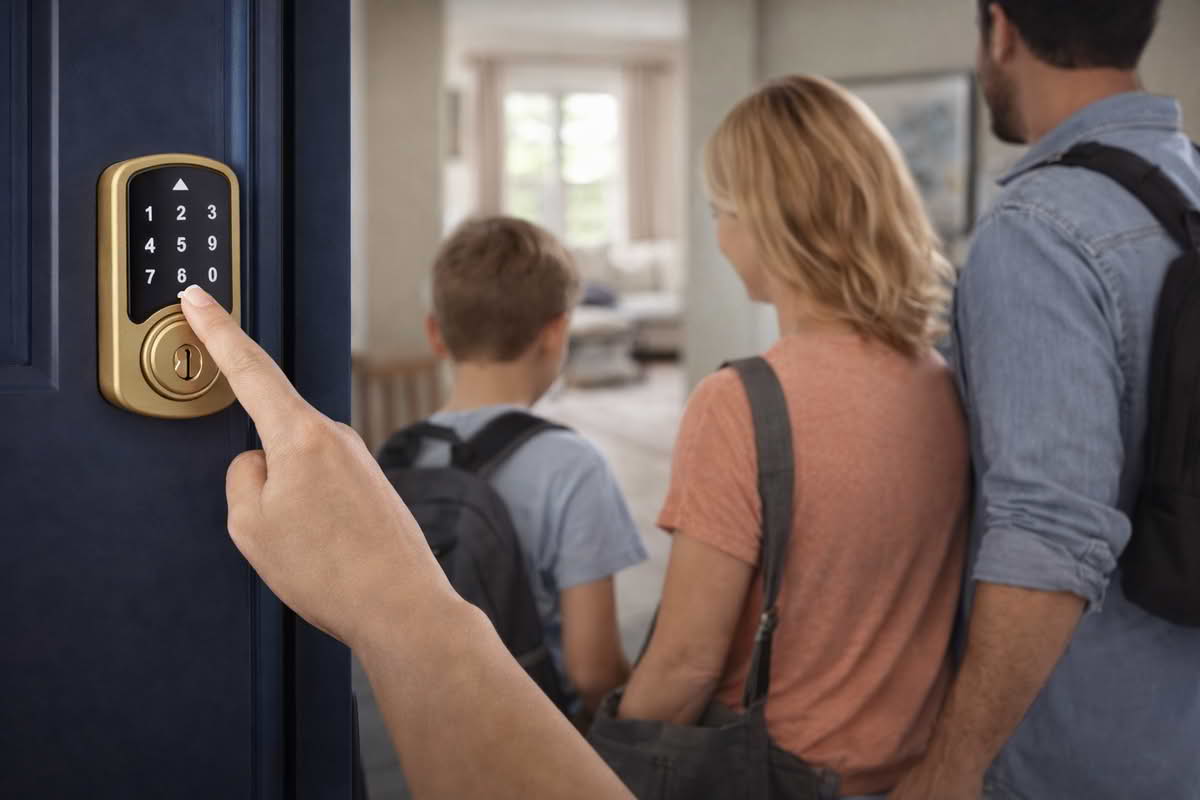
A front door used by several family members creates different needs from a side door used occasionally or a garage entry door used mostly for quick in-and-out trips. A family with school-age children may care most about simple code access that does not depend on phones. An older homeowner may care more about easy operation and a familiar physical feel. A renter may prioritize a reversible, low-drama upgrade that adds convenience without becoming a permanent systems project. These differences matter because keyless entry succeeds only when it matches the way the door is actually used.
Start with the reason you want keyless entry: convenience, shared access, temporary access, or reduced key dependence.
Do not assume every household needs a fully connected smart lock just to stop using keys daily.
Let the door’s traffic pattern shape the lock choice, not just the feature list.
Think about the least technical user in the household before choosing advanced app-heavy options.
Buyer psychology can create unnecessary upgrades in this category. Because entry hardware feels important, people often believe it is safer to buy the most feature-rich model they can afford. But more features do not automatically create a better door experience. They can just as easily introduce more settings, more battery dependence, and more household explanation. If all you really want is dependable code-based entry at the door, a simpler keyless setup may provide more daily value than a more ambitious system you barely use.
It also helps to be honest about what you are not trying to do. If you do not care about remote unlocking, do not let that feature dominate the decision. If you are not planning to manage dozens of temporary codes, do not overpay for a lock built around heavy user administration. If you mainly want a better way to get inside after a walk, school run, or grocery trip, your priorities should lean toward ease at the door rather than broad ecosystem integration. Clarity about the real problem usually leads to a cleaner, lower-regret purchase.
Keyless entry works best when it solves a clear everyday door-use problem, such as shared access or lower-friction entry, instead of trying to be every kind of smart lock at once.
Another practical distinction is whether you want convenience at a primary entry or flexibility at a secondary one. Main entries often benefit from calm, obvious, highly repeatable interaction. Side doors, garage entries, or office access doors may allow a little more experimentation. That does not mean standards should be lower, only that the door’s role influences what kind of compromise is acceptable. The more central the door is to household life, the more valuable it is to choose simplicity over novelty.
The safest starting mindset is narrow and specific: define the entry problem first, then buy only as much lock as that problem actually requires. That approach usually produces a better experience than treating keyless entry as a category where the “most advanced” option must automatically be best.
Match the lock type to the door, the traffic pattern, and the people using it
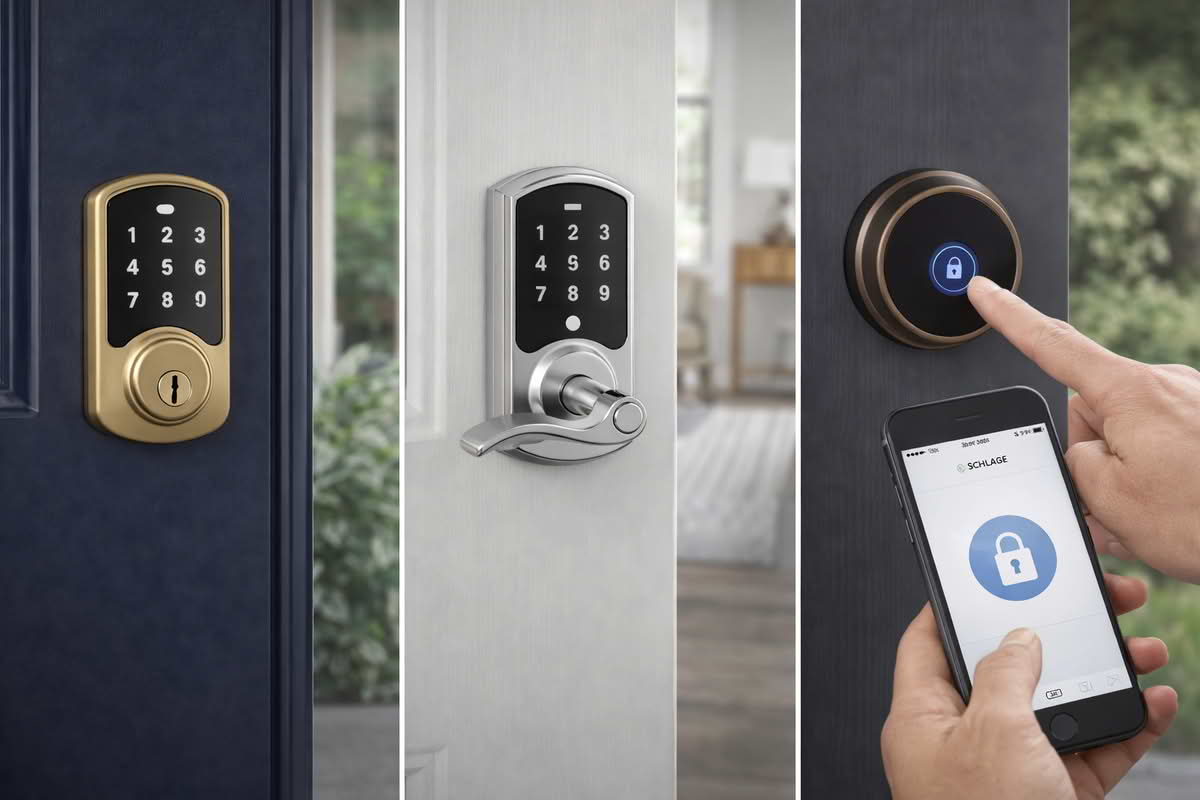
Once your entry goal is clear, the next step is choosing the kind of keyless lock that fits the door physically and behaviorally. The main categories usually include keypad deadbolts, lever-style keyless locks, and more feature-rich app-enabled entry locks. Some are best suited to a main front door. Others make more sense on interior garage-entry doors, side entrances, offices, or lower-stakes access points. Picking the wrong style can make even a well-reviewed product feel awkward in daily life.
Keypad deadbolts are often the most practical starting point for homes that want dependable code-based entry without too much extra complexity. They are familiar in function, usually straightforward to explain to guests or family members, and fit the mental model most people already have for a secure primary door. Their strength is clarity. You lock the door, use a code to get in, and keep the access method simple. For many households, that covers most of the real benefit of keyless entry.
Lever-style keyless locks serve a different purpose. They can be convenient on doors where a latch-style entry makes more sense than a deadbolt-only setup, such as utility rooms, office doors, mudrooms, or some side-access locations. But buyers should be careful not to treat them as automatically interchangeable with deadbolt-based main-entry security. The right use depends heavily on what the door is, how often it is used, and whether it needs the security posture of a deadbolt or simply the convenience of code-based access.
Basic app-enabled entry options occupy a middle ground that can make sense for households wanting a little more flexibility without going all the way into high-end smart lock behavior. These can be useful when remote code changes, occasional access sharing, or status awareness matters, but the household still wants the core experience to remain mostly code-based at the door. The risk is that buyers can end up paying for software features they rarely use while adding more maintenance expectations than they really wanted.
Use keypad deadbolts when you want the clearest, most familiar type of keyless entry at a main door.
Use lever-style keyless locks where latch access is more appropriate than full deadbolt replacement.
Choose basic app-enabled locks only when remote access control or flexible code management adds real value.
Match the lock category to the door’s actual role rather than assuming one style fits every entry equally well.
Door condition matters here just as much as lock category. A keyless lock still depends on good alignment, smooth latch or bolt travel, and a door that closes predictably. A lock with electronic or motorized functions will not magically solve a sticking frame, a warped door, or hardware that already requires force. In fact, those problems often become more irritating once technology is involved because the entry routine now includes both mechanical resistance and digital expectations. A well-fitted door is still the foundation of a satisfying keyless entry setup.
Household traffic also shapes the choice. A door used constantly by several adults, children, or visitors benefits from very predictable interaction. That usually favors clearer interfaces and less feature clutter. A lower-traffic door may tolerate a lock that requires a little more setup or occasional management. The more often the door is used, the more important it is that the keypad, handle, or latch feels physically obvious and forgiving. Repeated small annoyances at the door become bigger than they seem on paper.
The best keyless entry hardware depends on the door’s role, the traffic it sees, and whether the household needs simple code access or a more flexible connected system.
There is also a subtle difference between a lock that looks easy to use and one that actually is. Some designs present a clean modern face but ask the user to learn unusual button behavior, sequence timing, or lock states that do not feel natural when arriving home with full hands. Keyless entry hardware should be judged during imagined real-life moments, not just by its appearance on a product page. Picture using it in the dark, in a hurry, or while managing children, bags, or poor weather. That test often reveals whether the lock design is truly practical.
The best category fit is usually the one that makes the door feel simpler without changing how people think about using it. When the hardware, door, and traffic pattern align, keyless entry feels obvious. When they do not, the door starts to feel like a device instead of an entrance.
Think through code management, battery upkeep, and long-term daily use
Keyless entry often wins buyers over with convenience in the first week, but long-term satisfaction depends on much quieter issues. The biggest are code management, power management, and the lock’s behavior during ordinary life. If these are handled well, the lock feels calm and trustworthy. If not, the household begins to treat it as something that occasionally creates extra mental load around the door.
Code management is one of the most underestimated parts of ownership. A simple household code may be enough for many homes, especially if the lock is being used mainly to avoid carrying keys. But households that want to share access temporarily need a system that makes that sharing feel clean. It should be easy to add, remove, or change codes without confusion. If the lock turns code management into a chore, one of the core benefits of keyless entry starts to disappear. This is especially true for cleaners, pet sitters, relatives, or short-term access situations where flexibility matters only if it stays simple.
Battery upkeep deserves equal realism. Many keyless locks work for long stretches before needing attention, but battery changes are part of ownership, not an edge case. The more important question is whether the lock gives clear warning, behaves predictably as power gets low, and preserves a sensible backup plan. Buyers should not think only about how often batteries may need replacing. They should also think about how stressful it would be if the lock signaled low power in the middle of a busy week. Good ownership experience depends on making that maintenance cycle quiet and unsurprising.
Choose a keyless system that makes code changes and temporary access easy to understand.
Expect batteries to be routine maintenance, not an occasional exception.
Look for a lock with clear low-power warnings and a believable backup access path.
Judge the lock by how it will feel on an ordinary rushed day, not just during setup.
Backup access matters more than many people want to admit. Even buyers who are eager to go keyless often feel more comfortable knowing there is still a straightforward fallback. That could mean a traditional key override, a reliable emergency power method, or another predictable household plan. The point is not that you will use the backup often. It is that trust at the door is easier to maintain when the failure mode is calm and obvious rather than theoretical.
Daily use reveals another important truth: a good keyless entry lock should not ask for attention every time you touch it. The keypad should be readable. The response should feel prompt. The lock and unlock states should be easy to understand. If the device requires second-guessing, repeated input, or too much reliance on status lights and app confirmation, it stops feeling like a convenience upgrade. This is why simpler code-based locks often outperform more ambitious ones in real household satisfaction. Entry is a repeated action, and repeated actions reward clarity.
App-enabled features can still be helpful here, but only when they support the entry routine rather than dominate it. Remote status checks, basic access logs, or code changes can provide real value. But if the app becomes central to everyday use, the lock may feel more demanding than the household wanted. Keyless entry is strongest when the main experience happens at the door with minimal thought, while digital tools stay in the background for occasional management.
Long-term ownership also includes physical wear and environmental exposure. Front doors see weather, handling, repeated use, and seasonal changes. Garage-entry doors may see dust, temperature swings, and frequent short trips. A lock that seems fine in a static showroom context may feel different after repeated contact in real household conditions. This is another reason to prioritize calm durable function over novelty. The more central the door is to everyday life, the more important it is that the lock feels steady and obvious rather than merely modern.
The lowest-regret buying mindset is to treat keyless entry as household infrastructure rather than consumer tech. Ask whether the codes are manageable, the power routine is easy, the backup plan is real, and the lock still feels natural after the novelty disappears. Those are the decisions that shape whether the door becomes easier to live with over time.
Final Recommendations — choosing keyless entry that adds convenience without extra friction
The right keyless entry lock is usually the one that matches the door’s real job and keeps everyday access simple. Start by deciding whether you want straightforward code-based convenience or a slightly more connected entry tool, then choose the lock style that fits the door and the people using it. That usually leads to better results than buying the most feature-rich model by default.
Choose keypad deadbolts when you want the clearest and most practical form of keyless entry for a main door.
Choose lever-style keyless locks when latch-based convenience fits the door better than full deadbolt replacement.
Choose basic app-enabled entry locks only when remote code management or light status awareness will actually be used.
Prioritize readable input, simple code management, battery clarity, and dependable backup access over feature-heavy complexity.
In the long run, the best keyless entry setup is the one that makes the door feel easier without making it feel more technical. A calm, predictable, low-maintenance lock will usually provide more lasting value than a more advanced-looking option that adds complexity at one of the home’s most frequently used touchpoints.