Video Doorbell and Entry Monitoring Buying Guide for Practical Front Door Awareness
Front-door monitoring sounds simple until you live with it. Many buyers imagine a video doorbell mainly as a way to see who rang, but everyday usefulness depends on much more than that. A strong setup should help you understand package deliveries, unexpected visitors, missed knocks, and simple questions like whether the door area is calm when no one is home. A weak one tends to produce delayed alerts, bad angles, partial porch coverage, and a steady stream of notifications that are technically accurate but practically unhelpful. Entry monitoring works best when it is treated as part of household access control, not just as a camera mounted near the door. This guide focuses on those practical tradeoffs so you can choose a setup that fits your entry layout, your power options, and the amount of front-door awareness you actually want without making the most used part of the house feel more complicated.
Start with entry layout, approach paths, and what you need to see clearly
The first decision in entry monitoring is not whether you want a wired or battery doorbell. It is whether the camera can see the part of the entry experience that actually matters to you. Some households mainly want clear visitor identification. Others care just as much about package placement, porch activity, or knowing whether someone approached the door without ever pressing the button. Those goals sound similar, but they create different expectations for framing and performance.
Front doors are surprisingly varied. A flush suburban entry with a short porch is a different environment from a recessed apartment doorway, a narrow townhouse landing, or a house with deep overhangs, columns, stairs, and side walls. A video doorbell that performs well on one style of entry may produce awkward blind spots on another. This is why general claims about wide field of view or full porch coverage can be misleading. Real usefulness comes from how the camera sits relative to the walkway, the threshold, and the area where packages are actually left.
Approach path matters especially in this category. Some people want to see the moment a visitor appears at the edge of the walkway. Others are satisfied if the camera shows the person clearly once they reach the door. Those are different expectations. If the path to the door includes stairs, a gate, or a turn from the driveway, you may need to think of entry monitoring as a small zone rather than a single point. In some homes, that means the best front-entry awareness comes from a video doorbell supported by another outdoor camera rather than by the doorbell alone.
Check how porch walls, columns, storm doors, and stairs affect the camera’s natural angle.
Think about where motion begins, not just what happens at the threshold.
Do not assume one doorbell can monitor the entire front entry equally well in every home layout.
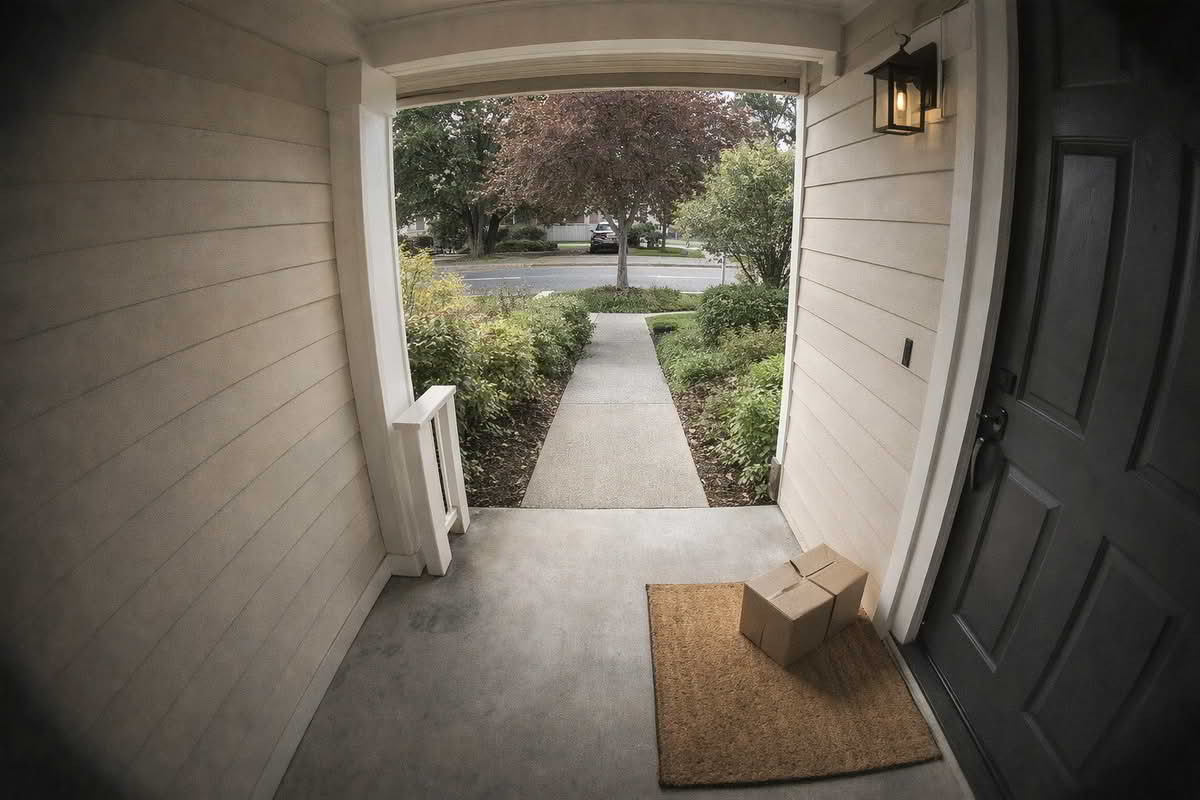
Package visibility has become one of the most important real-world use cases, yet it is also one of the easiest to overestimate. A doorbell may give an excellent view of faces at standing height while still providing only a partial view of the porch floor. If the delivery area sits low, off to one side, or behind a railing, the product category matters less than the geometry of the entry. Some buyers discover too late that they have bought a “visitor camera” when what they really wanted was better package awareness.
Apartment-friendly entry monitoring creates another layer of tradeoffs. In shared hallways or multi-unit buildings, a doorbell may naturally capture more surrounding space than a detached-house buyer would expect. That can make motion tuning, viewing angles, and privacy boundaries more important. In those environments, the best entry-monitoring device is usually the one that stays focused on your doorway and approach area without turning ordinary hallway traffic into constant low-value noise.
Entry monitoring works best when the camera can capture both the threshold and the part of the approach or porch activity that matters most to your household.
Lighting deserves just as much attention as layout. A covered porch with a light fixture behaves differently from a dark apartment hall or an exposed front step with strong afternoon sun. If the entry regularly shifts between shade and bright background light, image quality may depend more on placement and exposure handling than on headline resolution. Buyers often overemphasize image sharpness and underemphasize how often the camera will be looking into glare, shadows, or mixed lighting conditions.
The safest mindset is to ask a simple practical question: when an event happens at the front door, what do I most want to understand quickly? The answer might be who arrived, whether a package was delivered, whether someone lingered, or whether a family member came home. Once that is clear, you can evaluate the doorbell or entry camera as a tool for decision-making rather than as a generic smart-home accessory.
Match power, installation style, and package coverage to the front door you actually have
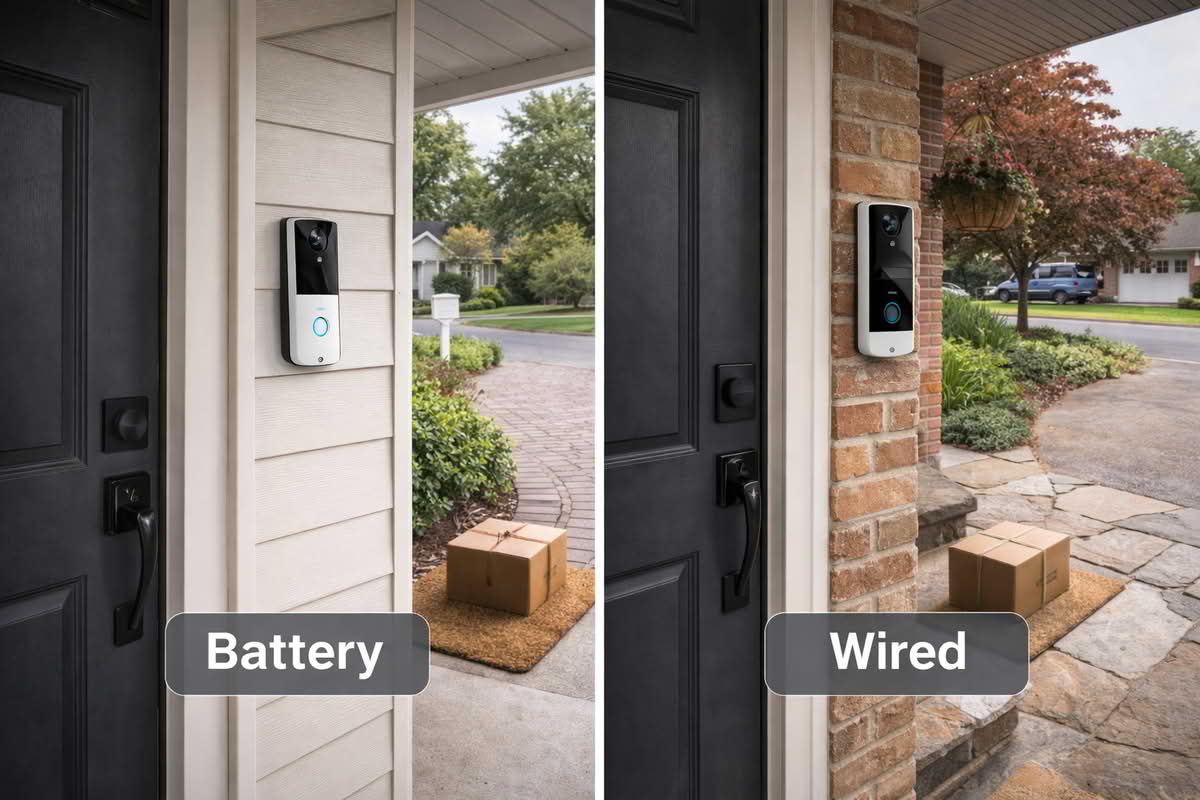
After coverage goals are clear, power and installation become the next major decision. Battery doorbells appeal because they reduce installation friction and can fit entries where existing wiring is absent, unreliable, or not worth modifying. That flexibility makes them especially attractive for renters, apartment dwellers, or anyone testing entry monitoring for the first time. But convenience during installation should not be confused with convenience during ownership.
A busy front door is one of the most demanding camera locations around the home. Delivery activity, family comings and goings, neighbors passing, and routine entry traffic all increase event volume. That can make a battery-powered device feel more maintenance-heavy than expected. A front entry with moderate activity may be perfectly well served by battery power. A very active entry can make charging intervals and power management feel less attractive over time. The issue is not whether battery units are good or bad. It is whether the front door creates enough traffic that permanent power would reduce friction meaningfully.
Wired doorbells usually make more sense when the entry is central to household life and you want the least possible maintenance burden. Permanent power can help the device feel more like part of the entry itself rather than a camera that occasionally needs service. That matters because front-entry monitoring is most valuable when it becomes routine and dependable. If a device is installed in the most visible, most used part of the home, repeated charging or occasional downtime becomes more noticeable than it would with a less central outdoor camera.
Installation style also influences what kind of porch visibility you get. Some entries naturally position a doorbell too close to the wall or too far from the delivery area. Angle wedges, spacers, and careful mounting height can matter more than many buyers expect. A good doorbell on a poor mounting angle can still produce a low-value view. This is especially common on narrow door trim, brick, or unusual doorframe layouts where the device cannot simply sit flat in the ideal location.
Choose battery doorbells when installation flexibility matters most and front-door traffic is relatively manageable.
Choose wired doorbells when the entry is busy and long-term low-maintenance operation matters more.
Pay close attention to mounting angle and height if package visibility is part of the goal.
Assume the physical placement of the camera will matter as much as the product category itself.
Package-focused buyers should be especially realistic here. Some entries simply do not place packages where a doorbell can see them clearly. A recessed porch, side drop zone, or low step can all create coverage problems. In those situations, it may be better to think in terms of “entry monitoring” rather than “doorbell monitoring.” That could mean supplementing the doorbell with another camera or choosing a broader front-porch monitoring approach if deliveries are the most important use case.
Power decisions also connect to response speed. At the front door, delays matter more than they do in many other camera placements because interactions are short. A visitor may wait briefly and leave. A delivery driver may appear and disappear in seconds. A good entry-monitoring setup should help you understand that activity without feeling consistently late to its own events. This is one reason buyers should judge the front entry as a high-friction location for weak performance. Anything that adds lag or maintenance is felt more strongly there.
Wi-Fi conditions deserve attention too. Front doors often sit at the edge of the home’s network coverage, behind thick walls, metal doors, brick, stone, or structural elements that complicate signal strength. A doorbell can appear easy to install and still perform inconsistently if the actual mounting spot has weak connectivity. That problem is especially frustrating because it can look like camera unreliability when the deeper issue is simply poor signal at the exact place the device must live.
Front-door performance depends heavily on power choice, mounting angle, and whether the camera can actually see the visitor and package zones you care about.
The best installation decision is usually the one that matches the actual front entry rather than the idealized one in product marketing. If the entry is busy, exposed, and important, invest in the most stable and maintainable approach. If it is lighter-use, constrained by rental rules, or simply difficult to wire, a battery-first route may still be entirely sensible. The key is to choose based on the entry’s behavior, not just on what seems easier during purchase.
Choose alert behavior and app usability that support real household entry routines
Entry monitoring is often sold through features like person detection, package alerts, two-way talk, activity zones, and remote viewing. These can all matter, but the daily experience is usually defined by something simpler: whether the device gives believable useful alerts at the times when the household actually needs them. A front door naturally produces a lot of non-urgent motion. If the monitoring system cannot separate meaningful events from routine background activity, it gradually trains the household to ignore it.
This is why motion tuning matters so much. Good activity zones, reasonable sensitivity controls, and useful event categories help the doorbell fit the property. A suburban front porch with sidewalk traffic needs different tuning from an apartment landing or a quiet side entry. The better the monitoring system can match the layout, the more likely the alerts will stay trusted. A constant stream of notices about harmless movement is one of the fastest ways an entry-monitoring setup stops feeling valuable.
App quality is equally important because the app becomes the real interface to the device. You will use it far more than the physical doorbell button. A strong app should make live view quick, clip review easy, and household sharing understandable. This matters particularly in entry-control scenarios because front-door events often require fast interpretation. You want to know whether someone arrived, whether a package is there, or whether the door area is clear. If the app slows that down with clutter, lag, or confusing event organization, the hardware’s theoretical features matter less.
Two-way talk can be useful, but it should be framed realistically. It is helpful for brief interactions with visitors or delivery drivers, especially when you are away. But it is rarely the main reason an entry-monitoring device succeeds. Better daily value usually comes from clear event review, dependable alerts, and a camera angle that answers the right front-door questions in the first place.
Prioritize alert accuracy and motion tuning over the sheer number of smart features offered.
Choose entry monitoring that helps you review events quickly without app clutter or confusion.
Use two-way talk as a support feature, not as the main reason to choose a device.
Make sure the system fits the household’s actual entry routine rather than just the installer’s preferences.
Privacy should be treated thoughtfully as well. A front-door monitor may capture public-facing space, neighbors, a shared hallway, or portions of a street depending on placement. The most practical approach is to monitor your entry purposefully and avoid a setup that creates broad irrelevant visibility. This is not only a comfort issue. Excess coverage often makes alerts worse because the device is watching too much unrelated motion.
Entry monitoring also overlaps with the broader access-control rhythm of the household. If you are already using a smart lock, keypad access, or temporary codes for guests and service providers, it helps when the camera or doorbell fits that routine rather than standing apart from it. The strongest front-entry systems usually feel coordinated. Someone arrives, the household can see the event, and access decisions feel informed without requiring several separate habits or too much app-switching.
Long-term ownership is about calm repetition. Can the device stay charged or powered without becoming a chore? Can it keep notifications meaningful? Can other adults in the house understand it easily? Can the entry still feel like an ordinary front door instead of a constant source of digital interruptions? Those questions matter more than a dramatic feature list because the front door is one of the house’s most repeated daily touchpoints.
The best buying mindset is modest and specific: choose entry monitoring that helps you understand real front-door events quickly, keeps alerts believable, and fits naturally into how your household already manages entry. The more the system depends on constant tuning or feature exploration, the less likely it is to remain valuable after the initial excitement fades.
Final Recommendations — choosing entry monitoring that actually improves the front door
The right video doorbell or entry-monitoring setup is usually the one that matches your front-door layout, your package and visitor priorities, and your tolerance for maintenance. Start with what you need to see clearly, then choose the power and mounting approach that keeps the device dependable in that specific entry environment.
Choose doorbell-focused monitoring when your main goal is clear visitor awareness at the threshold.
Choose broader entry-monitoring support when package coverage or porch activity matters as much as the button press itself.
Choose battery models when flexibility and renter-friendly installation matter most, and wired models when the entry is busier and more central to daily life.
Prioritize believable alerts, quick clip review, and practical front-door coverage over feature-heavy setups that add noise without clarity.
In the long run, the lowest-regret entry-monitoring system is the one that quietly answers the everyday questions your household actually has. It should help you see the front door clearly, manage visitors and deliveries with less uncertainty, and fit into normal entry routines without turning the porch into another source of technical friction.