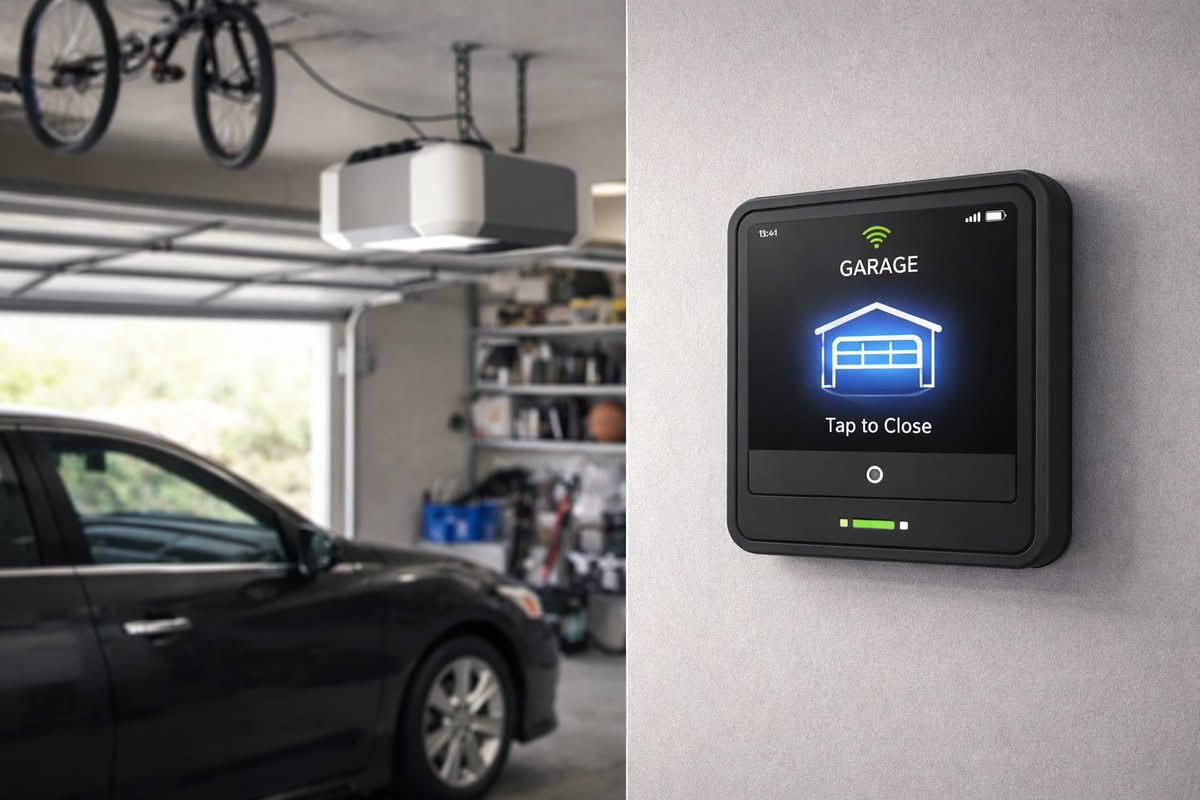
Garage Door Smart Control Buying Guide for Practical Everyday Access and Monitoring
Garage door smart control sounds like a straightforward upgrade, but the real value depends on how the garage fits into everyday household movement. For some homes, the garage is the main family entrance. For others, it is occasional access for parking, storage, deliveries, or workshop use. That difference matters because a good smart controller should do more than open the door from a phone. It should reduce uncertainty, make entry routines easier, and add useful awareness without turning a basic access point into another source of technical friction. Many buyers focus first on remote opening and closing, but the more important questions usually come later: whether the controller works cleanly with the existing opener, whether alerts stay meaningful, whether multiple household members can use it easily, and whether the system still feels dependable when you are rushed, away from home, or trying to check if the door was left open. This guide focuses on those practical tradeoffs so you can choose a garage smart control setup that fits the opener you already have and the way your household actually uses the garage.
Start with how the garage is used and whether your opener is a good fit for smart control
The first question in this category is not whether you want app control. It is what role the garage plays in your home. In many houses, the garage door is effectively the main family entrance, used several times a day for leaving, arriving, school pickups, and quick errands. In other homes, it functions more like a secondary access point, opened less often and used mainly for parking, storage retrieval, or workshop access. That difference matters because the more central the garage is to daily life, the higher the standard should be for smart control. A lightly used garage can tolerate a little extra setup complexity. A heavily used one needs calm, predictable operation.
Compatibility with the existing garage door opener is the next major filter. Smart control works best when the underlying opener is already dependable, the door moves smoothly, and the existing safety systems behave as they should. Buyers sometimes treat a smart controller as a general garage upgrade when it is really a layer added to the opener’s existing behavior. If the opener is inconsistent, the sensors are fussy, or the door balance is poor, remote access will not solve those problems. In fact, it may just make them more visible and more frustrating.
This is why retrofit controllers can be very appealing. They often allow homeowners to add smart functions without replacing the whole opener system. For many households, that is the most practical path because it improves access and visibility while preserving hardware that already works well. But retrofit convenience should not be confused with universal compatibility. A controller still has to match the opener’s behavior and the physical setup in the garage. That makes a compatibility-first mindset much more useful than shopping by app screenshots or remote-opening claims.
Decide whether the garage is a primary daily entrance or a secondary access point.
Make sure the existing opener and door behavior are already dependable before adding smart control.
Think of smart garage control as an upgrade layer, not as a fix for underlying opener problems.
Use compatibility as the first buying filter, not as something to check after choosing features.
It also helps to think about what kind of reassurance you want from the system. Some buyers mainly want the ability to close the door remotely if they forgot. Others want alerts when the door is left open too long. Some want a way to grant access to family members or service providers without handing over remotes. Others care most about visual confirmation through a garage camera or integrated monitoring. These are all valid use cases, but they do not all require the same product type. App-only controllers, broader camera-enabled systems, and more feature-heavy garage access platforms all solve slightly different problems.
Home layout matters too. If the garage is attached and opens into the home through a frequently used interior door, smart control may feel like part of the main entry routine. If the garage is detached or used only occasionally, monitoring needs may be different. Likewise, if the garage stores tools, bikes, packages, or hobby equipment, visibility into whether the door is open or closed can matter more than a household that uses the space only for vehicle storage. The more you understand what the garage means in the larger life of the house, the easier it becomes to choose the right level of smart control.
Garage smart control works best when it is added to an opener and door system that already operate smoothly and predictably in everyday use.
A common mistake is buying a controller because the idea of “smart garage access” sounds useful without narrowing the actual need. That often leads to a setup that technically works but adds little daily value. A better approach is to ask specific questions. Do you forget to close the garage? Do you need a simpler way to let someone in? Do you want better awareness of whether the garage has been open for a long period? These are practical problems. Once one of them is clearly defined, the product category becomes easier to evaluate.
The safest starting point is to treat the garage as part of your home’s entry infrastructure. If the opener is a good foundation and the access problem is clear, smart control can be useful. If either of those pieces is weak, the upgrade is less likely to feel worthwhile.
Choose the right balance of remote access, alerts, and visual confirmation
Remote opening and closing is the feature that draws most buyers into this category, but it is rarely the whole story. A garage controller is most helpful when it reduces uncertainty around access, not just when it allows action from far away. That means remote control should be considered alongside alerts, status checks, and visual confirmation. The real question is not “Can I open my garage from my phone?” It is “What do I need to know about the garage, and when?”
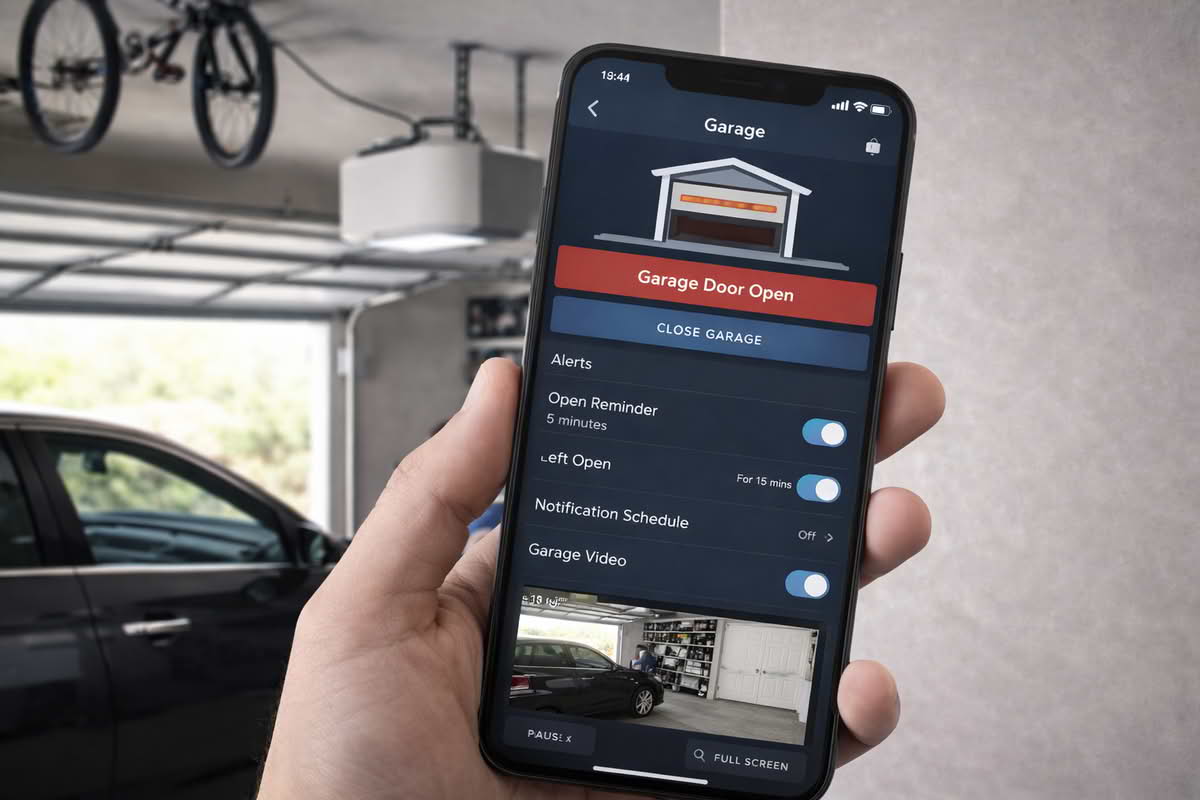
For many households, the single most useful feature is simply knowing whether the garage door is open or closed without walking out to check. This matters more than it sounds because uncertainty around a garage door tends to linger. Did someone leave it open after unloading the car? Was it closed after a delivery? Did the kids remember to shut it after grabbing bikes? A good smart controller turns that question into a quick answer. That answer often provides more daily value than remote opening itself.
Alerts can make this even more useful when they are restrained and purposeful. A notification that the door has been left open for a certain period can be genuinely helpful. So can an alert when the garage changes state during hours when no one should be home. But this is also where systems can become noisy. If every ordinary open-and-close cycle becomes another stream of low-value phone activity, the controller gradually trains the household to ignore it. That makes alert design and notification settings much more important than buyers sometimes expect.
Visual confirmation becomes more relevant when the garage is used for deliveries, storage, workshop activity, or any scenario where the state of the door is not the only important information. A camera-enabled garage system can help you see whether the space is clear, whether someone entered, or whether the door area is obstructed. That can be valuable, but it should be chosen for a reason. If you mainly want basic door control and open-or-closed awareness, a camera may add more cost and more decision-making than the household actually needs.
Choose basic smart control when open-or-closed awareness and remote closing solve the main problem.
Choose richer alerting only when it helps you notice meaningful exceptions rather than routine activity.
Choose camera-enabled systems when visual confirmation adds real value beyond door state alone.
Remember that the most useful garage notifications are usually the ones that answer a specific household question.
Shared access is another area where smart control can be helpful, especially for families with multiple drivers, older children, occasional visitors, or service providers who need legitimate access to the garage. A cleaner digital access method can feel more manageable than handing around spare remotes. But as with other entry categories, shared access is only helpful when it stays easy to understand. If adding, removing, or confirming access becomes complicated, the benefit shrinks quickly.
It is also important to think about timing. Garage interactions are often fast. Someone pulls into the driveway, leaves for work, or steps into the garage to grab a tool. Delays that would seem tolerable in another smart-home category can feel surprisingly irritating here. That means response reliability should matter more than feature depth. A garage controller that opens, closes, and reports status dependably usually provides more practical value than one with broader capabilities that feel slower or harder to trust.
The best garage control systems balance remote access with useful status awareness and alerts that stay believable instead of becoming background noise.
Buyers should also be realistic about how much of the garage they need to monitor. Some imagine a complete garage management dashboard when what they really need is a trustworthy answer to whether the door is shut. Others do want a more complete monitoring layer because the garage stores expensive tools, supports package deliveries, or serves as an important side entry. Neither approach is inherently better. The lower-regret choice is the one that matches the actual risk and use pattern of the space.
A good rule is to separate control from curiosity. If a feature helps you act confidently or reduces repeated worry, it may be worth paying for. If it mainly creates more things to check, review, or monitor without changing daily decisions, it may not add lasting value. Garage smart control works best when it clarifies access rather than turning the garage into a constant stream of household data.
Prioritize household routine, dependable operation, and low-maintenance ownership
The long-term success of a smart garage system depends less on setup and more on whether it fits the household’s routine without demanding too much attention. This is one of those categories where a product can be technically good and still not feel like a good fit. If the app is confusing, the alerts are too frequent, or the controller adds just enough delay to become annoying, the upgrade starts to feel optional rather than essential.
Shared use is especially important. A garage entrance is often used by more than one person, and those people may have very different tolerance for app-based control. The strongest systems work well for the primary user without making everyone else learn a fragile new routine. That means manual controls, remotes, vehicle-based habits, and app use should all feel reasonably consistent rather than in conflict. Smart control should add flexibility, not replace every familiar access method at once.
Reliability matters here in a very practical way. If a controller occasionally fails to report the right status, sends uncertain alerts, or requires too much reconnection after network changes, trust begins to erode. Once people stop believing the status screen or stop acting on the alerts, much of the reason for the purchase disappears. This is why the best garage controller is often not the most ambitious one. It is the one that gives stable, repeatable answers and behaves consistently in the background.
Choose a system that supports the household’s existing garage habits rather than trying to replace them all at once.
Value dependable status reporting and routine stability over excessive feature depth.
Make sure alerts remain meaningful enough that people will continue paying attention to them.
Think about every adult user, not just the person who enjoys setting up smart-home devices.
Maintenance is usually modest, but it still matters. Sensors may need occasional checking, app permissions may change, and household network updates can affect performance. None of this is unusual, yet it shapes whether the controller feels like a useful infrastructure upgrade or another device that periodically needs babysitting. The more central the garage is to daily movement, the more important it becomes that the smart layer stay quiet and predictable.
Buyers should also be careful not to let the garage become the place where every possible smart feature gets piled on. There is a temptation to bundle monitoring, camera coverage, delivery oversight, access sharing, and automation into one broad system because the garage feels like an important edge of the home. Sometimes that makes sense. But often the lower-regret choice is narrower: add only the functions that remove a real friction point. A garage controller that closes the door reliably, reports status clearly, and sends the right alert at the right time may provide more lasting value than a much more complex platform.
Another quiet advantage of a good system is peace of mind when away from home. Travel, long workdays, and ordinary errands are easier when the garage can be checked and corrected without second-guessing. But that benefit only holds if the system feels trustworthy. A controller that gives calm confidence is useful. One that creates doubt about whether the status is accurate or whether the remote action actually worked can increase mental load rather than reducing it.
The strongest buying mindset is simple: choose the least complicated system that fully solves your real garage access problem. For many homes, that means a solid universal retrofit controller with clear status and sensible alerts. For others, especially those using the garage as a more active monitored space, a camera-enabled system may make more sense. Either way, long-term value comes from reliability and routine fit, not from stacking features for their own sake.
Final Recommendations — choosing garage smart control that adds clarity without adding clutter
The right garage door smart control system is usually the one that fits your existing opener, answers the access questions your household actually has, and stays dependable in daily use. Start with compatibility and the real role the garage plays in your home, then choose the level of control and monitoring that matches that role without making the entry routine more complicated.
Choose universal retrofit controllers when you want practical remote access and status checks without replacing a working opener.
Choose camera-enabled garage systems when visual confirmation of the space adds meaningful value beyond open-or-closed status.
Choose simpler app-only control when the main goal is preventing forgotten open doors and making occasional remote action easier.
Prioritize dependable compatibility, believable alerts, and calm household usability over feature-heavy systems that create more monitoring than you need.
In the long run, the best garage smart control setup is the one that quietly removes uncertainty from one of the home’s most important access points. It should help the household know the door’s status, act confidently when needed, and fade into the background of everyday life instead of becoming another device that constantly asks for attention.