Smart Energy Monitoring Buying Guide for Practical Home Electricity Tracking
Smart energy monitoring attracts homeowners for an understandable reason: utility costs feel important, but household electricity use is often vague until a bill arrives. The appeal of monitoring is not just saving money. It is gaining enough visibility to understand what the home is actually doing, which devices run more than expected, and where small patterns may be adding up over time. The problem is that energy monitors are easy to buy with unrealistic expectations. Some buyers expect one device to explain every increase in power use instantly. Others buy detailed monitoring tools but never turn the data into decisions. The best purchase usually comes from choosing the right level of visibility for the question you want to answer. This guide focuses on those practical tradeoffs so you can choose an energy monitoring setup that fits your home, your appliances, and the amount of tracking you will actually use over the long term.
Start by deciding whether you need appliance-level insight or whole-home visibility
The most important buying decision in this category is the scope of the question you want to answer. Many people begin by saying they want to “monitor energy use,” but that phrase can mean very different things. Some households want to know whether one appliance is costing more than expected. Others want a broader view of how electricity use shifts across the whole house during the day. Some want help tracking seasonal heating and cooling demand. Others simply want clearer visibility into which devices quietly draw power all the time.
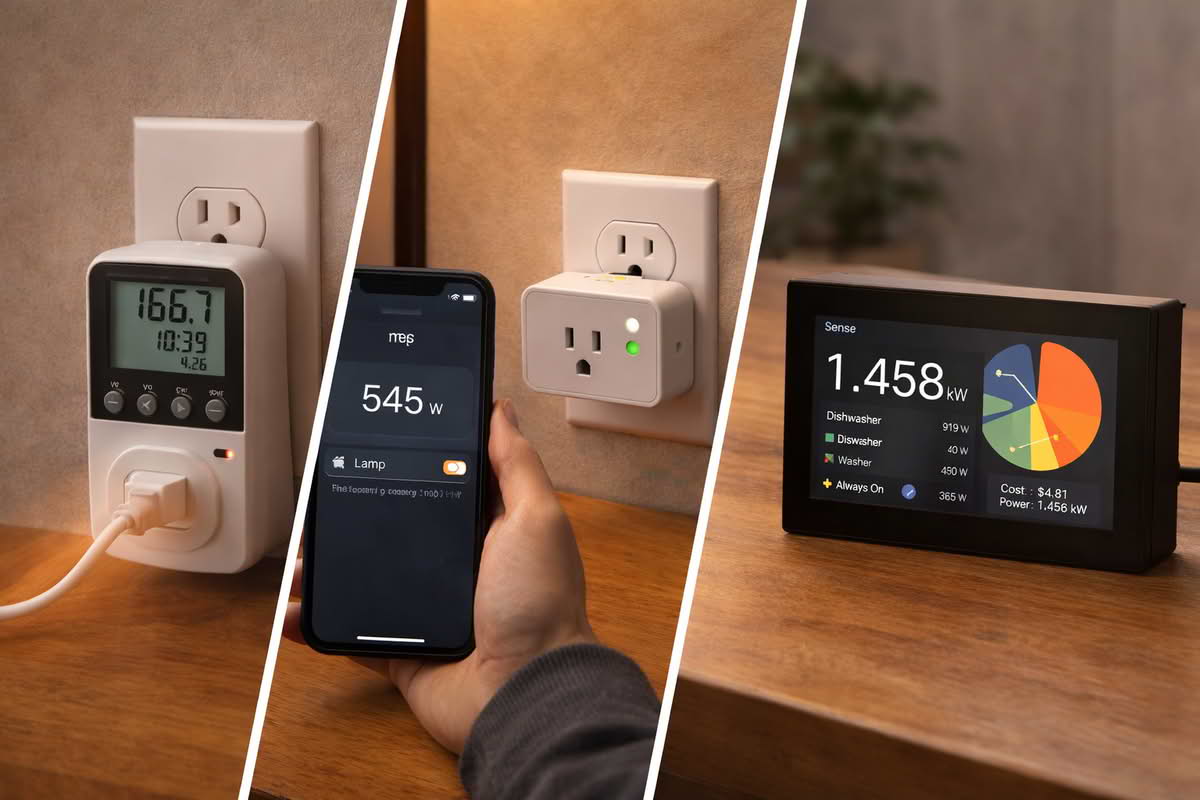
Those are different problems, and they point toward different tools. Plug-in energy monitors and smart plugs with energy tracking are usually best when the concern is narrow and specific. They help answer questions about one lamp, one freezer, one office setup, or one entertainment area. Whole-home monitors make more sense when the concern is broader: total household usage patterns, unexplained spikes, base load behavior, or understanding how large systems contribute to overall electricity demand. Buyers often get frustrated when they buy the wrong level of visibility for the problem they actually have.
This is also where expectations need to be grounded. A smart plug with energy monitoring is not meant to explain the entire electric bill. A whole-home monitor is not always the best first step if all you want to know is how much a dehumidifier or older refrigerator is drawing. The best results usually come from narrowing the problem first. Are you comparing one appliance against another? Trying to understand standby consumption? Looking for the devices responsible for a persistent usage floor? Or trying to understand daily household load more generally? Each question leads to a different kind of monitor.
Choose appliance-level monitoring when you want to understand the cost or behavior of a specific device.
Choose whole-home monitoring when the goal is understanding broader household power patterns.
Do not expect one product category to answer every energy question equally well.
Start with the decision you want to improve, not with the most advanced-looking dashboard.
A common buying mistake is assuming that more data automatically means more control. In practice, too much scope can make the first purchase less useful. A homeowner who mainly wants to know whether a chest freezer, window AC, or gaming setup uses more power than expected may benefit far more from a simple plug-in meter than from a complex system that tracks the whole electrical panel. Likewise, someone concerned that the entire home seems to use more electricity than expected may find appliance-level plugs too narrow and fragmented to explain the bigger pattern.
Another useful distinction is whether the concern is temporary investigation or ongoing visibility. Some buyers want a monitor mainly for diagnosis. They want to test a few appliances, confirm a suspicion, and move on. Others want a lasting system that helps them understand household usage month after month. Temporary investigation often favors simpler, targeted tools. Ongoing visibility favors systems that make broader trend tracking easy enough to stay useful beyond the first week of curiosity.
Smart energy monitoring works best when the tool matches the scale of the question, whether that means one appliance, one room, or the whole home.
It is also worth remembering that not every household energy concern is electrical in the same way. HVAC systems, electric water heating, plug-in devices, lighting, laundry, and kitchen appliances all influence total use differently. A whole-home monitor may help reveal when the load rises, but it may not always make the source obvious without some patient comparison. That does not make it unhelpful. It just means buyers should think of energy monitors as visibility tools, not automatic explanation machines.
The safest starting mindset is to buy for the narrowest scope that still answers the real question. That usually produces a clearer first win and makes it easier to expand later if you discover you want broader household visibility.
Match the monitor type to the devices, circuits, and patterns you actually want to track
Once the monitoring scope is clear, the next step is choosing the device type that matches the way electricity is used in the home. This is where the category becomes more practical. A monitor is only useful when it fits the appliances, circuits, or systems you actually care about. Buyers sometimes choose based on app polish or feature density before thinking through where the device will live and what kind of electrical behavior it can realistically observe.
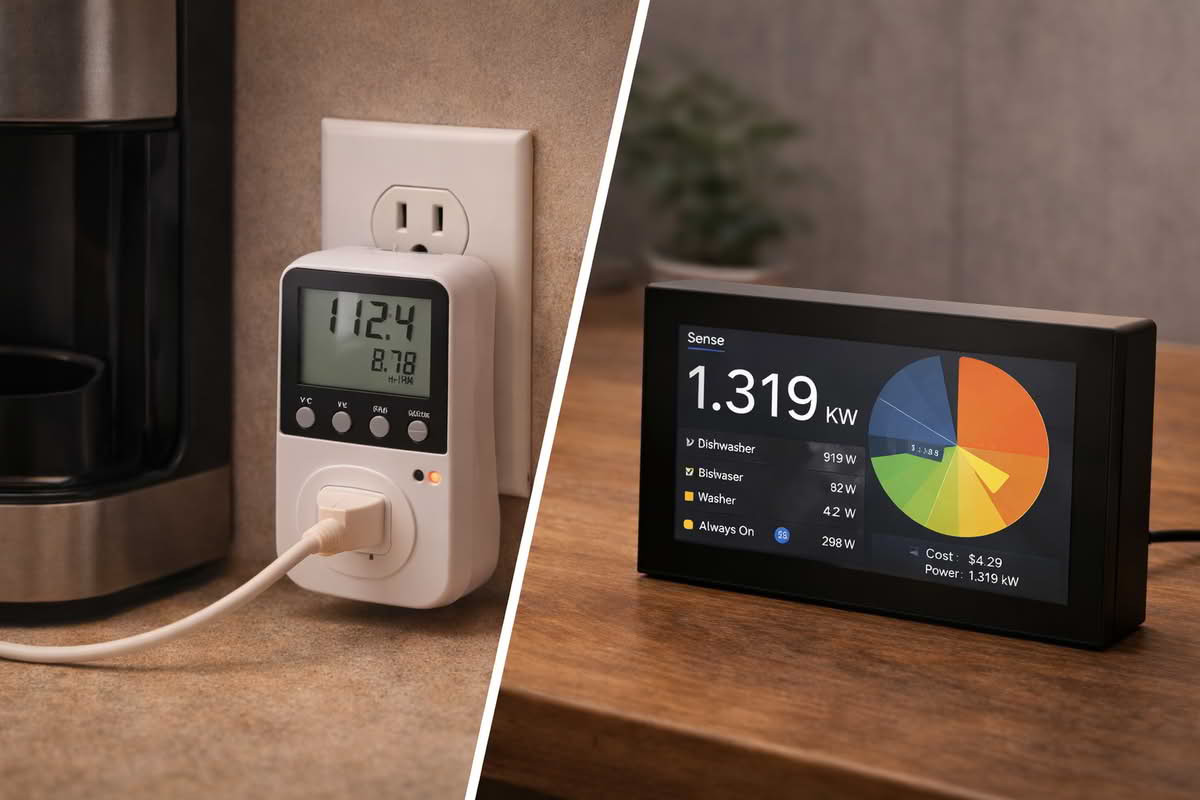
Plug-in energy monitors are often the simplest and most direct option when you want to test one item at a time. They are especially useful for home office setups, entertainment equipment, dehumidifiers, small appliances, chest freezers, and other plug-in devices whose usage is unclear. Their main strength is clarity. You connect one device, observe its consumption, and answer a focused question without building a broader system. For households just beginning to investigate electricity use, this kind of targeted clarity can be more valuable than a more ambitious setup.
Smart plugs with energy monitoring add another layer because they combine tracking with control. This can be helpful when you want not only to understand a device’s usage, but also to place it on a schedule or shut it off remotely. Lamps, fans, seasonal lighting, and certain electronics can all benefit from that combination. But buyers should be honest about whether they truly need both functions together. If the real goal is diagnosis rather than automation, a simpler monitoring tool may be more appropriate.
Whole-home monitors are different in both scope and mindset. They make sense when the household wants a living picture of overall electrical demand, base load behavior, or daily energy shape across the entire house. This can be particularly helpful for homeowners trying to understand how HVAC cycles, water heating, cooking, laundry, or large appliances contribute to total use. Their value comes less from pinpointing one gadget and more from revealing patterns that are hard to see on a monthly bill alone.
Use plug-in monitors when you want a quick clear answer about one device at a time.
Use smart plugs with energy tracking when automation and usage visibility both matter for the same appliance.
Use whole-home monitors when the concern is household load patterns rather than one single device.
Choose the monitor type based on what the device can actually see, not just on how advanced the app looks.
Placement and access matter too. Plug-based devices need to fit physically at the outlet and make sense in the room. A bulky monitor behind a heavy appliance or inside a crowded media center may be less convenient than expected. Whole-home systems require a different kind of consideration because they relate to the electrical panel and overall house configuration. In those cases, the practical decision is not only about data value but also about comfort with installation complexity and the longer-term role the monitor will play in the home.
This is one reason energy-monitoring purchases often work best in stages. A household may begin with one or two plug-in monitors to investigate suspected problem devices, then later decide whether a whole-home view is worth adding. That stepwise approach is often more useful than starting broad without knowing which patterns matter most. It lets the household learn what kind of information actually changes behavior instead of assuming the biggest system will automatically be the most helpful.
Energy monitoring becomes more useful when the tool is matched to the level of visibility you need, whether that is one appliance, one outlet, or the home as a whole.
Another common mistake is assuming that every device needs monitoring. In reality, the most useful tracking usually centers on uncertain loads, not obvious ones. A phone charger is rarely the mystery. A second refrigerator, window AC, network rack, dehumidifier, space heater, or entertainment area might be. Good monitoring strategy comes from identifying the devices or systems with unclear behavior rather than trying to instrument every plug in the house immediately.
It also helps to think about time patterns. Some loads are steady. Others are cyclical or seasonal. Heating and cooling demand may change dramatically across the year, while entertainment equipment may vary by time of day. A monitor is only as valuable as the pattern it reveals clearly. The better your sense of what kind of pattern you are looking for, the easier it becomes to choose the right device type and keep the data meaningful.
Judge energy monitors by usable trends and decisions, not by raw data volume alone
Once the device is installed and collecting information, the real question becomes whether the monitoring changes anything useful. This is where smart energy products either prove their value or drift into curiosity tools. A good monitor should help the household notice trends, compare usage meaningfully, and make better decisions about habits, appliance replacement, scheduling, or overall electricity awareness. A weak one may generate plenty of numbers without making them easy to interpret.
App quality matters a great deal here because most of the value lives in the software. A strong energy-monitoring app should help you see patterns over time, compare one period against another, and understand whether a change is meaningful. If the app simply lists usage figures without context, it can leave the user with more data but no clearer sense of what to do next. For many households, the best energy monitor is not the one with the most detailed measurements. It is the one whose app makes trends understandable enough to act on.
Alerts can be useful, but only when they point to conditions the household genuinely cares about. For example, unusual spikes, unexpected overnight load, or a device running longer than intended may justify attention. But constant notifications about normal energy behavior quickly become another stream of low-value noise. This category tends to work best when it emphasizes review and pattern recognition over excessive live alerting.
One of the clearest signs that an energy monitor is working well is when it helps the household answer practical questions. Does this appliance justify replacement? Is this spare refrigerator running more than expected? Is the home’s baseline load high even when no one is active? Are HVAC cycles driving most of the increase, or is the rise happening elsewhere? These are the kinds of decisions that make energy monitoring valuable. If the data never reaches that level, the system may be interesting but not especially useful.
Choose apps that make long-term patterns easy to see and compare.
Prefer meaningful threshold alerts over constant notification about normal fluctuations.
Judge the monitor by whether it helps answer real cost or usage questions.
Remember that the best energy data is data that leads to a decision, not just a dashboard.
Long-term value often comes from moderation. Households do not need to become obsessed with every watt for a monitor to be worthwhile. In fact, the healthiest setup is usually one that provides occasional clarity rather than constant fixation. Good energy visibility should reduce uncertainty, not create a new maintenance hobby built around checking charts every day. Buyers who expect the device to produce instant dramatic savings are often disappointed. Buyers who treat it as a visibility and comparison tool tend to get more durable value from it.
Whole-home systems are especially dependent on this mindset. They are powerful when used to notice patterns over weeks and months, compare seasonal change, or test the effect of household adjustments. They are less satisfying when buyers expect them to behave like a perfect detective that instantly labels every electrical event. Likewise, plug-in monitors provide strong value when used to answer targeted questions, but less value when they are left attached without any clear next step.
Another quiet advantage of smart monitoring is prioritization. When the household finally sees which devices or behaviors matter most, it becomes easier to ignore the tiny things that do not. That may be one of the most useful outcomes in this category. A good monitor can show which loads are worth attention and which are not, helping the household focus effort where it actually matters instead of chasing every small theoretical improvement.
The lowest-regret buying mindset is to choose the simplest monitoring setup that gives you actionable visibility into the patterns you care about. For some homes, that means a plug-in monitor used deliberately on a handful of devices. For others, it means a broader whole-home system that turns vague electricity concern into clearer household awareness. Either way, the right product is the one that helps you understand your home’s electrical behavior without demanding constant interpretation.
Final Recommendations — choosing monitoring that makes electricity use easier to understand
The right smart energy monitor is usually the one that matches the scale of the question you want answered and presents the results clearly enough to change household decisions. Start by deciding whether you need appliance-level tracking, smart-plug-style control plus monitoring, or a broader whole-home view, then choose the least complex tool that fully serves that goal.
Choose plug-in energy monitors when you want clear focused visibility into one appliance or outlet at a time.
Choose smart plugs with energy monitoring when both usage tracking and scheduling or remote control add real value.
Choose whole-home energy monitors when the household needs better understanding of overall load patterns and unexplained usage trends.
Prioritize usable app history, meaningful trend visibility, and practical decision support over the most detailed-looking dashboard.
In the long run, the best energy monitoring setup is the one that replaces vague concern with calm clarity. It should help the household see which devices and patterns actually matter, support better decisions without constant micromanagement, and turn electricity use into something more understandable rather than simply more measurable.