Smart Thermostat Buying Guide for Practical Home Heating and Cooling Control
Smart thermostats are often described as one of the easiest high-value smart-home upgrades, but that reputation can be misleading. The real decision is not just whether you want app control over the temperature. It is whether the thermostat fits your HVAC system, your household routine, and the way comfort actually works across your home. A good smart thermostat can make scheduling easier, reduce temperature guesswork, and help the house feel more consistent through changing daily patterns. A poor fit can create setup problems, confusing controls, or a system that looks advanced but adds little practical value. This guide focuses on those real-world tradeoffs so you can choose a thermostat that works with your heating and cooling equipment, supports ordinary life instead of complicating it, and stays useful long after the setup process is over.
Start with HVAC compatibility before thinking about smart features
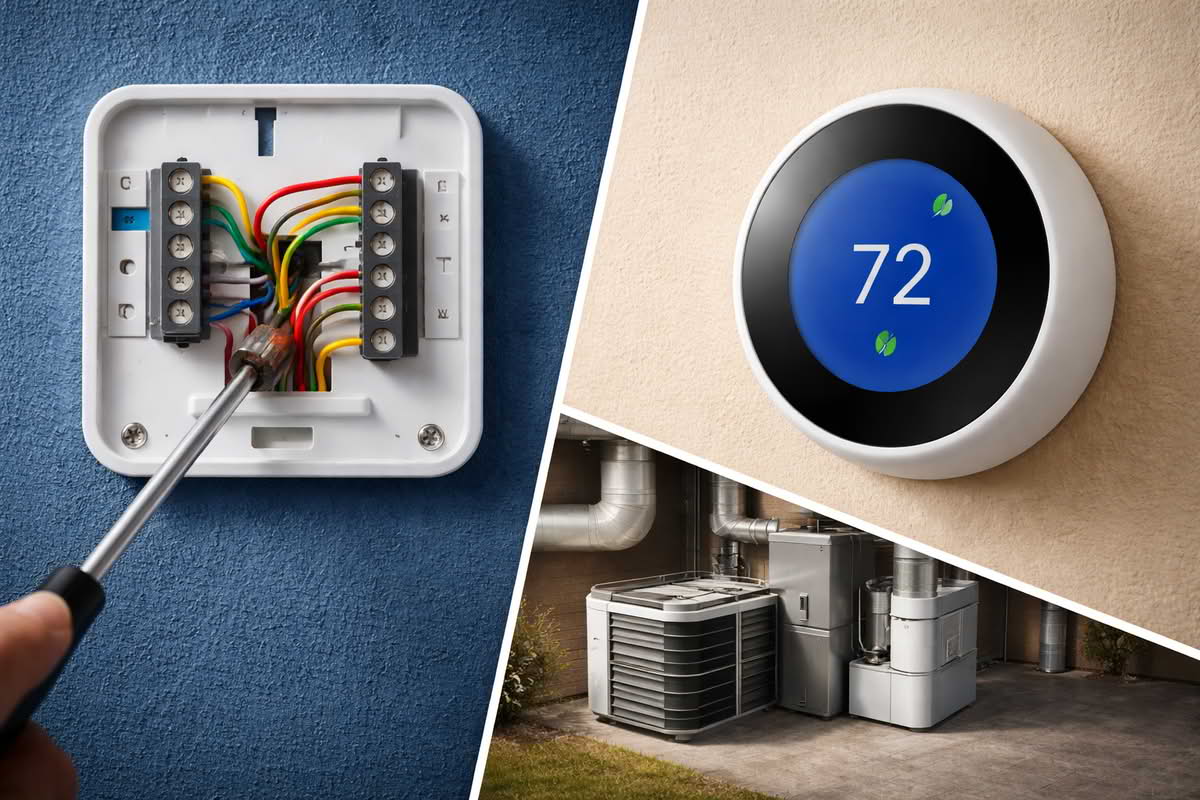
The most important smart thermostat decision happens before you compare app screens, learning features, or voice control. It starts with the heating and cooling system already in the house. Buyers often approach thermostats like consumer electronics, but a thermostat is really an interface layer for HVAC equipment that may already be complicated. If the thermostat does not fit that equipment correctly, the rest of the feature list matters much less.
That is why compatibility should be treated as the first filter, not as a line item to skim later. A simple single-stage furnace and air conditioner create one kind of thermostat decision. A heat pump creates another. Multi-stage systems, zoned setups, older wiring, electric heating, and homes with special accessories such as humidification or ventilation can change the fit significantly. Some buyers are attracted to premium thermostat features before checking whether the thermostat is even a clean match for the system it will control.
C-wire questions illustrate this problem clearly. Many households encounter smart thermostat buying for the first time through the question of whether a common wire is present. That detail matters because some thermostats depend on it, some work around it, and some fit more comfortably into older homes with less straightforward wiring. Buyers sometimes treat this like a small installation inconvenience when it can actually determine whether the product is a good fit at all. A thermostat that looks elegant in the app will not feel elegant if installation becomes an awkward workaround from the beginning.
Start with the HVAC system type before comparing smart features.
Check whether the home uses a standard furnace and air conditioning setup, a heat pump, or a more complex multi-stage system.
Treat wiring and C-wire fit as a core buying factor, not a minor technical footnote.
Assume thermostat compatibility matters more than brand familiarity or app appearance.
Heat pump compatibility deserves especially careful attention because many buyers underestimate how differently those systems behave. A thermostat that works well with a conventional system may not be the right choice when heating and cooling logic is tied to heat pump operation and backup heat behavior. In those homes, a thermostat should be evaluated less as a generic “smart temperature controller” and more as a system component that needs to communicate with the equipment properly.
It is also worth thinking about what problem the thermostat is supposed to solve. Some households mainly want to replace an aging manual or programmable thermostat with something easier to adjust and monitor. Others want room-by-room refinement through sensors. Some are trying to reduce the feeling that the house runs too hard when no one is home. Others just want simpler scheduling that the household will actually use. These goals point toward different categories. A simpler entry-level smart thermostat may be a better fit for a straightforward system and a household that wants dependable scheduling. A more feature-rich model may only make sense when the home’s layout or comfort pattern truly benefits from added sensing and automation.
Smart thermostat success usually begins with HVAC compatibility, wiring fit, and system type rather than with app features or voice control.
Another common mistake is expecting the thermostat to solve comfort problems that are really airflow, insulation, duct, or room-layout problems. A thermostat can improve control logic, but it cannot fully compensate for a house with uneven airflow, hot upstairs rooms, or cold corners caused by the building itself. That does not make a smart thermostat a poor purchase. It just means the thermostat should be judged as a control improvement, not as a magical fix for every comfort issue in the home.
The safest buying mindset is system first, interface second. Confirm that the thermostat matches the HVAC equipment, wiring situation, and household goal before becoming attached to any one feature set. That usually leads to more durable decisions than starting with aesthetics or automation claims.
Choose control style, scheduling, and room sensing around how the home actually feels
Once compatibility is clear, the next important question is how the house is used from morning to night. This matters because smart thermostat value comes less from raw connectivity and more from whether the control style matches the household’s real rhythm. A thermostat can only feel smart if it handles temperature in a way that makes ordinary life easier.
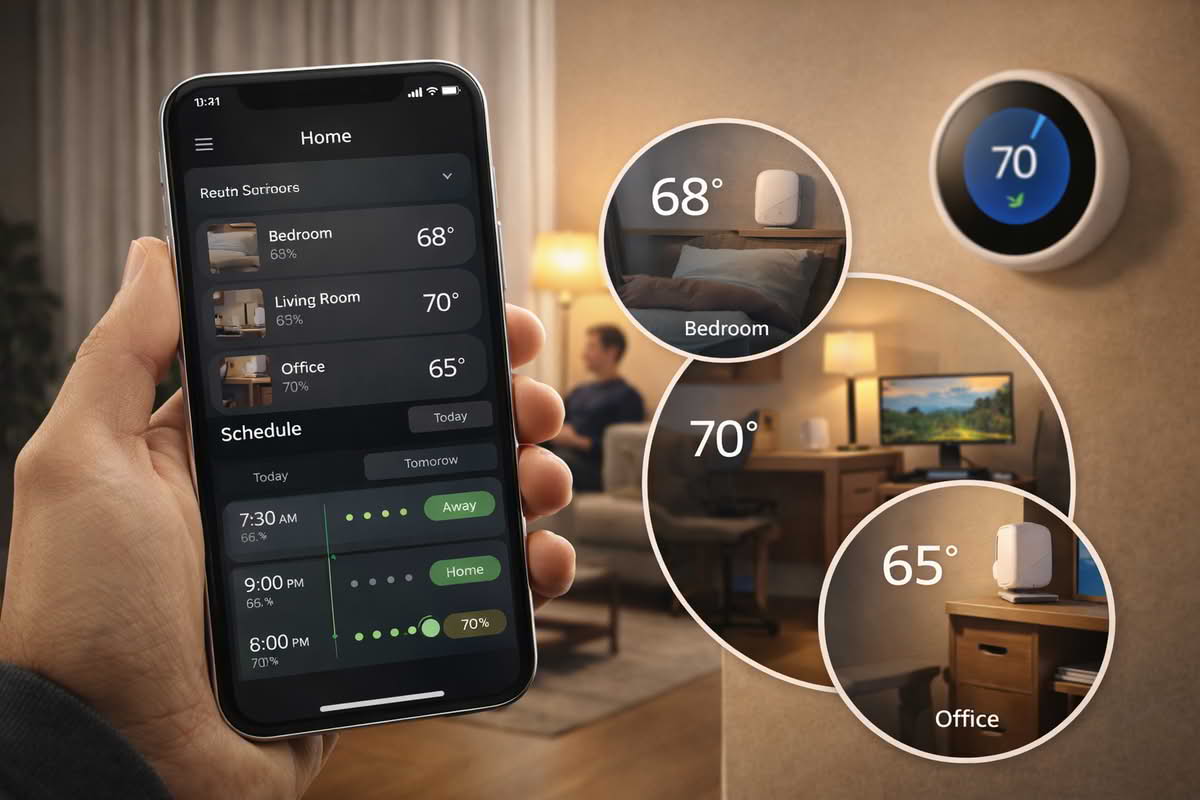
Scheduling is still one of the strongest features in this category, but only when the schedule is realistic. Many households buy smart thermostats because they are tired of either manually adjusting temperature all day or never using traditional programmable settings correctly. A good smart thermostat can solve that by making schedule changes easy enough that people actually maintain them. That sounds modest, but it is one of the biggest practical improvements the category offers. The problem is that buyers sometimes skip this quiet benefit and focus instead on advanced learning claims or broad automation features they may never really use.
Learning-style thermostats can make sense for some homes, especially when the household routine is regular enough that the thermostat can genuinely adapt in a useful way. But not every home benefits equally. A family with shifting work schedules, frequent manual overrides, guests, and irregular occupancy may discover that a highly automated thermostat is not necessarily more helpful than a simpler model with well-managed schedules. Buyers often assume more automation must mean better control, yet the opposite can be true when the household routine is messy or inconsistent.
Room sensors and multi-room awareness can also be valuable, but again, only when they solve a real house problem. If one level of the home runs warmer or cooler than another, or if a main bedroom regularly feels out of sync with the thermostat location, sensor-based control may improve comfort meaningfully. On the other hand, in smaller or more consistent homes, extra sensors may add cost and complexity without changing daily comfort much. The key is to decide whether the thermostat’s location already reflects the lived experience of the house. If it does not, remote sensing deserves more attention.
Choose a thermostat with scheduling that the household will realistically maintain.
Prefer learning features only when the home’s routine is stable enough to benefit from them.
Use room sensors when the house has meaningful temperature differences between important spaces.
Think about where comfort complaints actually happen, not just where the thermostat happens to be mounted.
Manual usability matters more than many buyers expect. A thermostat is still something people touch on the wall, often while half awake, coming home tired, or trying to make a fast adjustment during changing weather. If the interface is overly abstract, app-dependent, or slower than a household wants, the product can feel less useful despite being more advanced. This is especially true in shared households where not everyone wants to think about automation logic before adjusting the temperature.
It also helps to think about how many people influence comfort decisions. A thermostat in a one-person household behaves differently from one in a family home where several adults and children affect schedules, occupancy, and temperature expectations. In a shared home, clarity matters. The thermostat should not create ongoing low-grade negotiation because it is too clever for its own good or because only one person understands how it is configured.
Scheduling and room sensing are most valuable when they reflect the actual comfort patterns of the home rather than adding automation for its own sake.
A practical way to evaluate thermostat features is to ask how they behave on an ordinary weekday. Does the home warm or cool at the right times without repeated adjustments? Does the thermostat help with the rooms people actually occupy most? Can someone make a quick manual change without friction? If the answer is yes, the thermostat is probably doing its job. If it demands too much attention, the smart layer may be more decorative than useful.
This is also where entry-level smart thermostats can outperform premium ones for the right home. A simpler model that handles schedules cleanly, supports the system correctly, and offers reliable remote control may deliver more satisfaction than a more expensive device built around learning behavior or deeper ecosystem features that the household never really uses. Better fit matters more than broader ambition.
Judge smart thermostats by long-term usability, not by automation claims alone
Smart thermostats are often discussed in terms of efficiency or return on investment, but the broader ownership question is more useful. A thermostat should make heating and cooling control easier to live with over time. If it does that, any efficiency benefit becomes easier to realize because the household actually uses the system well. If it does not, the purchase can become another small source of friction even if the feature set is impressive.
App quality plays a major role here. Remote temperature changes, schedule edits, vacation modes, and alerts can all be genuinely useful. But the value comes from calm clarity, not from a crowded app experience. A thermostat app should help the household understand what the system is doing and change it quickly when needed. It should not make basic climate control feel like software administration. This matters especially during seasonal transitions, travel, or unexpected weather swings when people want fast answers rather than more complexity.
Cost should also be framed in context. The thermostat itself is only one part of the purchase. Compatibility accessories, added sensors, installation help, and ecosystem choices can all shape the total cost. That does not mean premium models are poor value. It means buyers should think about the complete setup instead of evaluating only the thermostat box. A more affordable thermostat that fits the system cleanly and supports the house well can be the better long-term decision than a premium model that requires extra workarounds or adds features the household does not need.
Choose a thermostat app that makes settings and schedules easier to understand, not more technical.
Consider the full ownership cost, including sensors, accessories, and installation fit.
Judge thermostat value by how often it reduces manual temperature friction in ordinary life.
Remember that a clean reliable control system often matters more than advanced automation promises.
Long-term ownership also means being realistic about the limits of thermostat intelligence. A smart thermostat can help a good HVAC system run in a more organized way, but it cannot fully fix poor insulation, duct imbalances, blocked vents, undersized equipment, or a house with strong sun exposure in one zone and deep shade in another. Buyers sometimes expect the thermostat to deliver room-by-room perfection when the building envelope and HVAC design are still shaping the outcome more heavily than the control interface.
Another factor is household trust. If the thermostat makes adjustments that feel unpredictable, or if people do not understand why the temperature changed, the system can start to feel less dependable even when it is technically working as designed. That is why transparency matters. Good climate control should feel understandable. A little intelligence can be helpful. Too much opaque behavior can make comfort feel less under the household’s control, which is the opposite of what most buyers wanted in the first place.
Premium learning thermostats make the most sense when the home has a fairly stable rhythm, the HVAC system fits the product well, and the household values a more automated experience. Entry-level smart thermostats make more sense when the goal is practical reliable scheduling, app access, and basic control without extra complexity. Neither category is universally better. The right choice depends on whether you want the thermostat to mostly follow your rules or take a more active role in shaping them.
The lowest-regret buying mindset is to choose the simplest thermostat that fully supports the HVAC system and the comfort pattern of the home. For some households, that still means a premium model with sensors and broader automation. For others, it means a straightforward thermostat that handles schedules well and stays easy to live with. The measure of success is not how advanced the device feels. It is whether the house feels easier to manage through ordinary seasons and ordinary routines.
Final Recommendations — choosing a thermostat that improves control without overcomplicating comfort
The right smart thermostat is usually the one that fits the HVAC system cleanly, supports the home’s real comfort pattern, and stays easy for the household to use. Start with compatibility, then choose the level of scheduling, sensing, and automation that matches how the house is actually occupied rather than how smart-home marketing imagines it should be.
Choose entry-level smart thermostats when you want dependable scheduling, app access, and cleaner basic control for a straightforward HVAC system.
Choose premium learning thermostats when the system is compatible and the household benefits from more automated schedule adaptation.
Choose C-wire-friendly or compatibility-focused models when wiring limitations are a real part of the installation decision.
Choose sensor-capable or heat-pump-friendly thermostats when the home’s comfort pattern or equipment type clearly calls for them.
In the long run, the best thermostat is the one that makes the house feel calmer and easier to manage without demanding constant attention. Good climate control should support everyday comfort, reduce repeated manual adjustments, and fit the home’s real system instead of promising more intelligence than the household actually needs.