How to Choose a Toaster Oven for Everyday Countertop Cooking
A toaster oven can be one of the most useful appliances in a kitchen or one of the easiest to underestimate. Buyers often think of it as a simple upgrade from a pop-up toaster, then discover that the real decision is much broader. Some models are best at fast reheating and toast. Others act more like compact countertop ovens that can handle sheet-pan meals, baking, broiling, and everyday cooking without turning on the full-size oven. That range is exactly why it is easy to buy the wrong one. A model that looks flexible in a product listing may be too large for the counter, too small for the pans you actually use, too fiddly to clean, or too weak to replace meaningful oven work. The better approach is to think about a toaster oven as a kitchen system choice. Size, control layout, tray access, heat behavior, and countertop fit all matter more over time than the longest feature list.
Start with the cooking jobs you want to move off the main oven
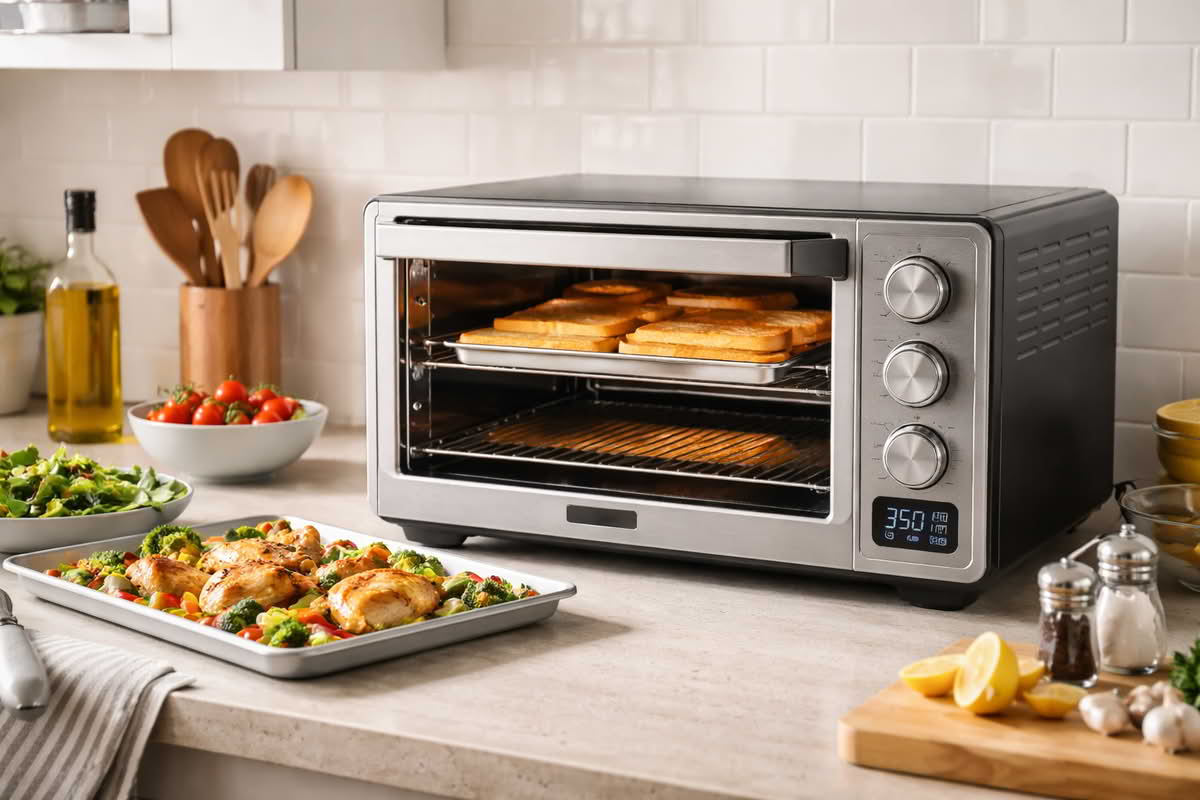
The most useful toaster oven decision starts with role, not brand or feature count. Some households want an appliance mainly for toast, bagels, reheating pizza, warming leftovers, and small frozen foods. Others want a compact oven that can handle vegetables, open-face sandwiches, baked snacks, and small-sheet-pan dinners without heating the full kitchen. Those are different needs, and they do not all point to the same machine size or style. A toaster oven becomes valuable when it takes repeated pressure off your main oven in a way that actually matches how you cook.
This is where buyer regret often begins. People buy for the broad idea of convenience instead of the specific kind of convenience they need. A small toaster oven may seem perfect because it is compact and affordable, but it can become limiting if the goal was to cook real meals or fit useful bakeware. A larger countertop oven may sound safer because it promises more capability, but that extra capability only matters if the household truly wants to roast, bake, broil, or reheat in bigger volumes often enough to justify the space. The better question is not whether the appliance can do more. It is whether the extra functions meaningfully improve what happens in your kitchen every week.
A toaster oven becomes more useful when it is chosen for the actual cooking jobs it will handle repeatedly, not just for a long feature list.
Frequency matters just as much as food type. A toaster oven used every morning for toast and every evening for quick reheating should be judged heavily on speed, usability, and ease of cleanup. A toaster oven used a few times a week as a second oven should be judged more by capacity, tray access, and how comfortably it handles real cooking tasks. Many buyers confuse these two categories of use. They end up with a machine that is overbuilt for toast and underconsidered for everything else, or one that acts like a miniature oven but is annoyingly large for the simple jobs it performs most often.
Another source of confusion is overlap with other appliances. In some kitchens, an air fryer already covers quick crisping and reheating. In others, a microwave handles convenience while the main oven handles larger cooking. A toaster oven should be bought with awareness of that appliance ecosystem. If it duplicates tools you already use well, then its value drops unless it offers a clearer, more comfortable workflow. On the other hand, if the main oven feels excessive for smaller meals or slow for quick reheating, a toaster oven can earn its place very quickly.
Choose the toaster oven based on repeated kitchen jobs, not just on the general idea that it might be useful.
Decide whether the main role is toast and reheating or broader countertop cooking.
Think about how often the appliance will be used, because frequency changes which tradeoffs matter most.
Consider what other appliances already do well before paying for overlapping functions.
It is also worth being honest about meal scale. A compact countertop oven can be excellent for one or two servings, quick lunches, and side dishes. It may feel much less impressive when expected to feed a full family on one rack or support multi-item cooking without compromise. Larger households do not always need a family-size toaster oven, but they do need enough space to make the appliance practical for real meal portions. Otherwise the unit may be used constantly for snacks and almost never for the work it was purchased to handle.
Kitchen heat and seasonality can matter here as well. In some homes, the ability to cook smaller foods without heating the full oven is a major everyday advantage. In others, that benefit is secondary to convenience or counter space. The right toaster oven purchase should reflect your actual kitchen pain points, whether that is saving time, reducing oven use, improving reheating quality, or creating a more flexible small-batch cooking setup.
A good toaster oven should feel like a practical extension of the kitchen, not like a smaller oven purchased out of vague optimism. When buyers start with the jobs the appliance truly needs to do, the right size and style usually become much easier to identify.
Size, layout, and controls in real kitchen use
Once the role is clear, the next decision is how much oven you actually need on the counter. This is where many buyers default to simple thinking: bigger seems safer, smaller seems easier. In practice, both choices carry real tradeoffs. A toaster oven has to be judged not only by exterior footprint but also by interior usability, rack access, tray size, and how comfortable it feels during repeated cooking.
Compact toaster ovens usually make the most sense when speed, basic reheating, and minimal counter burden matter more than broad cooking flexibility. They tend to suit smaller kitchens, lighter use, and households that mainly want a better tool for toast, bagels, leftovers, and small oven tasks. Their weakness is capacity. Once the household wants to cook more than one portion at a time, fit a meaningful tray, or handle thicker foods without crowding, a compact model can quickly feel cramped. In that situation, what first seemed efficient starts to feel limiting.
Larger countertop ovens make more sense when the appliance is expected to operate as a real secondary oven. They usually provide more interior height, more usable rack area, and better accommodation for trays or pans that support actual meal prep. But that extra space comes with cost beyond the purchase price. Larger models take more counter room, usually weigh more, and often create more surface area to keep clean. They only pay off if the household genuinely uses that larger cooking envelope often enough to matter.
Layout matters just as much as size. A wide interior is helpful only if the door, rack, and controls make access comfortable. Some designs look spacious yet feel awkward when loading food, rotating trays, or checking browning. Shallow interiors can also be deceptively limiting, especially if the foods you cook most often need more clearance or better airflow. Buyers sometimes compare headline dimensions without thinking about how the oven actually behaves when food, pans, and hands are moving in and out repeatedly.
Control style is another major decision point. Some kitchens do best with simple knobs and direct adjustments because they reduce the learning curve and make the oven feel fast to use. Others may prefer more precise digital controls if the appliance is expected to handle a broader variety of cooking tasks. Neither approach is automatically better. The more important question is whether the controls support confidence and quick adjustments during real cooking. A toaster oven is usually purchased to simplify countertop cooking, so an interface that feels slow or overcomplicated can quietly reduce its value.
Choose compact ovens when lower footprint and lighter use matter more than broader meal capacity.
Choose larger countertop ovens only when the extra interior space supports real, repeated cooking needs.
Look at interior layout and rack access, not just exterior dimensions.
Choose controls that feel quick and clear for the way you actually cook instead of the most feature-heavy interface.
Heating style and cooking emphasis matter too. Some toaster ovens are better suited to straightforward toasting and reheating, while others are clearly built for more oven-like performance across baking, broiling, and roasting. Some include air-fry-style functionality as part of the package. That can be useful when it truly fits the kitchen's needs, but it can also blur the identity of the appliance. Buyers should be careful not to equate more modes with better ownership. If the machine becomes harder to learn, bulkier, or less intuitive just to claim broader capability, the benefit may be smaller than expected.
Another commonly overlooked factor is how the oven handles smaller tasks. Some larger toaster ovens are purchased for flexibility but end up feeling slightly excessive when used for quick reheating or a single slice or two of toast. That does not make them bad appliances. It just means buyers should be realistic about proportion. If most usage will be small and frequent, ease and immediacy may matter more than maximum cooking room. If the goal is truly to replace meaningful oven usage, then the larger cavity and broader controls may be worth the extra commitment.
The best purchase in this category usually comes from matching physical layout to kitchen rhythm. A toaster oven should support the pans, foods, and routines you already have rather than constantly reminding you that it was designed for a different kind of user.
Counter space, cleaning, and long-term value
Toaster ovens often succeed or fail in daily life based on factors that seem secondary during shopping. Counter space is one of the biggest. Because this appliance usually lives where it is used, its footprint becomes part of the kitchen every day. A model that technically fits can still feel too dominant if it crowds prep space, blocks outlets, or creates visual clutter in a smaller kitchen. Buyers are often more tolerant of this at first than they are six months later. That is why space should be treated as a core buying factor, not an afterthought.
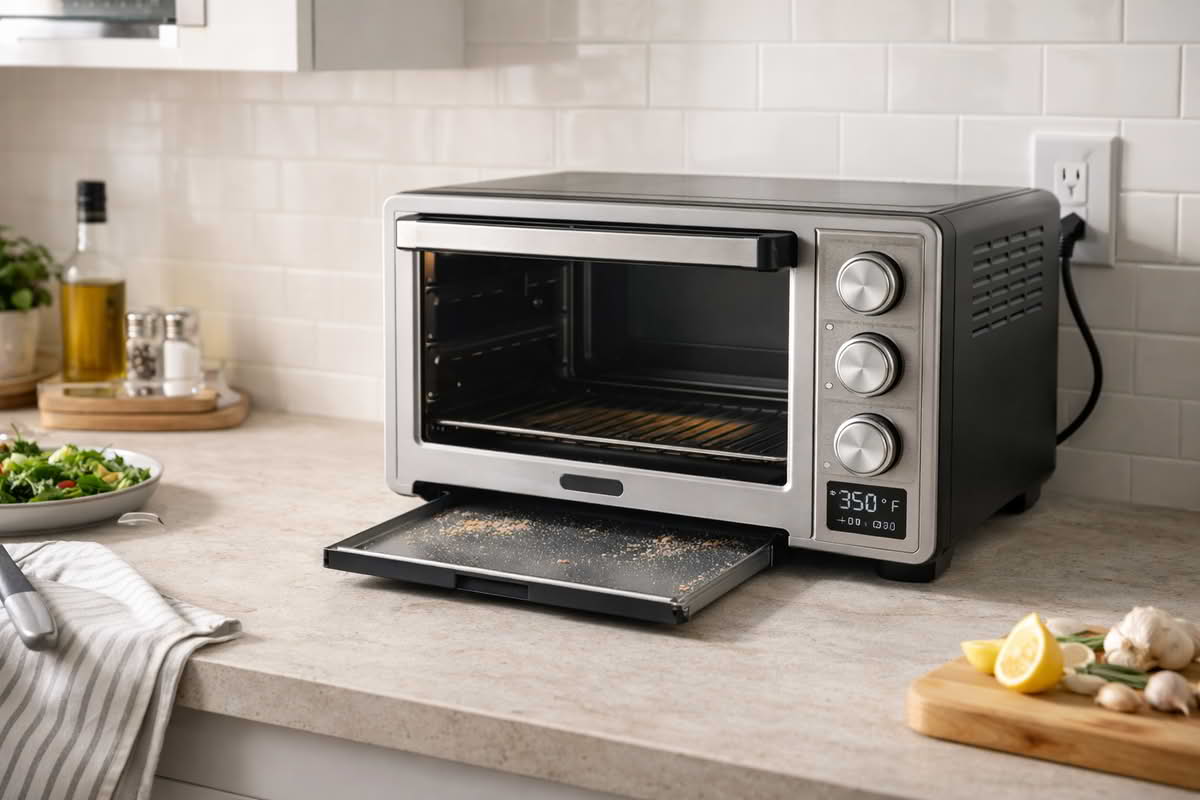
Counter fit and cleanup access matter as much as cooking features because a toaster oven usually stays visible and in regular use.
This does not mean the smallest possible model is always smartest. A compact oven that feels easy on day one may create constant frustration if the tray area is too limited or the interior does not comfortably fit the foods you bought it to cook. The goal is proportionality. The right toaster oven is big enough to handle repeated tasks well and restrained enough that the counter still works as a kitchen. That balance is especially important in apartments, smaller homes, and multipurpose kitchens where every appliance competes with food prep space.
Cleaning should be considered part of performance. Crumbs, grease, splatter, rack residue, and door glass all affect whether a toaster oven feels pleasant to own. A unit that is easy to access, wipe, and empty will usually stay in better rotation than one that cooks well but quietly accumulates cleanup friction. This matters most when the appliance is used often. Since many buyers want toaster ovens for quick daily tasks, a messy or awkward cleaning routine can erode the very convenience the oven was supposed to provide.
Door style, crumb management, and rack removal all play into that. They rarely dominate product descriptions, yet they strongly influence ownership because they affect how easy the appliance is to maintain between normal meals. An oven that invites simple cleanup tends to remain more useful than one that feels progressively dirtier or more tedious to manage. In the long term, maintenance convenience can matter almost as much as cooking quality for countertop appliances.
Cost should be framed around how much real oven work the appliance will absorb. A budget toaster oven can make complete sense if the main jobs are toast, quick reheating, and occasional small foods. A mid-range model often makes the most sense for many kitchens because it can improve capacity, controls, and cooking confidence without demanding the space and price of a larger multifunction unit. Higher-priced toaster ovens make more sense when the kitchen will actually use them as everyday secondary ovens or broad countertop cooking tools. The mistake is paying for expansive capacity and modes when the household mostly wants warm leftovers and crisp toast.
Let counter footprint influence the decision as much as cooking features, because this appliance usually stays visible.
Choose a size that supports real cooking without crowding the kitchen beyond what feels reasonable.
Judge crumb handling and wipe-down ease as part of the ownership experience, not as minor details.
Spend more only when the extra capacity or versatility clearly replaces work your main oven currently handles poorly.
Another useful way to think about value is appliance overlap. A toaster oven earns its place when it becomes the preferred tool for a repeatable set of jobs. If it duplicates what the microwave, air fryer, and main oven already do well without improving the process, then it is harder to justify no matter how nice the machine is. The best units usually create a clearer workflow: they handle small oven tasks more comfortably, reheat with better texture than a microwave, or support daily cooking in a way that feels more natural than using the big oven every time.
One of the most common forms of regret in this category is buying a multifunction unit that sounds ideal on paper but proves too large or too complicated for the tasks it actually performs. The opposite mistake is choosing a compact oven that feels elegant and minimal until it starts limiting meal flexibility. Both problems come from ignoring the relationship between physical fit and cooking role. A toaster oven should not just be a good appliance in the abstract. It should be the right amount of appliance for your kitchen.
The best long-term toaster oven purchase usually feels quietly justified. It earns its footprint through repetition, supports the foods you actually make, and stays simple enough that using it never feels like extra work. That is what turns it from an interesting countertop device into a dependable part of daily cooking.
Final Recommendations — choosing the toaster oven that fits your counter and your cooking habits
A good toaster oven should be chosen by role, interior usability, and kitchen fit rather than by feature count alone. Buyers who mainly want toast, reheating, and quick small foods usually do best with a more compact, faster-feeling model that stays easy to live with. Buyers who want a real secondary oven for baking, roasting, and broader countertop cooking usually benefit more from added interior space and stronger cooking flexibility, but only if the counter can support that larger footprint. In both cases, the goal is the same: move repeated cooking tasks off the main oven in a way that genuinely reduces friction.
Match the toaster oven to the kinds of foods and meal sizes you actually repeat.
Choose compact convenience or broader oven-like capability intentionally instead of trying to maximize both without a reason.
Prioritize interior usefulness, control clarity, and cleanup ease alongside raw feature lists.
Spend for better long-term fit, not just for the appliance that claims the most modes.
The lowest-regret toaster oven purchase is usually the one that feels proportionate. It fits the counter, handles everyday jobs well, and earns its place through steady use instead of novelty. When that balance is right, the appliance becomes less about features and more about quietly making the kitchen work better.