How to Choose an Air Fryer for Everyday Kitchen Use
Air fryers are easy to buy for the wrong reasons. The category is full of dramatic claims about speed, crispness, and convenience, which can make almost any model sound like an obvious upgrade. In real kitchens, the better question is much simpler: will this appliance actually fit the way you cook? A machine that seems perfect in a product listing can end up too small for normal meals, too bulky for the counter, too annoying to clean, or too limited for the foods you hoped it would handle well. Some buyers overestimate how often they will use a large multi-function model. Others buy a compact unit for convenience and then feel cramped almost immediately. The best air fryer purchase usually comes from thinking beyond the novelty. Basket shape, usable capacity, countertop footprint, cooking style, and cleanup burden all matter more over time than headline promises about crispness alone.
Start with how you actually cook
The most useful starting point is not brand, wattage, or preset count. It is the role the appliance will play in your kitchen. Some households want an air fryer mainly for quick frozen foods, reheating leftovers, and small convenience meals. Others want it to take pressure off the main oven during weeknight cooking, help with vegetables and proteins, or speed up lunch and side-dish prep without heating the whole kitchen. Those are different use cases, and they do not all point to the same machine.
An air fryer is most useful when it matches the kinds of meals and cooking tasks a household actually repeats during the week.
This is where many disappointing purchases begin. Buyers often imagine the air fryer as a universal shortcut appliance that will replace several cooking methods at once. Sometimes it becomes very useful, but it still works within limits. It excels when the goal is fast, concentrated countertop cooking with strong surface browning and relatively simple workflow. It is less magical when batch size is large, when multiple components need to be finished at once, or when expectations are based more on marketing than on meal patterns. A good air fryer should solve repeated kitchen friction. It should not be purchased mainly as a symbol of modern convenience.
Frequency matters here. If the appliance will be used several times a week for reheating, quick proteins, potatoes, vegetables, or frozen snacks, then ease of access and cleanup become major parts of the decision. If it is more likely to be used occasionally, then a very large or feature-heavy model may be harder to justify. One of the most common forms of regret is buying a machine that is technically capable but slightly too large, too awkward, or too cleanup-heavy for the simple tasks it ends up doing most often.
Household size should also be interpreted carefully. A larger household does not always need the largest air fryer, but it usually does need enough usable cooking area that the appliance can produce food without requiring too many rounds. Air fryers work best when food is not overly crowded. That means the listed size is only part of the story. The real question is whether the cooking surface and basket shape support the portions you actually make. A compact machine may feel efficient for one or two people, then become frustrating once the appliance is expected to handle family-size portions on a regular basis.
Choose the appliance around repeated meal patterns, not around broad promises that it can do everything.
Think about whether the main jobs are reheating, frozen foods, vegetables, proteins, or full small meals.
Match the air fryer to realistic household portions rather than occasional peak-demand cooking.
Judge the appliance by whether it removes real weeknight friction, not by how modern it sounds.
Another useful question is whether you want the air fryer to be a primary countertop cooking tool or a supporting appliance. In some kitchens, it becomes a near-daily workhorse because the oven is large, slow to preheat, or inconvenient for smaller meals. In others, it mainly fills gaps by handling a few fast tasks better than the oven does. Both are valid roles, but they should lead to different purchases. A primary countertop cooker has to justify its footprint with frequent, broad usefulness. A supporting appliance can be smaller or more specialized if it solves a narrower problem especially well.
Buyers also tend to underestimate the psychological side of countertop appliances. If the machine feels easy, visible, and fast to use, it is more likely to become part of normal kitchen rhythm. If it feels slightly bulky, noisy, or fussy to clean, even strong performance may not be enough to keep it in frequent use. This is why the best purchase often comes from realism rather than enthusiasm. The right model is the one that fits your cooking routine without asking you to change your entire kitchen around it.
Basket style, capacity, and cooking flexibility
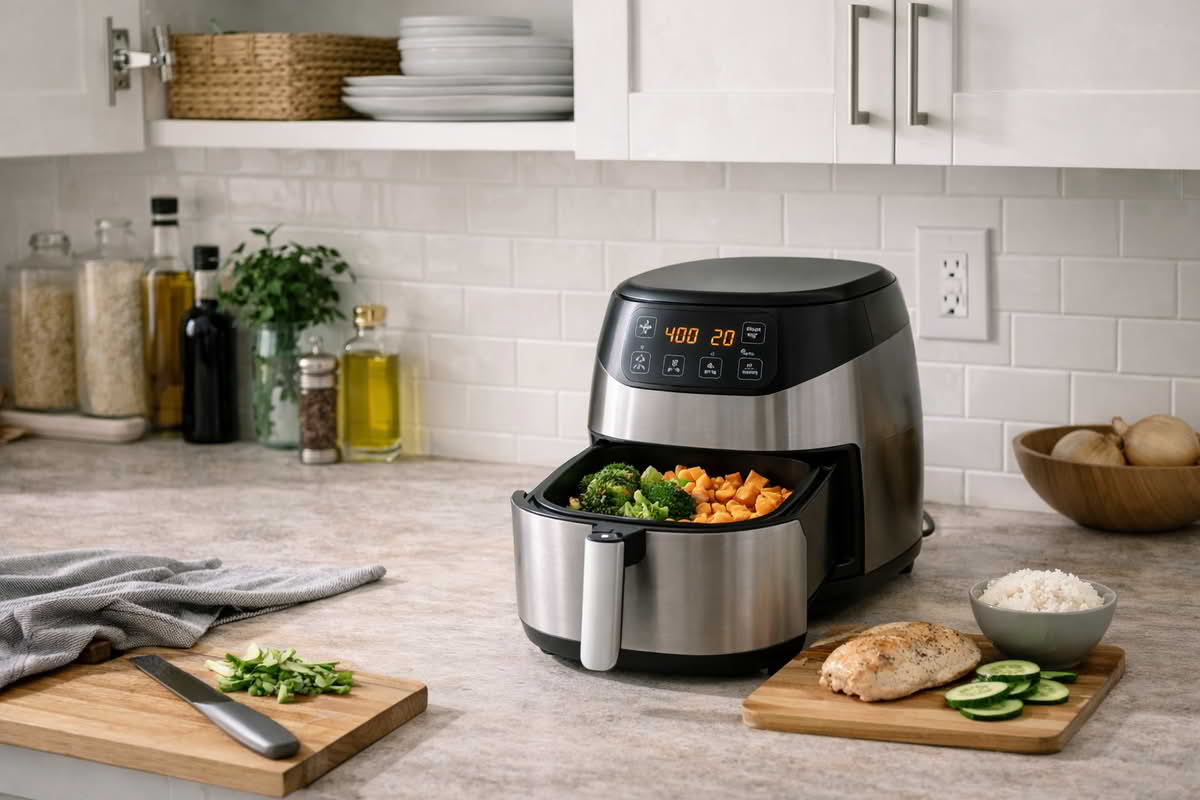
Once the role is clear, the next decision is what kind of air fryer layout makes sense. This usually means thinking through basket design, usable cooking area, and how much meal flexibility the appliance needs to support. The category often gets simplified into compact models, larger single-basket units, dual-basket machines, and oven-style designs, but the real question is how the shape and layout affect your actual food.
Basket-style air fryers are popular because they are straightforward. They usually suit buyers who want a clear, fast process and a strong focus on crisping, roasting, and reheating. In many kitchens, this simplicity is the entire value. The machine is easy to understand, easy to pull into a meal, and well matched to foods that benefit from concentrated airflow and basket-based cooking. The tradeoff is flexibility. A basic single-basket design may do one thing well, but it can become limiting when you want to separate foods, cook two components at once, or avoid crowding larger portions.
Dual-basket models appeal because they address a real kitchen problem: timing and separation. They can be useful when the household regularly wants two foods cooking side by side, different items finishing together, or more flexibility without using the main oven. But the extra utility comes with tradeoffs. These machines are often larger, heavier, and more demanding of countertop space. They are only worth that added footprint if the second basket will truly be used often enough to matter. Otherwise, buyers can end up paying in both space and complexity for flexibility they rarely use.
Oven-style air fryers sit in another part of the spectrum. They often promise broader functionality and can work well for households that want the appliance to behave more like a compact countertop oven with air-frying capability. That can be useful when toast, baking, reheating, and broader countertop cooking matter alongside air frying itself. The weakness is that broader capability can come with a different kind of compromise. The machine may be larger, involve more racks and surfaces to clean, and feel less specialized for fast basket-style cooking. For some kitchens, that tradeoff is worthwhile. For others, it dilutes the main reason they wanted an air fryer in the first place.
Capacity should be judged by usable area rather than by raw numbers alone. A tall basket with modest floor space may sound generous but still crowd food quickly. Since air fryers depend on circulation, crowding can undermine the very crisping performance buyers are trying to purchase. This is one reason the safest-looking size choice is not always the best one. A slightly larger unit may improve cooking results meaningfully if the household regularly cooks items that need space to brown evenly.
Choose single-basket models when simplicity and lower footprint matter more than multitasking.
Choose dual-basket designs only when separate cooking zones solve a repeated meal-planning problem.
Choose oven-style models when broader countertop cooking matters as much as air frying itself.
Judge capacity by real cooking surface and airflow needs, not just by the largest number on the box.
Control layout matters too. Some buyers want basic operation with a few clear settings and quick manual adjustments. Others want more time and temperature range because they expect to use the appliance for a wider set of foods. Presets can be helpful, but they should not dominate the decision. What matters more is whether the machine feels easy to adjust in real cooking. If you cannot quickly change time, check food, and keep moving through a meal, then the interface is not helping much no matter how many labeled functions it includes.
Another overlooked issue is cooking style compatibility. Some foods work beautifully in air fryers because they benefit from intense surface heat and circulating air. Others are less impressive unless the appliance has enough space and a shape that suits the food. Buyers who want a crisping and reheating specialist may be happy with a simpler unit. Buyers who expect the air fryer to function as a small second oven need to think more carefully about shape, access, tray configuration, and whether the machine supports that broader role gracefully.
The best purchase in this category usually comes from matching layout to meal logic. A machine should support the food combinations, portion sizes, and timing patterns that already exist in your kitchen. When it does, the air fryer feels genuinely useful instead of merely trendy.
Counter space, cleaning, and long-term value
Long-term satisfaction with an air fryer depends as much on ownership friction as on cooking performance. This is one of the most important truths in the category. An appliance can brown food well and still become a disappointing purchase if it is too large for the counter, too annoying to clean, or too cumbersome to store and retrieve regularly. Buyers often realize this only after the first few weeks, once the novelty wears off and the machine has to compete with the rest of the kitchen for space and attention.
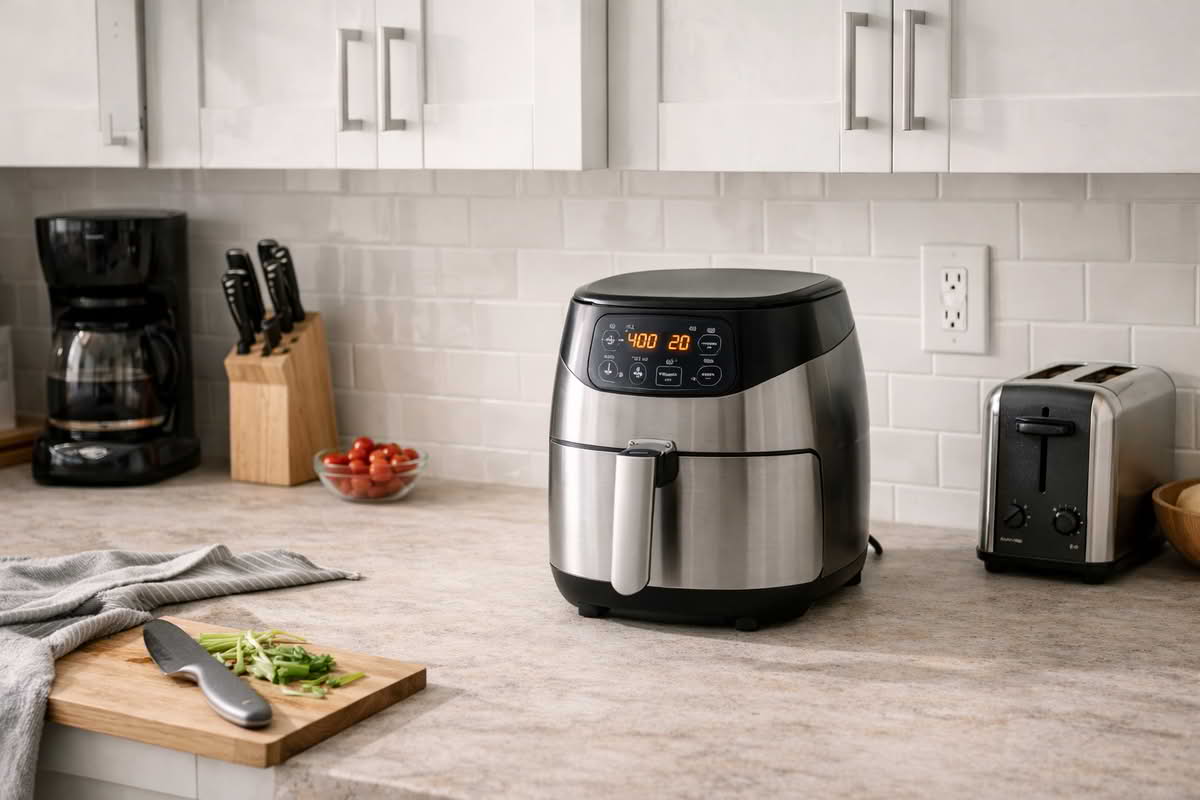
Counter footprint is a major part of that equation. Some kitchens can accommodate a medium or large air fryer easily, especially if the appliance will be used often enough to justify a permanent place. Other kitchens already have crowded counters, limited outlet access, or a preference for keeping appliances stored away. In those spaces, even a good air fryer can become inconvenient if it demands a large, visible footprint. This is especially true for dual-basket and oven-style models, which can look reasonable online and feel much larger once they are sitting among other countertop tools.
Counter footprint matters because an air fryer has to fit comfortably into normal kitchen workflow, not just look acceptable in a product listing.
Cleaning should be treated as part of performance. A machine that is quick to wipe down and simple to unload will almost always feel more successful over time than one that cooks well but leaves behind a fiddly cleanup routine. Baskets, trays, racks, crumb areas, and splatter-prone interiors all shape whether the air fryer feels efficient in daily use. Since many buyers want these appliances for fast weeknight convenience, the cleanup burden matters even more. A quick lunch or simple dinner side should not lead to a process that feels almost as involved as using the full oven.
Storage fit matters when the appliance will not live on the counter. A compact model may be easier to put away and retrieve, which can strongly improve real-world use. A larger model may only be worth the trouble if it delivers enough meal flexibility or portion capacity to justify the extra effort. This is why kitchen size alone is not the whole story. The better question is whether the appliance's physical demands are proportionate to how much it will genuinely improve your cooking routine.
Cost should be framed around repeated usefulness, not around excitement or trend strength. A budget model can be a smart purchase when the goal is basic reheating, quick crisping, and lighter household use. Mid-range machines often make the most sense for many kitchens because they improve capacity, controls, and overall daily usability without forcing the buyer into a very large or feature-heavy design. Higher-priced air fryers make sense when the household cooks with them often enough to benefit from broader layout flexibility, larger portions, or more consistent all-around performance. The mistake is paying for maximum appliance ambition when the real use case is narrower and simpler.
Let countertop space meaningfully influence the decision, because placement affects how often the appliance gets used.
Choose a model whose cleanup burden fits the quick-meal convenience you expect from it.
Balance size against storage reality instead of assuming more capacity is always safer.
Spend more only when the added layout or capacity clearly improves the way your kitchen already works.
Another common regret pattern is buying too much machine for too little kitchen. This usually happens when a buyer chooses the model that seems most flexible or future-proof without considering whether that flexibility will actually be used. The opposite mistake is buying too small in the name of simplicity, then becoming frustrated by crowding and repeated batches. Both problems come from ignoring proportion. A good air fryer should feel matched to the kitchen, the household, and the meals it will handle most often.
The best long-term purchase usually feels quietly efficient. It handles your normal portions well, fits the available space, and does not make cleanup or storage feel like the hidden cost of convenience. When those elements line up, the air fryer becomes part of the kitchen routine rather than a periodic novelty appliance.
That is the real measure of value in this category. Not whether the appliance can theoretically replace several others, but whether it earns its place through repeated, low-friction usefulness.
Final Recommendations — choosing the air fryer that fits your meals and your counter
A good air fryer should be chosen by meal pattern, usable cooking space, and ownership fit rather than by hype or preset count. Buyers who mainly want fast crisping, reheating, and simple weeknight support usually do best with a straightforward machine that is easy to access and easy to clean. Buyers who regularly need more portion flexibility or separate cooking zones may benefit from larger or dual-basket layouts, but only when the kitchen has the space and the meals truly justify them. In both cases, the goal is the same: make countertop cooking easier often enough that the appliance earns its footprint.
Match the air fryer to the foods and portion sizes you actually repeat.
Choose layout based on meal logic, not just on the appeal of extra functions.
Prioritize usable cooking area, cleanup ease, and counter fit alongside cooking performance.
Spend for better long-term fit, not just for a larger machine or a more fashionable feature set.
The lowest-regret air fryer purchase is usually the one that feels proportionate. It is big enough to be useful, simple enough to stay in rotation, and practical enough that using it never feels like more trouble than the meal is worth. When that balance is right, the appliance becomes less about novelty and more about everyday kitchen efficiency.