How to Choose an Espresso Machine for Home Coffee Drinks
Espresso machines are one of the easiest kitchen purchases to romanticize. They suggest better mornings, cafe-style drinks at home, and a more refined coffee routine. That appeal is real, but it can also lead buyers toward the wrong machine very quickly. A model that looks impressive on a countertop or sounds advanced in a product listing may still be frustrating if it asks for more skill, cleanup, maintenance, or daily attention than the household actually wants to give. On the other hand, a very convenient machine may feel satisfying at first and then disappointing if it limits drink quality, milk texture, or control in ways the buyer starts to notice over time. The better decision usually comes from treating espresso as a workflow rather than a luxury object. Machine type, grinding expectations, milk-drink habits, warm-up behavior, counter footprint, and maintenance all matter more over time than visual styling or broad promises about cafe-level results.
Start with the kind of coffee routine you actually want
The most useful place to begin is not pressure ratings, boiler language, or polished metal finishes. It is the daily coffee routine you actually want to live with. Some buyers want a more hands-on process because making espresso is part of the enjoyment. They are willing to think about dosing, tamping, timing, milk steaming, and the small adjustments that shape drink quality. Others want espresso-based drinks at home with as little friction as possible. They care more about reliable speed, simpler controls, and repeatability than about fine-tuning every variable. Those are very different goals, and they do not all point to the same machine.
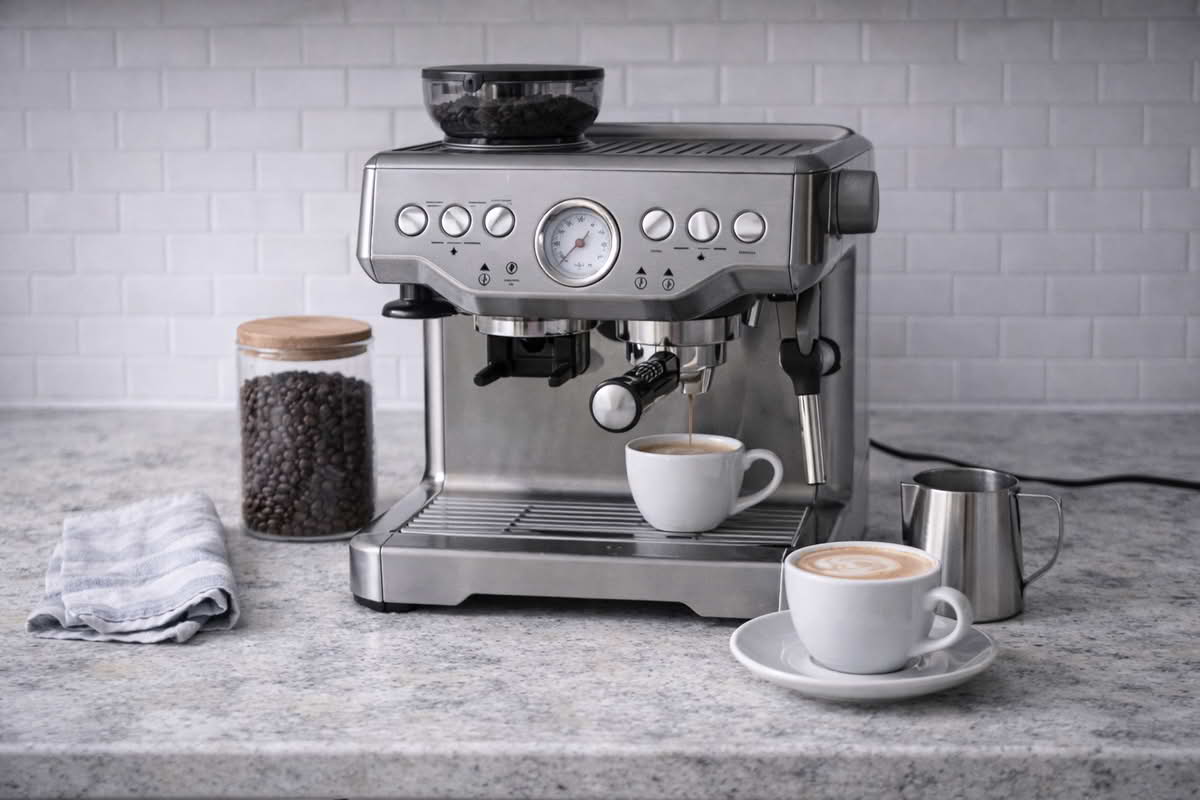
An espresso machine is most useful when its workflow matches the kind of coffee routine the household actually wants to repeat on ordinary mornings.
This is where buyer regret often starts. Espresso machines are easy to shop for aspirationally. A buyer imagines leisurely mornings, careful preparation, and daily interest in the craft of espresso. In reality, many weekday coffee routines are rushed, repetitive, and shaped by limited patience before work. A machine that demands focus, cleanup, and technique can absolutely be satisfying, but only when the household actually wants that level of involvement. If the real goal is quick milk drinks and dependable caffeine, then too much complexity can turn a premium purchase into a daily annoyance.
The reverse mistake happens too. Some buyers choose the most convenient path because they want to avoid error and simplify the process. That can be sensible, especially in busy households. But convenience-focused machines are not always equally satisfying over the long term. Once the novelty wears off, a buyer may start caring more about temperature consistency, espresso texture, milk control, or the flexibility to change beans and drink styles. A machine that felt safe at checkout can later feel limiting if the buyer's expectations grow.
It helps to think about what kinds of drinks dominate the routine. Straight espresso, Americanos, cappuccinos, lattes, and milk-heavy drinks place different emphasis on the machine. If the household mainly drinks milk-based coffee, the milk system matters almost as much as the espresso itself. If straight shots or small americanos are the main goal, the espresso workflow and shot consistency matter more directly. Many buyers focus heavily on espresso branding while overlooking the fact that their daily satisfaction may depend just as much on steam behavior, milk convenience, and how quickly the machine moves from one drink to the next.
Choose the machine around the routine you actually want, not the one that sounds most serious or most advanced.
Be honest about whether you want coffee-making involvement or coffee-making convenience.
Think about whether the household mostly drinks straight espresso, milk drinks, or a mix of both.
Do not assume the most premium-looking machine is the most practical daily fit.
Another useful question is whether espresso at home is meant to replace frequent cafe purchases or simply add occasional variety. A household making multiple drinks every day has very different needs from one that mainly wants weekend cappuccinos or occasional after-dinner coffee. Frequency changes how much setup time, warm-up time, and maintenance feel acceptable. A machine that is enjoyable twice a week can become tiresome when used twice every morning.
Kitchen rhythm matters as well. Some homes have one coffee drinker who can move at their own pace. Others have multiple people wanting drinks around the same time, which makes workflow more important. A machine that works well for one careful user can feel slow or awkward when the demand becomes back-to-back milk drinks and quick turnaround. This is one of the biggest reasons the correct espresso machine is about more than coffee quality in isolation. It is about how the machine fits into the timing of real mornings.
A good purchase in this category usually comes from clarity. The right machine should fit the household's patience, habits, drink style, and willingness to learn. When those pieces line up, the espresso machine feels like a satisfying tool. When they do not, even a technically capable machine can feel wrong very quickly.
Machine type, control, and milk-drink workflow
Once the routine is clear, the next decision is what kind of machine best supports it. Espresso machines are often sorted into broad tiers such as manual-leaning, semi-automatic, and more automated systems, but the more useful distinction is how much of the brewing and milk process the machine expects the user to manage. That single question affects learning curve, drink repeatability, speed, and how satisfying the appliance feels after the first few weeks.
More hands-on machines usually make sense for buyers who want to shape the drink more directly and are willing to learn the steps involved. Their appeal is control. That control can be rewarding, especially when the user enjoys the process and notices the difference between a merely acceptable shot and a well-prepared one. But control has a real cost. It slows the routine, increases setup and cleanup decisions, and often depends on the buyer being willing to improve their technique over time. A machine that rewards learning is only valuable if learning itself is part of the appeal.
More automated machines reduce that burden by narrowing the number of variables the user has to think about. This can make them attractive for households that want espresso-based drinks without turning coffee into a daily project. Their strength is not just speed. It is lowering the number of points where a rushed morning can go wrong. The tradeoff is that convenience-focused systems often reduce flexibility. The buyer may gain easier repeatability but lose some of the room to refine drinks, adjust workflow, or shape the result to changing preferences later.
Milk preparation is one of the most important and most underestimated parts of the decision. Buyers who mostly drink lattes or cappuccinos should pay close attention to how milk is handled rather than treating it as a secondary feature. A machine may brew espresso capably and still be disappointing if steaming milk feels slow, awkward, or messy. Some households are happy to steam manually because they value control and do not mind the extra step. Others mainly want the drink finished with as little effort as possible. Since milk drinks dominate home espresso for many people, this is often the practical center of the buying decision rather than a side detail.
Interface design matters more than it might in simpler coffee categories because espresso machines often involve repeated sequences. Heating, shot selection, milk handling, rinsing, and recovery time all shape the experience. A complicated menu or unclear control layout can make even a good machine feel less inviting on ordinary mornings. Buyers sometimes focus on headline capabilities while ignoring whether the machine seems comfortable to operate before the first drink of the day. That is a mistake in a category built around repetition.
Choose more hands-on machines only when learning and drink adjustment are part of the value for you.
Choose more automated systems when routine speed and consistency matter more than fine-tuning.
Let milk-drink habits influence the decision heavily, because steaming and frothing shape daily satisfaction.
Prioritize control clarity and workflow over impressive-looking but awkward feature sets.
Recovery and pacing also matter. A machine that works well for one drink may feel very different when asked to make two milk drinks back to back. This is especially relevant in households where the espresso machine supports more than one person. The question is not only whether the machine can make espresso. It is whether it can do so in a way that fits the demand pattern of your home without making the coffee routine feel slow or fragmented.
Another overlooked issue is how tightly the machine's performance depends on the rest of the setup. Some espresso machines are best understood as part of a broader system rather than as isolated appliances. If they require more careful grinding, more exact routine, or more active technique to feel satisfying, that should be part of the buying decision. A machine that sounds affordable or appealing on its own can become much more demanding in practice once the surrounding workflow is considered.
The strongest purchases in this category usually come from matching machine type to temperament. Some buyers enjoy daily ritual and control. Others want dependable drinks with less involvement. Problems begin when a buyer chooses a machine that fits the wrong temperament and then expects enthusiasm or patience to appear later.
Counter space, maintenance, and long-term value
Espresso machines tend to feel more like serious appliances than ordinary coffee makers, which makes physical fit and maintenance especially important. Buyers are often willing to excuse more bulk or more care at first because the category carries a sense of premium value. Over time, those practical demands become much harder to ignore. A machine can make satisfying coffee and still become a poor fit if it dominates the counter, takes too long to clean, or quietly asks for more daily upkeep than the household wants to give.
Countertop presence matters because espresso machines rarely disappear into a kitchen the way smaller brewers can. Height, depth, clearance, water access, and nearby workspace all affect whether the appliance feels integrated or intrusive. A machine that technically fits may still feel awkward if there is no comfortable space for cups, milk handling, or regular access to the water tank. This category often requires more surrounding workspace than buyers expect. That is why a machine's footprint should be evaluated as part of the total coffee station it creates, not as an isolated rectangle.
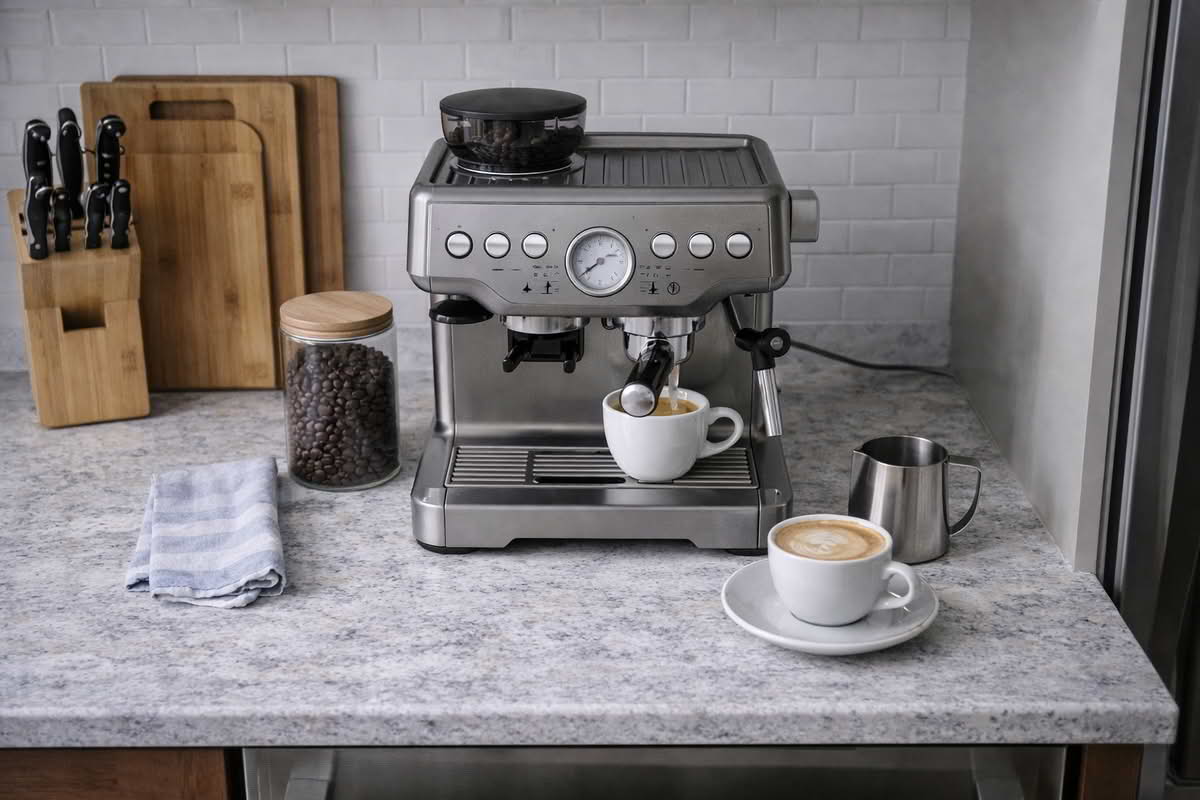
Long-term espresso machine value depends not just on drink quality, but on whether the machine fits the counter, the surrounding workspace, and the maintenance rhythm of the kitchen.
Maintenance is part of ownership, not a side issue. Espresso brewing involves more residue, more parts, and more routine cleaning than many simpler coffee methods. That can be perfectly acceptable if the buyer expects it and the machine offers enough satisfaction in return. But if the household mainly wants better coffee without much extra work, then maintenance burden becomes a decisive factor. A machine that needs frequent rinsing, descaling, milk-system attention, or general wipe-down can feel reasonable to one buyer and exhausting to another. The right machine is the one whose upkeep matches the level of involvement you already know you are willing to sustain.
This is also where long-term value becomes clearer. A less expensive machine can be a smart purchase if it supports the household's real drink routine without pretending to be something more. A mid-range machine often makes the most sense for many buyers because it can improve workflow, milk capability, and drink consistency without demanding either the highest price or the highest level of daily skill. Higher-priced espresso machines make sense when the household will actually benefit from better build quality, more satisfying milk performance, or more refined control often enough to justify the extra cost and extra attention.
Another common form of regret is buying for status instead of routine. Espresso machines have a stronger symbolic pull than many small appliances. They can represent a serious home coffee habit, a more elevated kitchen, or a hoped-for replacement for frequent cafe spending. None of that is necessarily wrong. The problem comes when the symbolic value outruns the practical value. A machine that feels impressive but inconvenient is still inconvenient. The better purchase is the one that continues to feel worthwhile after the novelty wears off.
Let counter fit and nearby workspace influence the decision as much as the machine's coffee features.
Judge maintenance honestly, because espresso ownership always includes some level of routine cleaning.
Choose a price tier that matches how often the machine will be used and how much coffee quality refinement you will actually notice.
Be cautious of buying for image or aspiration when the daily workflow points in a simpler direction.
It is also useful to think about replacement pressure. A machine that feels only slightly too demanding can often be tolerated for a while, then gradually replaced once the daily friction becomes more obvious. The same is true of a machine that feels slightly too limited once preferences grow. That is why the best purchase is usually not the one that seems safest in a generic comparison. It is the one that fits your current routine while leaving just enough room for how you are realistically likely to use it in the next few years.
Milk systems, drip trays, water reservoirs, and general cleanup paths all contribute to whether the appliance feels manageable in daily life. These are not glamorous details, but they are exactly what shape long-term satisfaction. Since the machine is meant to improve the coffee routine, it should not create a second routine of small annoyances around it.
The best long-term espresso machine purchase usually feels justified rather than dramatic. It supports the drinks you actually make, fits the pace of your mornings, and demands a level of effort that still feels fair after the first few months. That is what turns an espresso machine into a lasting kitchen tool instead of a short-lived enthusiasm purchase.
Final Recommendations — choosing the espresso machine that fits your mornings instead of your fantasy version of them
A good espresso machine should be chosen by workflow, drink preference, and maintenance tolerance rather than by prestige alone. Buyers who want espresso-based drinks with lower friction usually do best with a machine that emphasizes repeatability, clear controls, and practical milk handling. Buyers who genuinely enjoy adjusting the process and are willing to learn can justify a more hands-on machine, but only when that involvement is part of the reward rather than part of the problem. In both cases, the goal is the same: make home coffee satisfying enough to earn the machine's space, cost, and upkeep.
Match the machine to the kind of coffee routine you actually want to repeat on ordinary mornings.
Let milk-drink habits and speed needs influence the decision as much as espresso branding.
Prioritize workflow, control clarity, and maintenance realism alongside drink quality potential.
Spend for better long-term fit, not just for a more premium-looking machine or broader promise set.
The lowest-regret espresso machine purchase is usually the one that feels proportionate. It is capable enough to satisfy, manageable enough to keep using, and well matched to the pace of the household. When that balance is right, the machine becomes part of the daily rhythm instead of a demanding object that keeps asking for more than the morning wants to give.