How to Choose an Electric Kettle for Everyday Kitchen Use
Electric kettles look simple enough that buyers often assume almost any model will do the job. Water boils, the kettle shuts off, and that seems like the end of the decision. In daily use, though, the differences show up quickly. A kettle can feel too slow, too noisy, too awkward to pour, too large for the counter, or needlessly limited once tea, coffee, oatmeal, instant meals, and general kitchen use all start competing for the same tool. Some buyers overpay for precision features they never use. Others choose the cheapest option available and end up with a kettle that feels flimsy, poorly balanced, or inconvenient every morning. The better decision usually comes from treating the kettle as a daily workflow tool rather than a generic small appliance. Capacity, pour style, temperature control, base design, and how the kettle fits your beverage habits matter more over time than a long list of marketing claims about speed alone.
Start with how the kettle will actually be used
The most useful place to begin is not material or wattage. It is the role the kettle will play in the kitchen. Some households want a fast everyday water-boiling tool for tea, instant coffee, oatmeal, and quick meal prep. Others want a kettle that supports more deliberate brewing, where pour control and water temperature matter because the kettle is part of a coffee or tea routine rather than just a way to heat water. Those are different jobs, and they do not all point to the same kettle.
An electric kettle is most useful when its size, speed, and feature level match the way the household actually uses hot water every day.
This is where many purchases go wrong. Buyers often assume that a kettle with more settings or a more specialized shape is automatically the better long-term choice. In practice, that is only true when the household will actually use those strengths. A variable-temperature gooseneck kettle can be highly useful in one kitchen and needless complexity in another. Likewise, a very simple fast-boil kettle can be perfectly sensible until the buyer starts to care about precision for tea styles, manual coffee brewing, or holding water at a certain temperature during a longer routine.
Frequency matters here. A kettle used several times a day becomes a very different kind of appliance from one used occasionally for a cup of tea or the odd package of instant noodles. When use is frequent, lid design, handle comfort, filling convenience, and base stability become much more important because the appliance stops being a convenience extra and becomes part of the kitchen's daily rhythm. What looks like a minor ergonomic issue in a product listing can become mildly annoying every single day.
It also helps to separate beverage use from broader kitchen use. Some households buy an electric kettle almost entirely for coffee or tea. Others end up using it just as often for hot cereal, cooking water, broth concentrates, or speeding up stovetop tasks. The broader the role becomes, the more important general usability tends to be. That can push the decision away from narrow specialty features and toward capacity, ease of filling, and an intuitive everyday design. A kettle that is too specialized for the way you actually use hot water can become less useful than expected even if it excels in one narrow scenario.
Choose the kettle around repeated uses, not just the most specific or aspirational one.
Decide whether the main role is general hot-water convenience or more deliberate beverage brewing.
Think about how often the kettle will be used, because daily-use appliances need better handling and less friction.
Do not assume more features automatically create more practical value.
Another common mistake is buying around the idea of versatility without considering pace. A kettle that fits a careful brewing ritual may not feel equally satisfying when all you want is very fast water before work. A basic fast-boil kettle may be ideal for speed, but feel less useful if careful pouring or precise temperature control becomes important later. The better choice comes from understanding which kind of convenience matters more in your home: fast boiling with minimal thought or more controlled brewing with more intentional use.
Household size should be interpreted realistically too. A larger household may not need the biggest kettle, but it usually does need enough capacity that boiling water does not turn into repeated cycles. A smaller household may not benefit much from a large kettle if the main use is one or two cups at a time. Just as with coffee makers and rice cookers, the right size is usually the one that matches normal use rather than rare peak demand.
A good purchase in this category usually feels quietly appropriate. It fits the beverages you make, the pace of your mornings, and the amount of kitchen space you are willing to give it. When those pieces align, the kettle becomes one of the simplest and most useful tools on the counter.
Capacity, pour style, and temperature control
Once the kettle's role is clear, the next questions are how much water it should hold, how it should pour, and whether temperature control actually matters for your routine. These are the decisions that shape long-term satisfaction far more than decorative finishes or broad brand positioning. A kettle may look refined or modern, but if the size, balance, and controls are wrong for the way you use it, those visual strengths fade quickly.
Capacity is one of the easiest parts of the decision to misjudge. Buyers often lean toward a larger kettle because it feels safer and more flexible. Sometimes that makes sense, especially in households where multiple cups are prepared at once or where the kettle supports broader kitchen tasks beyond beverages. But larger kettles also take up more space, weigh more when full, and may feel excessive when the usual job is just one mug or two. A smaller kettle can feel more agile and easier to live with, but it becomes frustrating fast if the household constantly has to reboil for additional cups.
Pour style is just as important, though it is often discussed less carefully. Standard kettles usually make the most sense for straightforward daily use where the goal is efficient pouring into mugs, bowls, or cookware without much concern for flow precision. Gooseneck-style kettles serve a different purpose. They appeal when slower, more controlled pouring matters, especially for manual coffee brewing or more deliberate tea preparation. That precision can be very useful, but it only earns its place if the household actually values that kind of control. Otherwise the specialized spout can feel like a feature chosen for category appeal more than for real utility.
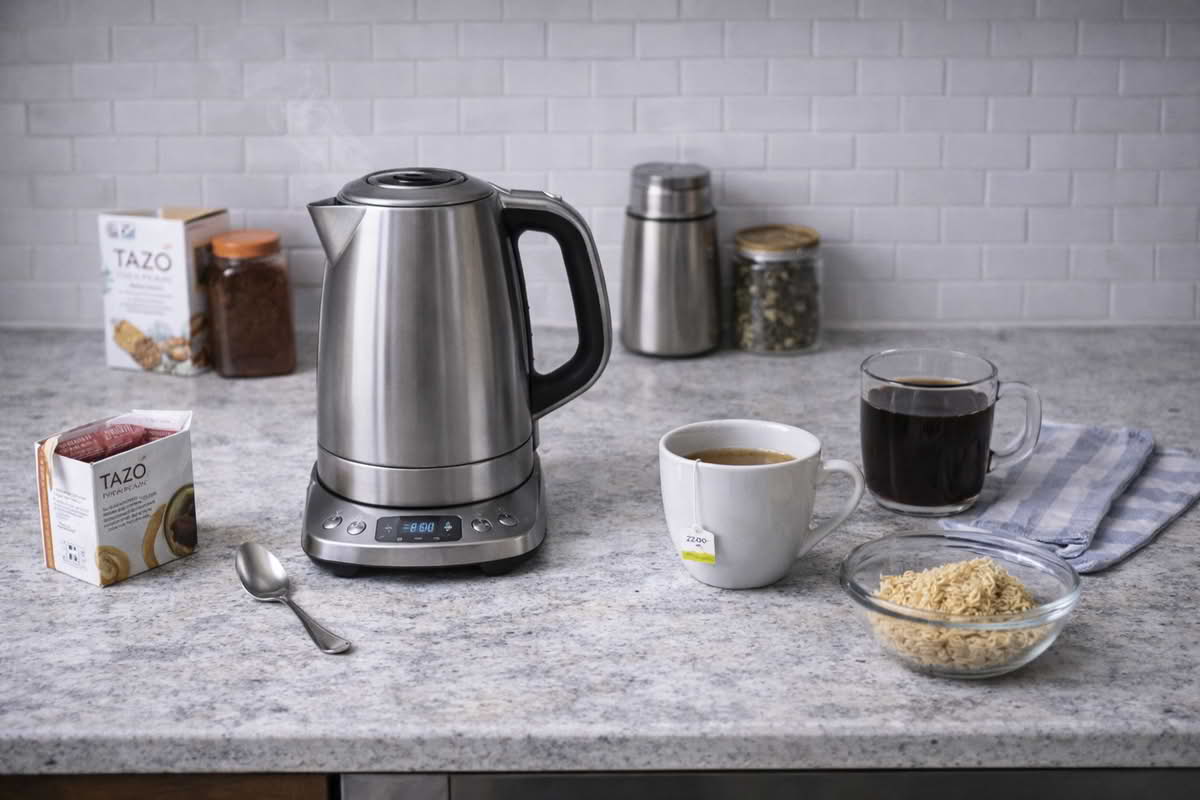
Temperature control works the same way. In some kitchens, it is a meaningful daily advantage because different teas or coffee methods benefit from more precise water temperature. In others, it is mostly an unused panel of buttons that makes the kettle feel more complicated than necessary. Buyers often overestimate how often they will choose a specific temperature unless they already have a routine that clearly depends on it. A variable-temperature kettle is best treated as a tool for a known need, not as automatic proof of a better kettle.
Keep-warm functions deserve the same skepticism. They can be genuinely helpful in households where hot water is needed over a stretch of time rather than all at once. But if most use is one quick boil and immediate pouring, the feature may matter very little. As with many kitchen appliances, the right feature set is the one that supports repeated real behavior, not the one that looks most complete in a comparison chart.
Choose capacity around normal cup volume and kitchen use, not around the largest boil you might occasionally need.
Choose standard spouts for general speed and practicality, and gooseneck designs only when pour control matters often enough to justify it.
Choose variable temperature only when your beverage routine already benefits from it.
Judge features by how often they will truly be used rather than by how advanced they make the kettle appear.
Handle comfort and balance also matter more than many buyers expect. A kettle is picked up hot, often early in the day, sometimes one-handed, and often while the user is multitasking. If the handle shape, lid, or body weight distribution feels slightly awkward, that annoyance repeats constantly. The same goes for the base. A secure, easy-to-align base can make the kettle feel natural to use, while a poorly considered one can create needless fumbling in a routine appliance.
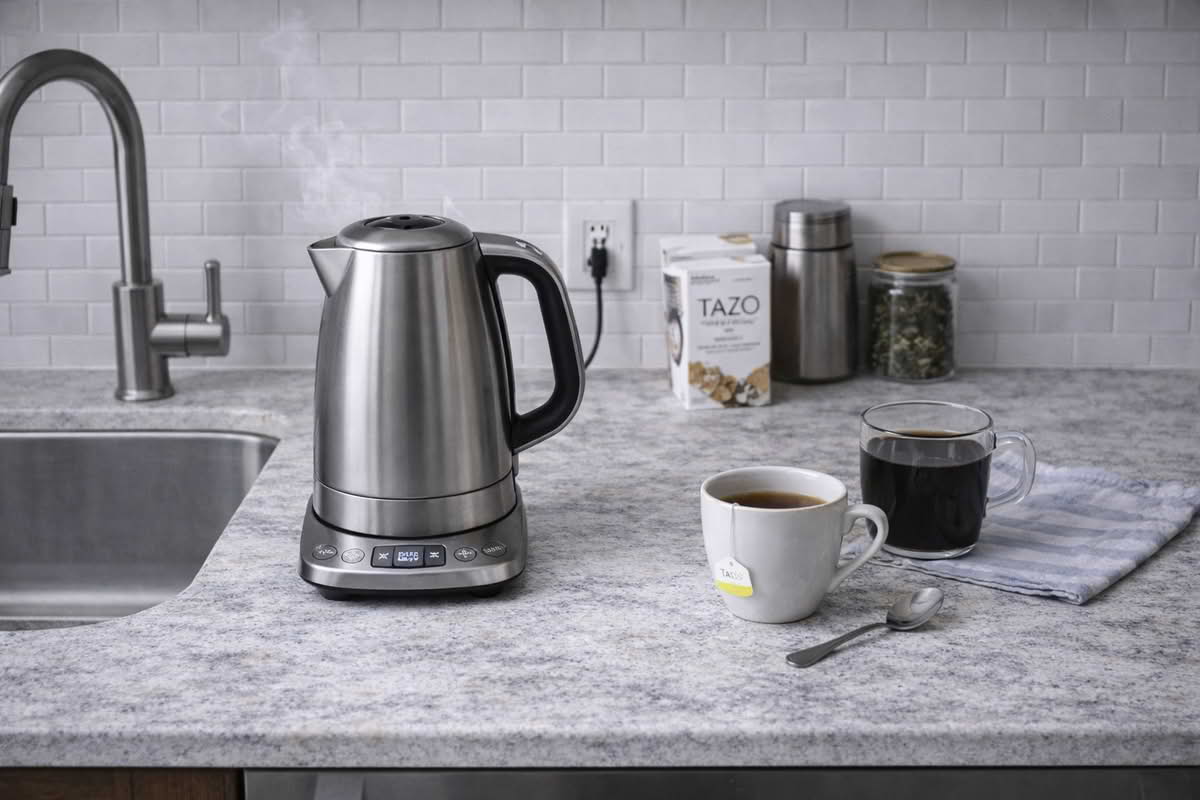
Another often-overlooked issue is fill and water-window design. A kettle should be easy to fill without guesswork and easy to judge at a glance. Buyers sometimes focus on boiling performance while ignoring how often they will interact with the kettle before the water even heats. Good visibility, comfortable opening access, and a design that works well near the sink all improve real usability in ways that specifications alone do not capture.
The best kettle choices usually come from systems thinking. Capacity, spout type, control style, and physical handling all contribute to whether the kettle feels simple and dependable in real use. Looking at any one feature alone often leads to a kettle that sounds ideal in theory and feels slightly mismatched on the counter.
Counter space, cleaning, and long-term value
Electric kettles are usually small enough that buyers underestimate their countertop impact, but they still need to earn their place. In compact kitchens especially, a kettle becomes part of the visual and functional layout every day. A model that feels too tall under cabinets, too wide near other appliances, or too awkward to move around can lose some of its value no matter how well it boils water. That is why physical fit should be part of the purchase decision from the start.
Long-term kettle value depends not just on boiling speed, but on whether the unit fits the counter comfortably and stays easy to fill, lift, and use every day.
This does not mean the smallest kettle is always the smartest. A kettle that is too compact for the household's normal needs can create repeated inconvenience through extra boiling cycles. The better question is whether the kettle's size, shape, and base arrangement feel proportionate to how much it will actually be used. A daily-use kettle can justify a steady countertop position if it truly improves beverage or kitchen workflow. A more occasional-use kettle may benefit from a more compact footprint that stores easily when needed.
Cleaning and maintenance matter more than they first appear. Kettles may seem low-maintenance compared with coffee machines or espresso systems, but scale buildup, water residue, lid handling, and general wipe-down still influence ownership over time. A kettle that is simple to empty, easy to dry, and straightforward to descale usually remains more pleasant to own than one that quietly accumulates friction around these tasks. Since the appliance is often used daily, even small maintenance annoyances can become part of the experience quickly.
Material influences long-term feel here too. Some buyers care more about visual style or the sense of sturdiness a certain body material provides. Others care more about weight, exterior feel, or how easy the kettle is to keep looking clean. None of these priorities is wrong, but they should be interpreted through routine use rather than aesthetics alone. A kettle is handled often, moved frequently, and used close to the sink and counter. The better purchase is the one whose material choices still feel sensible after the first few months of ordinary use.
Cost should be judged against repetition and clarity of purpose. A budget kettle can be an excellent purchase if the goal is fast, dependable boiling without much need for temperature precision or specialized pouring. Mid-range kettles often make the most sense for many households because they can improve ergonomics, consistency, and build feel without adding a lot of feature complexity. Higher-priced kettles make sense when the household truly values pour control, specific temperatures, or a more refined beverage setup often enough to justify the premium. The mistake is paying for a precision-brewing identity when the actual need is just quick hot water before work.
Let counter fit and sink-side handling influence the decision, because the kettle is moved and used often.
Judge descaling and general cleaning as part of real ownership, not just as occasional maintenance.
Choose material and finish with daily handling in mind, not just appearance.
Spend more only when the added temperature or pouring control clearly improves your routine.
Another common regret pattern is buying the most beverage-focused kettle when the kitchen mostly needs a general-use one. The reverse also happens: buyers choose a basic fast-boil model, then feel limited when they start using the kettle for more intentional tea or coffee routines several times a week. Both outcomes come from ignoring the role the kettle will really play. A good purchase should feel like a fit decision, not just a category decision.
Long-term value is usually quiet in this category. A kettle earns its place by being easy to fill, easy to lift, predictable to use, and well matched to the water tasks the household repeats most. It does not need to feel luxurious. It needs to feel cooperative. That is what makes it one of the most useful appliances in the kitchen rather than just another countertop object.
When the right size, spout, and feature level line up with the kitchen's real habits, an electric kettle becomes the kind of appliance you stop thinking about because it simply works the way you want it to. That is usually the best sign that the choice was right.
Final Recommendations — choosing the kettle that fits your beverage routine and your counter
A good electric kettle should be chosen by daily use pattern, pouring needs, and long-term kitchen fit rather than by feature count alone. Buyers who mainly want fast, dependable hot water usually do best with a straightforward kettle that emphasizes speed, comfortable handling, and practical capacity. Buyers who care more about controlled pouring or specific temperatures usually benefit from more specialized designs, but only when those capabilities clearly support routines they already keep. In both cases, the goal is the same: make hot-water prep easier often enough that the kettle earns its place every day.
Match the kettle to the way hot water is actually used in your kitchen: general convenience, precise brewing, or both.
Choose size around normal use, not around the largest boil you may rarely need.
Prioritize handle comfort, fill ease, and countertop fit alongside speed and features.
Spend for better long-term fit, not just for more advanced controls than your routine really needs.
The lowest-regret electric kettle purchase is usually the one that feels proportionate. It is fast enough to be useful, simple enough to stay pleasant, and specialized only where your actual habits benefit from it. When that balance is right, the kettle becomes less like a purchase to justify and more like a natural part of how the kitchen works.