How to Choose a Water Filtration Pitcher for Everyday Home Use
Water filtration pitchers seem simple enough that many buyers choose one almost as an afterthought. It holds water, runs it through a filter, and sits in the fridge. In real use, though, the differences become obvious quickly. A pitcher can feel too small for the household, too bulky for the refrigerator, too slow to refill, or unexpectedly expensive once replacement filters become part of the routine. Some buyers choose the biggest pitcher they can find and then realize it is awkward to lift and rarely fits comfortably on a shelf. Others choose a compact model that looks tidy but demands constant refilling. The better decision usually comes from treating the pitcher as a daily kitchen system rather than a one-time convenience purchase. Capacity, filter replacement logic, pour design, fill speed, and fridge fit all matter more over time than a general promise of cleaner-tasting water.
Start with how the household actually uses filtered water
The most useful place to begin is not the filter marketing itself. It is the role filtered water plays in your home. Some households mainly want better-tasting drinking water in the refrigerator and need a simple everyday pitcher that can fill glasses throughout the day. Others also use filtered water for coffee, tea, cooking, water bottles, or children's drinks, which can increase demand dramatically. Those are different patterns, and they should lead to different purchases.
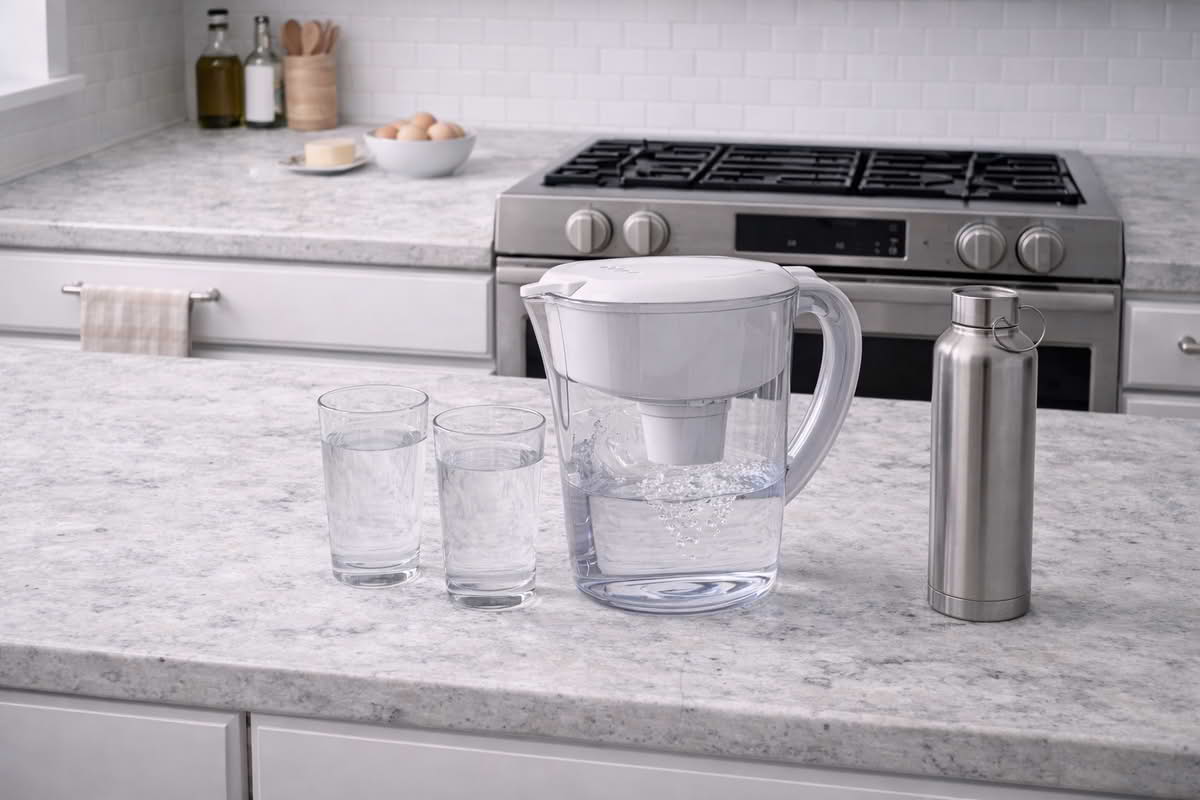
A water filtration pitcher works best when its size and use pattern match how the household actually drinks and refills filtered water each day.
This is where many buying mistakes begin. Buyers often choose a pitcher because it seems like a tidy, low-commitment solution, but they do not think through total water flow across the day. A model that works well for one or two people drinking a few glasses may become frustrating in a busier kitchen where multiple bottles are being filled, coffee is brewed every morning, and filtered water is expected to support meal prep too. The reverse problem happens just as often. A large pitcher or dispenser-style model may sound safer because it seems more prepared for heavy use, but if the household's actual demand is modest, the extra size can feel wasteful and awkward.
Frequency matters here because a water filtration pitcher is not really a passive appliance. It is a refill system. Every household will experience that system differently depending on how often the pitcher is emptied, how quickly it is refilled, and whether anyone reliably keeps it topped off. A pitcher that sounds fine in theory can become annoying if it is constantly empty when needed. This is one reason why the best choice is rarely about the headline filter promise alone. It is about whether the pitcher fits the rhythm of real drinking and refilling behavior.
It also helps to think about where the filtered water goes. If most of it is consumed directly from the fridge in glasses, then chilled storage and easy pouring are central. If a good share is used for kettles, coffee makers, or pet bowls, then fill access and refill frequency matter more. A household that uses filtered water mainly for beverage prep may have very different priorities from one that simply wants a better-tasting glass of water available throughout the day.
Choose the pitcher around repeated daily use, not around the broadest possible filtering promise.
Think about whether filtered water is mainly for drinking, beverage prep, cooking support, or all three.
Match the pitcher to the household's refill habits, not just to the amount of water people wish they drank.
Do not assume a larger pitcher is automatically the more convenient option.
Another common mistake is buying around occasional demand instead of normal demand. Households sometimes imagine the pitcher needs to cover guests, larger gatherings, or every possible kitchen use at once. But pitchers are best judged by the pattern they repeat most often. If the household rarely needs large quantities at one time, then a smaller, easier-to-manage pitcher can actually be more satisfying. If the household constantly runs out of filtered water at ordinary times, then a compact model is not saving space so much as creating frustration.
Refrigerator habits matter too. Some households are disciplined about placing the pitcher back in the same spot, refilling it immediately, and keeping it ready. Others use filtered water more casually and need a system that feels forgiving rather than high-maintenance. A good pitcher should support the habits you already have, not depend on idealized household discipline to remain useful.
A smart purchase in this category usually comes from realism. The right model is the one that fits the amount of water the household actually uses, the way it is refilled, and the physical space available in the kitchen and refrigerator. When those pieces align, the pitcher becomes part of the daily routine instead of a minor source of repeated irritation.
Capacity, filter system design, and daily usability
Once the household's filtered-water pattern is clear, the next decision is how much water the pitcher should hold and how the filter system behaves in normal use. This is where simple-looking products begin to separate from one another. Capacity, reservoir design, filter replacement logic, and pour comfort all affect whether the pitcher feels smooth to live with or slightly inconvenient every day.
Smaller pitchers often make sense for apartments, smaller households, or kitchens where refrigerator space is limited and water demand is moderate. Their strength is manageability. They are easier to lift, easier to place, and less likely to dominate a shelf. Their weakness is that they can become refill-heavy if the household drinks more water than expected or uses filtered water for more than just occasional glasses. A smaller pitcher can be elegant in theory and still create constant low-grade frustration if it empties too quickly.
Larger pitchers and dispenser-style units can solve that volume problem, but only when the kitchen and fridge actually support them. More capacity sounds helpful, but it also means more weight, more shelf commitment, and more room needed for filling and pouring. This is especially noticeable when the pitcher is full and has to be handled one-handed or removed from a crowded refrigerator. Bigger can absolutely be better, but only when the household will benefit from the added capacity often enough to justify the tradeoff.
Filter system design is equally important. Some pitchers make filter replacement feel straightforward and predictable, while others create more friction around tracking, seating, or replacement timing. Buyers often focus on the first filter included with the pitcher and underweight the ongoing reality that filter replacement becomes part of ownership. A pitcher that is affordable upfront may not feel as appealing once ongoing replacement habits and costs become part of the routine. This does not mean the cheapest recurring option is always best. It means buyers should think about the whole system rather than only the plastic body and initial setup.
Fill design also matters more than many buyers expect. A pitcher that is awkward to refill under a standard kitchen faucet or takes too long to process a normal refill can become tiresome quickly. Since this category is built around repeated use, refill logic is not a minor detail. The easier the pitcher is to top up, the more likely it is to stay available when needed. The more awkward the refill process, the more likely the household will postpone it and run into an empty pitcher at the wrong time.
Choose smaller pitchers when fridge space and lighter household demand matter more than maximum stored volume.
Choose larger or dispenser-style systems only when the household repeatedly uses enough filtered water to justify the added size.
Think of filter replacement as part of the purchase, not as an afterthought after the first month.
Prioritize easy refilling because the pitcher only works well when people actually keep using it.
Pour comfort deserves more attention than it usually gets. A pitcher can filter water well and still feel awkward if the handle, lid, or spout make it clumsy to pour into glasses or water bottles. This becomes especially important when the unit is larger or shaped for door storage in a crowded fridge. A slight imbalance, a poorly controlled stream, or a lid that shifts during pouring can turn a basic kitchen task into a daily nuisance.
Another overlooked factor is how quickly the filtered-water chamber becomes usable after a refill. Some designs support a smoother cycle between filling and available water, while others create a stop-and-wait rhythm that is more noticeable in busy households. Again, this is not a dramatic performance issue. It is an ownership issue. The best pitcher systems tend to fit naturally into the household's pace rather than interrupting it.
The strongest choices in this category usually come from systems thinking. Capacity, filter replacement, refill ease, and pour handling all combine to shape satisfaction. Looking only at one trait such as pitcher size or initial price makes it easy to miss the model that would actually work better every day.
Fridge fit, refill habits, and long-term value
Water filtration pitchers are strongly shaped by physical context, especially refrigerator space. This is one of the clearest reasons buyers either end up loving the category or quietly resenting it. A pitcher that fits neatly into the door or onto a shelf and remains easy to remove can feel almost invisible in use. A pitcher that technically fits but blocks other items, tips awkwardly, or has to be moved around constantly can create repeated friction no matter how good the filtration promise sounds.
Fridge fit is not just about dimensions. It is also about how the pitcher moves through the kitchen. Can it be lifted comfortably when full? Is there enough room to refill it at the sink without awkward hand positions? Does it return to the refrigerator easily without a careful rearranging process every time? These are the kinds of details that do not look important during shopping and become very important once the pitcher is used several times a day.
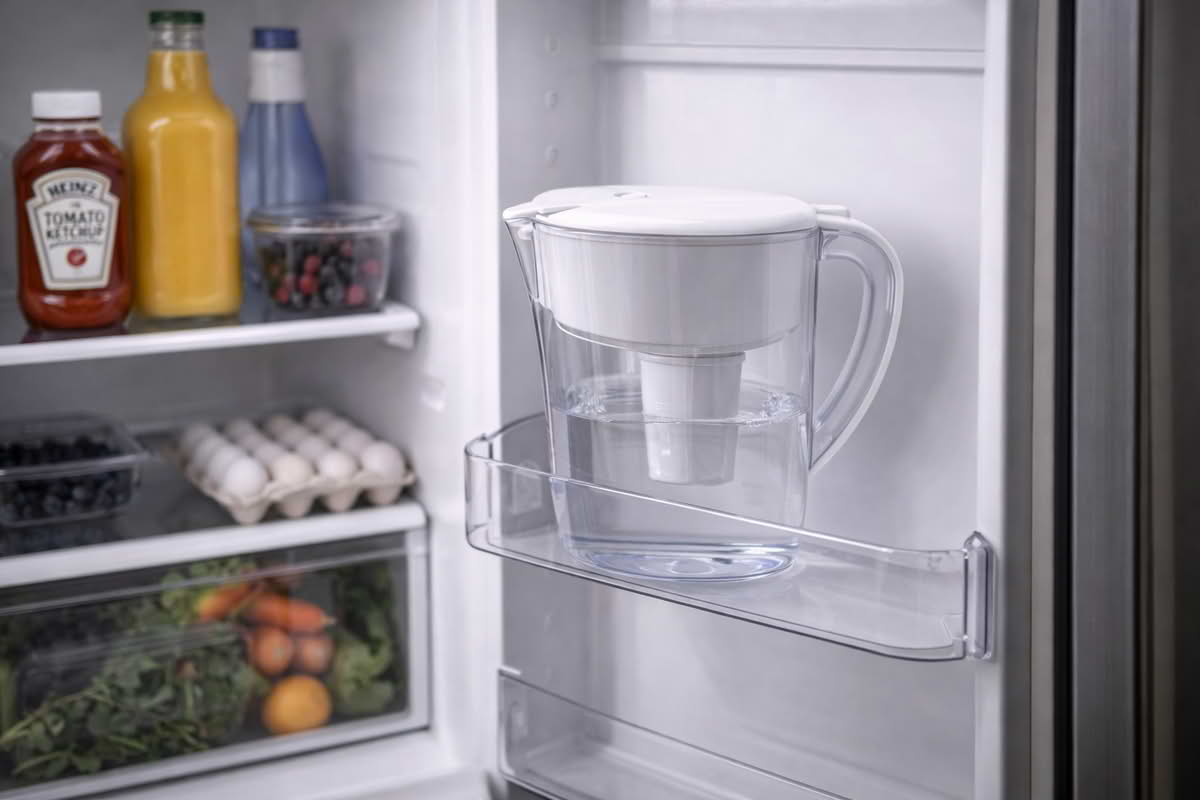
Long-term pitcher value depends not just on filtration, but on whether the unit fits the refrigerator comfortably and stays easy to remove, refill, and return.
Refill habits are a core part of long-term value. Some systems work best in disciplined households that refill immediately after pouring and treat filtered water as something that should always be ready. Others are better for looser routines where water runs low unexpectedly and the pitcher still needs to feel manageable. A pitcher that depends on constant attentiveness from the household may not feel very convenient in practice. The best choices usually support normal human forgetfulness rather than assuming perfect upkeep.
Cleaning also matters more than many buyers expect. Pitchers can seem low-maintenance, but lids, internal reservoirs, spouts, and filter compartments still need occasional attention. If the design makes these surfaces awkward to reach or annoying to wipe, the whole system can start to feel less pleasant over time. Since the category is often chosen for simple everyday utility, maintenance should remain simple enough that the pitcher does not become another object people avoid cleaning until it is overdue.
Long-term value also depends on whether the pitcher stays integrated into the kitchen rather than becoming one more separate system to manage. A budget pitcher can be a smart fit when the household wants a straightforward, light-use solution and does not mind more frequent refills or modest capacity. Mid-range models often make the most sense for many households because they can improve capacity, usability, and day-to-day practicality without forcing a jump into very large refrigerator dispensers or more complex filtration setups. Higher-spending options only make sense when the extra volume or system design clearly matches real household demand.
Let actual refrigerator layout influence the decision as much as stated capacity.
Choose a pitcher the household can refill and return to the fridge easily without constant rearranging.
Judge lid and reservoir cleaning as part of ownership, not as occasional maintenance that will not matter.
Spend more only when extra capacity or a larger filtration format clearly improves repeated daily use.
Another common form of regret is buying for a theoretical ideal. Buyers imagine the household drinking more water, using the pitcher constantly, and keeping it perfectly full. Sometimes that happens. Often the better purchase is simply the one that works well enough within the habits the household already has. A pitcher that is slightly more forgiving, easier to pour, and easier to keep in place can outperform a technically larger or more ambitious option because it actually gets used properly.
The reverse mistake is underbuying when filtered water is truly central to the kitchen. In that situation, a too-small pitcher can become a constant inconvenience and make the whole category seem less effective than it really is. The problem is not water filtration itself. The problem is mismatch. As with many practical kitchen products, proportion matters more than feature ambition.
The best long-term water filtration pitcher purchase usually feels unremarkably cooperative. It fits the refrigerator, supports the household's normal drinking habits, and stays easy enough to refill that filtered water remains available without much thought. That kind of quiet usefulness is what creates real value in this category.
Final Recommendations — choosing the filtration pitcher that fits your fridge and your daily habits
A good water filtration pitcher should be chosen by household water use, refrigerator fit, and long-term refill logic rather than by size claims alone. Buyers who mainly want better-tasting drinking water in modest amounts usually do best with a pitcher that emphasizes easy handling, easy refilling, and sensible fridge storage. Households that use filtered water much more heavily may benefit from larger-capacity or dispenser-style systems, but only when the kitchen and refrigerator can support them without added frustration. In both cases, the goal is the same: make filtered water easy enough to keep available that the system earns its place every day.
Match the pitcher to how filtered water is actually used in your home: casual drinking, heavy daily use, or broader beverage support.
Choose size around normal demand and fridge fit, not around the largest theoretical capacity you might need.
Prioritize refill ease, pour comfort, and replacement-filter practicality alongside filtration claims.
Spend for better long-term fit, not just for a larger unit or a more ambitious-looking system.
The lowest-regret purchase is usually the one that feels proportionate. It is large enough to keep up, small enough to manage comfortably, and simple enough that the household actually keeps using it as intended. When that balance is right, the pitcher becomes a quiet piece of kitchen infrastructure rather than a small daily inconvenience.