How to Choose a Coffee Maker for Everyday Home Brewing
Coffee makers are easy to shop for the wrong way because most of them promise the same basic outcome: hot coffee at home with less effort than more manual brewing methods. In daily use, though, the differences become obvious very quickly. A machine that seems perfect in a product listing can be too slow for rushed mornings, too large for the counter, too small for the household, or too complicated for the kind of coffee routine you actually keep. Some buyers overpay for extra settings they never touch. Others buy the simplest option available and end up frustrated by inconsistent brewing, poor temperature control, or awkward cleanup. The better decision usually comes from thinking about coffee making as part of a daily system. Brew volume, timing, storage, carafe style, maintenance, and how much control you want all matter more over time than a long list of marketing features.
Start with your actual coffee routine
The most useful place to begin is not the machine type itself. It is the rhythm of coffee in your home. Some households brew one or two cups in a hurry each morning and mainly want speed, minimal cleanup, and reliable convenience. Others make a larger pot for multiple people, refill cups over a longer morning, or want enough volume to support work-from-home routines and weekend breakfasts. Those two patterns can point to very different coffee makers, even though both fall under the same broad category.
A coffee maker is most useful when its brew style and capacity match the way the household actually drinks coffee each morning.
This is where many buying mistakes begin. Buyers often shop for the most broadly useful-looking machine instead of the one that fits the routine they already have. A model that makes a full pot may sound like the safest choice, but if the household usually makes one mug at a time, that extra capacity can become wasted space and unnecessary maintenance. A compact or single-serve model may seem efficient, then feel limiting once more than one person needs coffee at the same time or when the household wants a fuller morning brewing routine instead of repeated individual cycles.
Timing matters as much as quantity. Some coffee makers fit best in homes where coffee is prepared in a predictable early-morning routine and kept ready for gradual drinking. Others fit better when people brew on demand, at different times, or in different amounts. The right purchase depends heavily on whether you want one brewing event to cover the morning or a machine that supports more fragmented, individual use. A coffee maker becomes valuable when it reduces friction in the schedule you already have, not when it asks you to adopt a different one.
Another common mistake is assuming coffee preferences are more complex than they really are. Many buyers get pulled into technical comparisons before deciding whether the main goal is simply dependable everyday coffee. If the household mostly wants a consistent, practical brew without extra ritual, that should steer the decision. If the household wants more control over brewing strength, timing, or temperature stability, that points in a different direction. The important thing is to decide how much involvement you actually want. Convenience and control often move in different directions.
Choose the machine around the way coffee is actually consumed: single-cup, full-pot, or mixed household use.
Think about whether the routine depends on one brewing session or repeated on-demand brewing.
Match the appliance to how much control you realistically want in the morning.
Do not buy extra capacity or extra complexity unless it clearly improves the routine you already keep.
Household scale should also be interpreted carefully. A larger household does not automatically need the biggest coffee maker, but it usually does need enough brew capacity or enough speed to avoid repeated frustration. A smaller household does not automatically need a compact brewer either. If both people tend to drink coffee throughout the morning, a full-pot machine may still create the smoother workflow. The better question is not how many people live in the home. It is how coffee actually gets brewed and consumed day after day.
Countertop role matters as well. In some kitchens, the coffee maker is one of the most frequently used appliances and easily earns a permanent spot. In others, counter space is limited and the machine needs to justify every inch it takes. A brewer that works beautifully but feels oversized in the kitchen can lose some of its value simply because of where it has to live. This is one reason the best coffee maker is often the one that feels proportionate rather than impressive.
A good purchase in this category usually comes from realism. The right machine is not the one with the broadest promise. It is the one that makes the first part of the day easier, more consistent, and less demanding without asking too much from the kitchen in return.
Brewing style, capacity, and controls
Once the daily routine is clear, the next questions are how the machine brews, how much it needs to make at once, and how much control the household will actually use. Coffee makers are often compared by feature lists, but real ownership depends more on whether the brewing style supports the way the household drinks coffee. A basic drip machine, a single-serve system, or a programmable larger brewer may all be sensible choices in different kitchens. The better fit comes from how their strengths and limitations line up with your mornings.
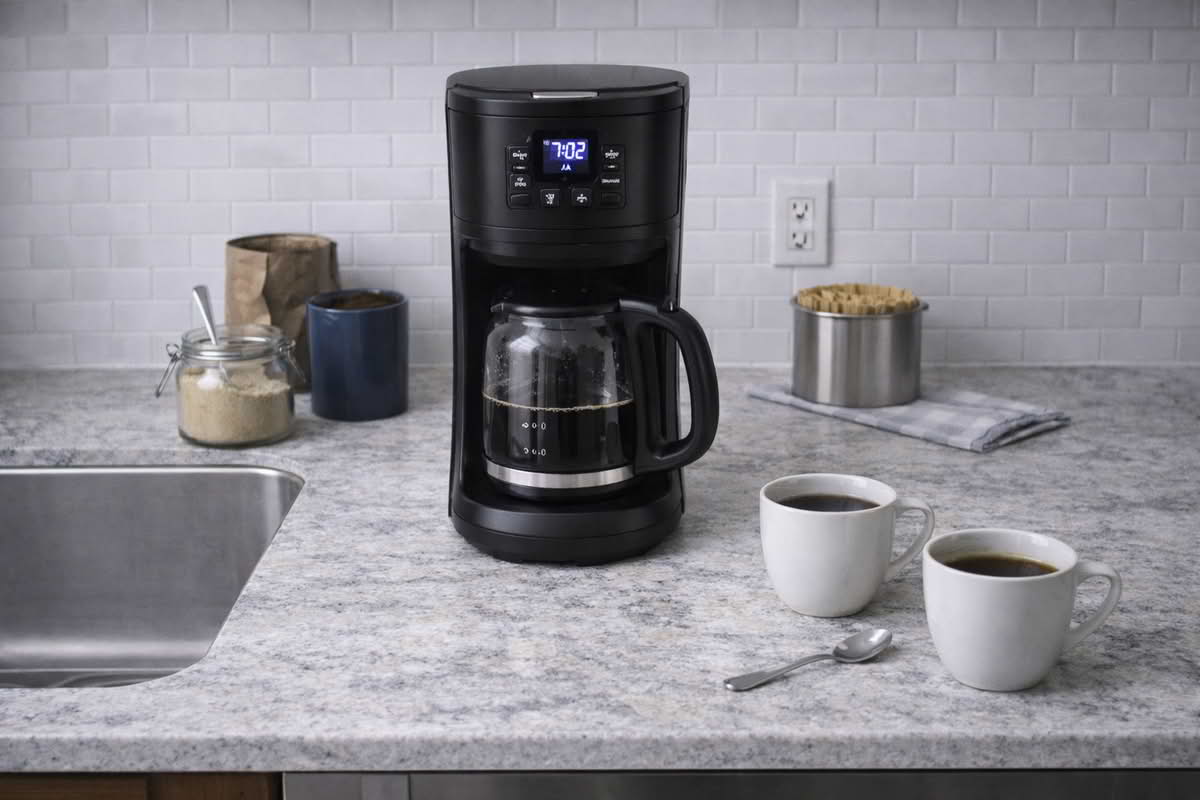
Drip-style coffee makers usually make the most sense when the goal is a larger shared brew, a slower morning of refills, or a kitchen that wants coffee ready in a broader household rhythm. Their main advantage is that one cycle can cover multiple cups without additional effort. The tradeoff is that they are most useful when that volume is truly needed. If the household only drinks one or two cups total, the machine may feel larger and more involved than necessary.
Single-serve coffee makers appeal because they reduce commitment. They fit households where timing is split, preferences vary, or one person wants coffee without brewing for everyone else. That convenience can be very real. But it comes with its own compromises. When multiple cups are needed in quick succession, repeated cycles can become slower and more tedious than a pot-based system. That does not make them a poor choice. It just means they work best when convenience is tied to individual timing rather than group volume.
Capacity should be judged by actual use rather than by the largest number on the product page. A coffee maker that regularly produces more than the household drinks can create waste, stale holding time, or unnecessary cleanup. One that regularly falls short can create repeated brewing sessions that slow the morning down. This is especially important with households that have different drinking habits during weekdays and weekends. The goal is not to buy for the largest possible coffee event. It is to buy for the pattern that repeats most.
Controls deserve a more skeptical look than they often get. Programmable timers, brew strength adjustments, and other features can be genuinely useful when they match the way coffee is already made in the home. But many buyers overestimate how often they will engage with more detailed settings. A machine that looks more advanced can still be less satisfying if the interface feels clumsy, slow, or harder to use before the first cup of the day. In this category, clarity often matters more than sophistication.
Choose drip brewers when one larger brew event fits the household better than repeated single-cup cycles.
Choose single-serve systems when coffee timing is more individual and convenience matters more than batch efficiency.
Match brew capacity to regular use rather than occasional maximum-demand mornings.
Choose controls you will actually use, not the ones that merely make the machine look more capable.
Carafe style affects ownership more than many buyers expect. A machine designed around a thermal carafe supports a different kind of routine than one built around a hot plate and glass carafe. Neither is automatically better. The better choice depends on whether coffee will be consumed quickly after brewing or held longer over the course of the morning. That decision shapes taste consistency, convenience, and the overall logic of the brewer.
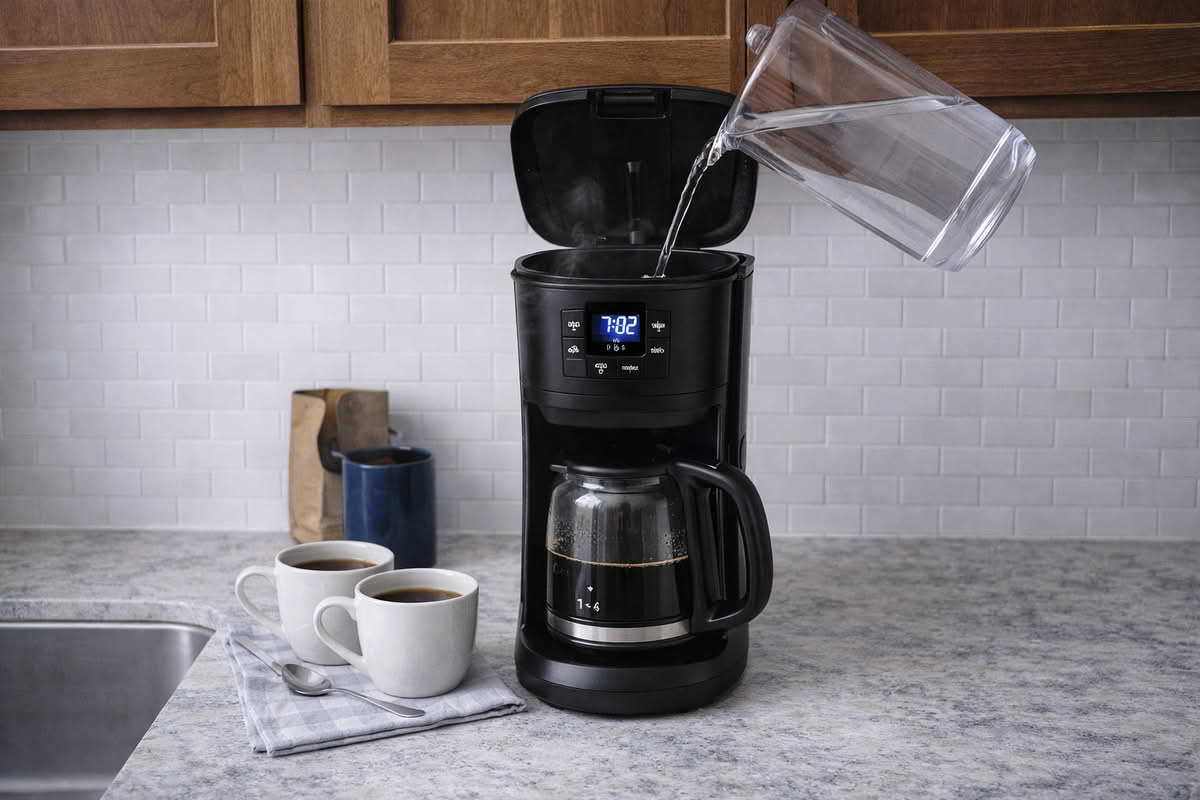
Another overlooked factor is water reservoir design and fill behavior. A coffee maker that is awkward to fill, difficult to read, or cumbersome under cabinets can become irritating even if the brewed coffee is fine. Since the machine is used so frequently, small ergonomic issues compound quickly. Lid opening, reservoir access, filter loading, and how the basket moves all influence whether the brewer feels easy or slightly annoying every single day.
The strongest coffee maker decisions usually come from systems thinking. Brew style, capacity, carafe behavior, control clarity, and fill convenience all work together. Choosing on the basis of just one attractive feature can easily lead to a machine that sounds right in theory and feels slightly wrong every morning.
Counter space, cleaning, and long-term value
Coffee makers are among the appliances most likely to stay on the counter permanently, which makes physical fit especially important. A machine that works well but dominates the limited prep area can wear out its welcome over time. On the other hand, a coffee maker that is small enough to fit comfortably yet still handles the household routine well can feel much more valuable simply because it integrates into the kitchen more gracefully.
This is why footprint should be treated as a core performance factor, not just a storage detail. In smaller kitchens, height under cabinets, lid clearance, and reservoir access can matter almost as much as the brewed coffee itself. A machine that is awkward to fill because of overhead cabinets or a cramped corner may become annoying even when everything else about it seems acceptable. Buyers often underestimate how often they will interact with the brewer physically. In daily-use appliances, ergonomics become part of the product's value very quickly.
Long-term coffee maker value depends not just on brewing, but on whether the machine fits the counter comfortably and stays easy to fill, pour, and clean every day.
Cleaning also matters more than many buyers expect. A coffee maker can seem simple on day one and still become a maintenance burden if the brew basket, water path, carafe, or drip area are annoying to clean. Since the appliance is often used every day, even small maintenance frustrations add up. The household does not need a machine that feels luxurious. It needs one that stays manageable under real use, including routine rinsing, occasional descaling, and general wipe-down.
Long-term value improves when the machine matches the level of coffee importance in the home. A budget brewer can be entirely sensible if the household mainly wants dependable hot coffee without a lot of precision or extra features. A mid-range machine often makes the most sense for many kitchens because it can improve capacity, temperature consistency, interface quality, and overall daily ease without becoming too large or too complex. Higher-priced coffee makers make more sense when the brewer is central to daily routine and the household genuinely benefits from better build quality, stronger consistency, or a more refined brewing workflow.
Another common form of regret is buying too much coffee maker for too little routine. This usually happens when a buyer is drawn to advanced controls or broader capacity without a matching household rhythm. The opposite mistake is buying the simplest machine available when coffee is actually a high-frequency part of the day and the household would have appreciated better consistency or better holding performance. In both cases, the problem is the same: the appliance was not matched closely enough to repeated use.
Let counter footprint and cabinet clearance influence the decision as much as brewing features.
Judge fill access and daily handling as part of real usability, because the brewer is touched often.
Choose a machine whose cleaning and descaling demands feel realistic for everyday ownership.
Spend more only when the improved consistency or workflow clearly matters in your household.
It is also useful to think about replacement pressure. A coffee maker that feels slightly inconvenient every day tends to get replaced sooner than expected, even if it technically works. The brewer may be too small, too fiddly, too messy, or too inconsistent. A better-matched machine can actually cost less over time simply because it stays in the routine without creating small daily dissatisfaction. That is one reason fit matters more than headline feature count.
The best long-term coffee maker purchase usually feels unremarkably dependable. It fits the counter, supports the household's normal volume, brews in a way that matches the timing of the morning, and stays easy enough to maintain that using it never feels like a separate chore. That kind of quiet reliability is what makes a coffee maker valuable.
In a practical sense, the right coffee maker is not the one that promises the most. It is the one that gets the morning started without creating new problems in the kitchen. When that balance is right, the machine becomes part of the routine in the best possible way.
Final Recommendations — choosing the coffee maker that fits your mornings and your kitchen
A good coffee maker should be chosen by household routine, brew volume, and long-term usability rather than by feature count alone. Buyers who mainly want straightforward daily coffee usually do best with a machine that emphasizes dependable brewing, easy filling, and clear controls. Households with more split schedules or different drinking patterns may benefit more from on-demand brewing styles, but only when that convenience genuinely matches the way coffee is consumed. In both cases, the goal is the same: make daily brewing feel easier and more consistent without adding unnecessary complexity.
Match the brewer to how coffee is actually consumed: shared pot, single cup, or mixed timing.
Choose capacity around regular mornings instead of occasional higher-demand scenarios.
Prioritize fill access, cleanup ease, and control clarity alongside brewing style.
Spend for better long-term fit, not just for extra settings or larger capacity than you really need.
The lowest-regret coffee maker purchase is usually the one that feels proportionate. It is large enough to support the household, simple enough to stay pleasant, and dependable enough that the first part of the day runs a little more smoothly because it is there. That kind of everyday fit matters more over time than feature lists or trend-driven comparisons.