Garden Sprinklers: How to Choose the Right Type for Your Yard
Many homeowners buy a sprinkler expecting it to simply “water the lawn,” only to discover uneven coverage, puddles in some areas, and dry patches in others. The problem usually isn’t the sprinkler itself — it’s choosing a design that doesn’t match the shape, size, or watering needs of the yard. Different sprinkler types distribute water in very different patterns, and the wrong choice can waste water while leaving grass stressed. This guide explains how sprinklers actually distribute water, how yard layout influences performance, and what tradeoffs matter most so you can choose a system that fits your lawn instead of constantly fighting it.
How Sprinklers Actually Distribute Water
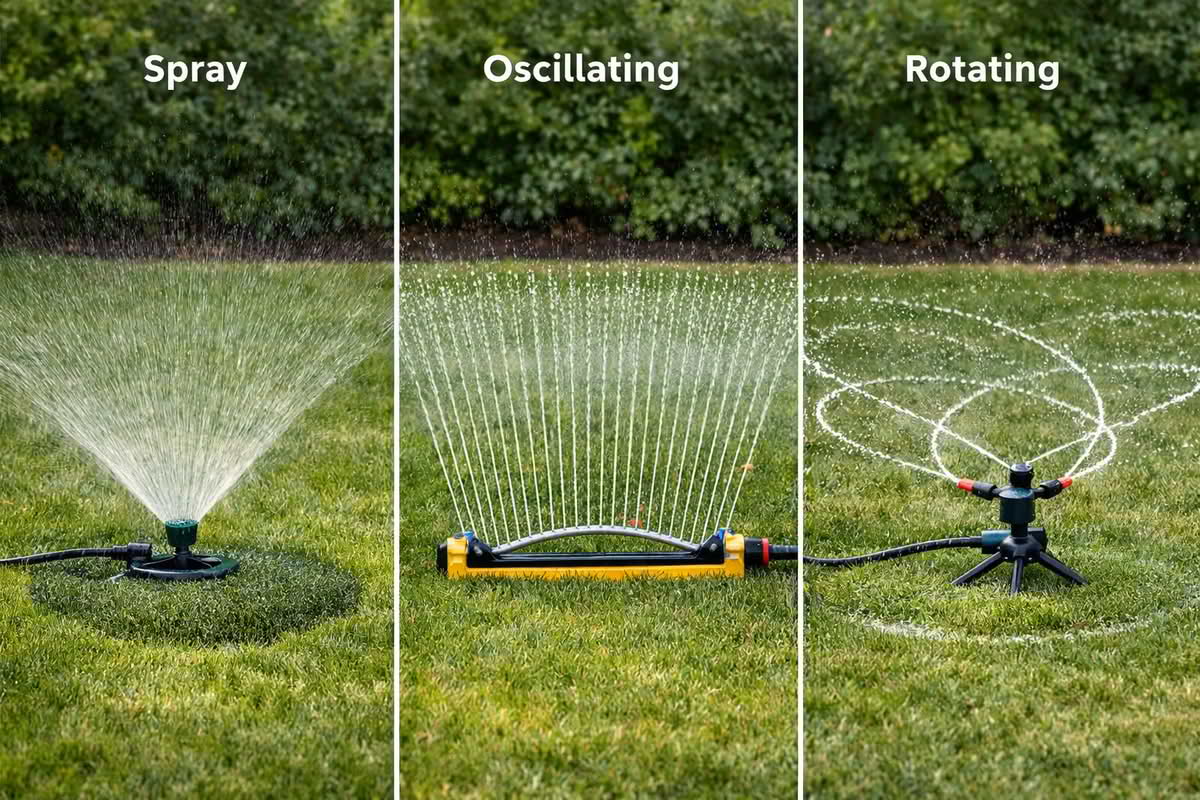
Sprinklers may look simple, but the way they deliver water varies dramatically between designs. Some models spray water continuously across a fixed pattern, while others rotate slowly and distribute water in pulses across a larger area. These patterns influence how evenly water reaches the soil, how much evaporates before soaking in, and how likely you are to see runoff along sidewalks or driveways.
Even coverage matters more than many people realize. Grass roots grow strongest when moisture penetrates consistently across the entire lawn. If some sections receive much more water than others, the lawn often develops patchy growth patterns where dense green areas sit next to thin or stressed turf.
Fine mist sprays water quickly but can evaporate or drift in windy conditions.
Large rotating streams travel farther but apply water more slowly.
Pulsing impact sprinklers deliver heavier droplets that penetrate soil efficiently.
Low-angle streams reduce wind drift but may reduce coverage width.
The common mistake is assuming larger spray distance automatically means better watering. In reality, distribution pattern and application rate often matter more than maximum reach. A sprinkler that covers a slightly smaller area evenly may produce healthier grass than one that throws water farther but leaves dry zones between passes.
Different sprinkler designs distribute water in distinct patterns, which directly affects how evenly moisture reaches the soil.
Matching Sprinklers to Yard Size and Shape
One of the most important factors when choosing a sprinkler is the shape of the area you’re watering. Lawns rarely match the perfect circles that many sprinklers produce, which means some areas can receive too much water while others remain dry. Selecting a sprinkler that aligns with the layout of your yard often solves many watering problems before they start.
Rectangular lawns often benefit from sprinklers that sweep back and forth in straight lines. Irregular lawns, on the other hand, may require rotating or adjustable sprinklers that can reach corners and curved edges without wasting water on hard surfaces.
Long, narrow lawns usually work best with oscillating sprinklers.
Wide open areas benefit from rotating or impact sprinklers.
Small gardens may only need compact spray sprinklers.
Irregular yard shapes often require adjustable spray patterns.
The tradeoff is coverage precision versus watering time. Sprinklers designed for wide coverage reduce repositioning, but they may water areas outside the lawn if the pattern cannot be adjusted. Smaller pattern sprinklers require more repositioning but often deliver more precise watering with less waste.
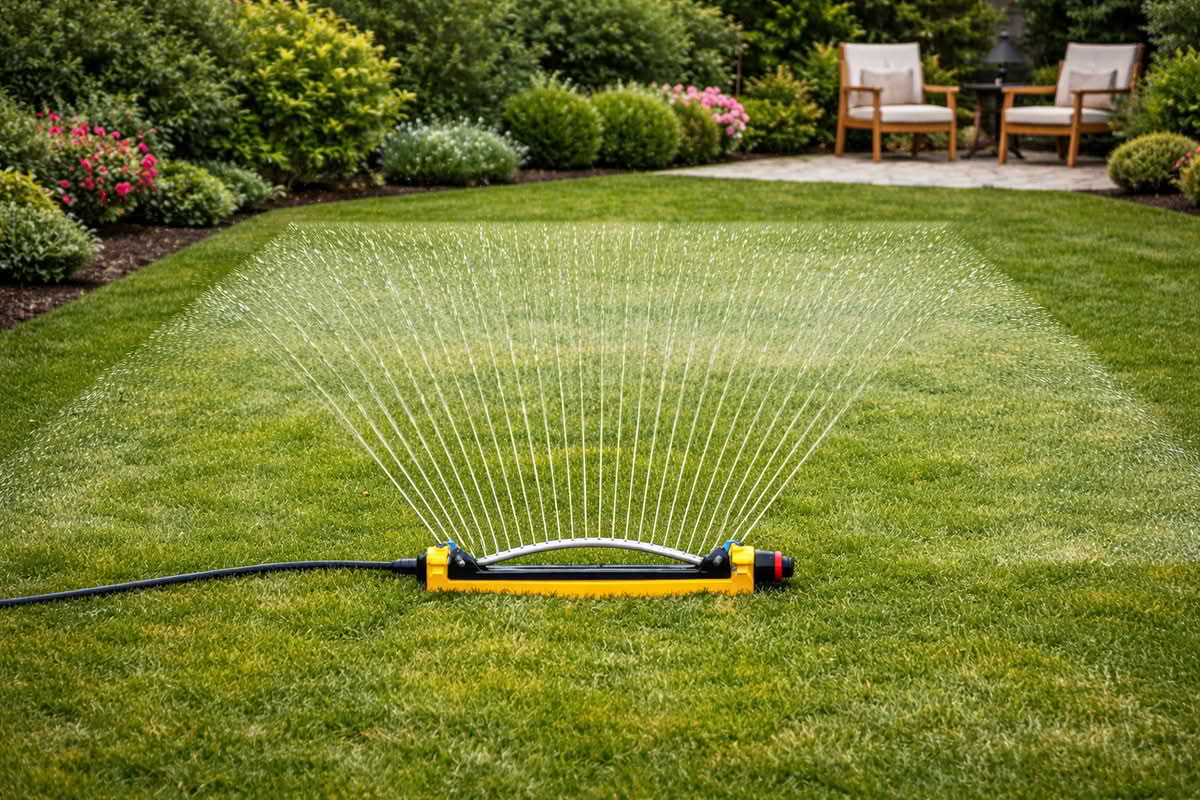
Oscillating sprinklers sweep back and forth, creating a rectangular watering pattern suited for many typical backyard lawn shapes.
Water Pressure and Flow Considerations
Even the best sprinkler design cannot perform properly if the household water supply doesn’t provide enough pressure or flow. Many watering problems that appear to be sprinkler issues are actually caused by limited water pressure or restrictive hoses.
Sprinklers depend on pressure to push water outward and maintain consistent spray patterns. If pressure is too low, the sprinkler may fail to rotate, produce uneven arcs, or collapse into a weak spray that barely reaches beyond a few feet.
Typical residential outdoor faucets provide 40–60 PSI of pressure.
Long hoses reduce pressure as water travels farther.
Multiple sprinklers connected together divide available flow.
Older plumbing systems sometimes deliver inconsistent pressure.
The long-term implication is watering efficiency. A sprinkler that barely functions due to limited pressure may force longer watering times, increasing water consumption while still delivering uneven moisture. Understanding your water supply limitations helps prevent buying sprinklers that require more pressure than your system can realistically provide.
Durability, Adjustability, and Maintenance
Lawn sprinklers operate outdoors, often exposed to sun, soil, and occasional impacts from lawn equipment. Durability therefore plays a major role in long-term ownership satisfaction. Lightweight plastic models may work well initially but sometimes degrade faster under constant sun exposure or accidental bumps from lawn mowers.
Adjustable sprinklers can also significantly reduce watering frustration over time. Being able to fine-tune spray width, rotation angle, or water distance helps adapt the sprinkler to changing lawn conditions as gardens grow or landscaping changes.
Metal components generally last longer under repeated outdoor exposure.
Adjustable spray patterns allow better control of watering zones.
Stable bases prevent sprinklers from tipping during operation.
Removable filters help prevent clogging from debris in water lines.
The tradeoff often comes down to simplicity versus flexibility. Highly adjustable sprinklers offer more control but can require occasional adjustments. Simpler designs require less setup but may limit how precisely you can control water placement.
Understanding Common Sprinkler Types
Several sprinkler designs dominate residential lawn care, each with strengths suited to particular watering scenarios. Understanding how these types behave can make sprinkler selection far easier than trying to compare dozens of individual models.
Oscillating sprinklers are among the most common choices because they produce a predictable rectangular watering pattern. They work well for medium-size lawns but may struggle to reach very large areas without repositioning.
Impact sprinklers rotate using water pressure, throwing streams in wide arcs. Their ability to cover large areas makes them useful for bigger yards, though they sometimes require more pressure to operate effectively.
Oscillating sprinklers produce rectangular watering coverage.
Impact sprinklers cover large circular areas with strong streams.
Stationary spray sprinklers work well for small spaces.
Traveling sprinklers move along a hose path for large lawns.
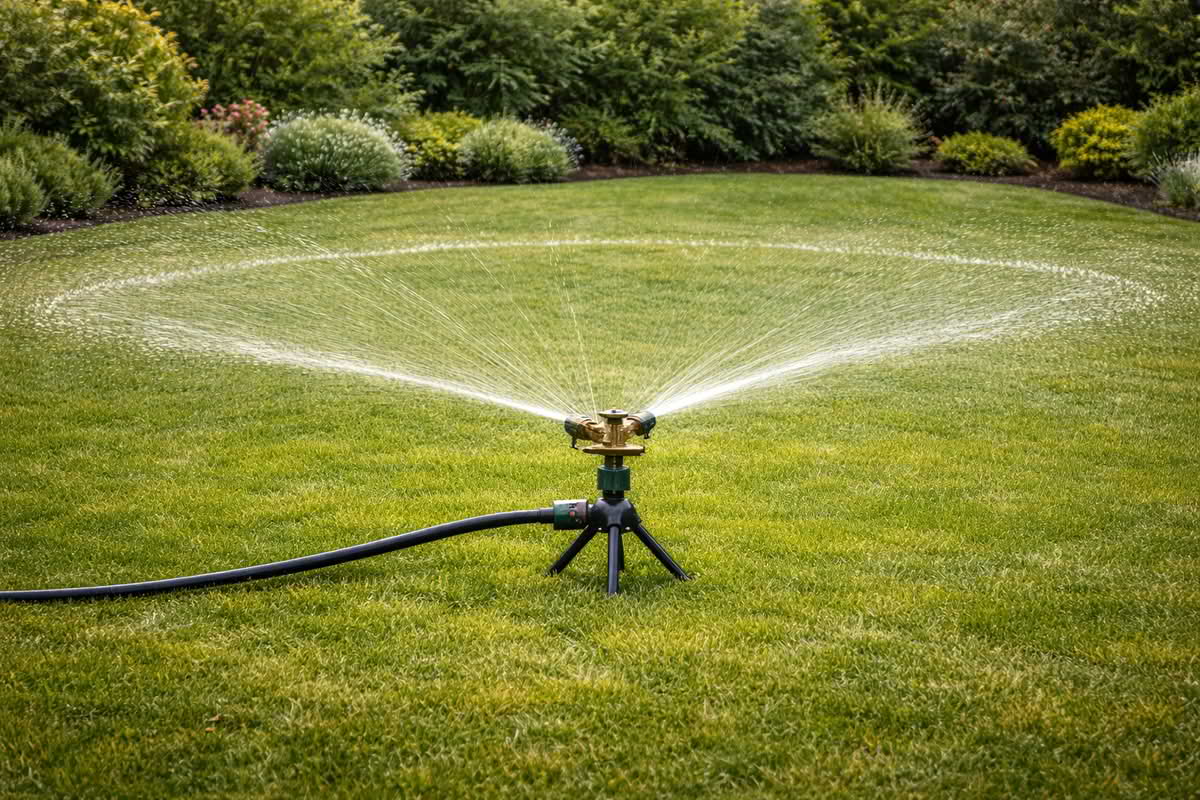
Impact sprinklers rotate in repeating arcs, allowing them to water larger lawn areas with fewer repositioning adjustments.
The key decision factor is rarely which design is “better,” but which one aligns with the physical layout of the lawn and the capabilities of your water supply.
Final Recommendation: Choosing the Right Approach
Choosing the right sprinkler ultimately depends on how your yard is shaped, how large the watering area is, and how much control you want over water distribution. Instead of focusing on features alone, it helps to think about common watering scenarios and which sprinkler type aligns with them most naturally.
Small or irregular lawns: Adjustable spray sprinklers allow precise control and minimize wasted water along sidewalks or garden beds.
Typical rectangular backyard lawns: Oscillating sprinklers usually match the shape of these spaces and distribute water evenly.
Large open lawns: Impact sprinklers or rotating models can reach farther and reduce the need for repositioning.
Large properties with minimal supervision: Traveling sprinklers can automate watering across wide areas.
In the long run, the most effective sprinkler is the one that matches your lawn’s shape and your household water supply while delivering even coverage with minimal adjustment. When those factors align, watering becomes simpler, water usage becomes more efficient, and lawns tend to grow more evenly without the constant need to reposition sprinklers or compensate for dry spots.