Drip Irrigation Systems: How Efficient Garden Watering Really Works
Watering a garden efficiently can be surprisingly difficult. Traditional sprinklers often waste water through evaporation, overspray, and uneven coverage, while hand watering takes time and rarely delivers consistent moisture to plant roots. Drip irrigation systems are designed to solve these problems by delivering water slowly and directly to the soil where plants need it most. However, many homeowners assume drip systems are complicated or only suitable for large agricultural setups. In reality, modern drip irrigation can be simple, flexible, and highly efficient for home gardens. This guide explains how drip irrigation works, the components involved, and how to decide whether it is the right watering solution for your garden.
How Drip Irrigation Systems Work
Drip irrigation systems deliver water slowly and precisely at the base of plants using a network of tubing and small emitters. Instead of spraying water through the air like a sprinkler, drip systems release water directly into the soil at a controlled rate. This method reduces evaporation and ensures that moisture reaches the plant roots where it can be absorbed effectively.
The concept is simple but powerful: apply water gradually and consistently rather than flooding the soil all at once. By maintaining steady soil moisture, plants can develop deeper root systems and experience less stress between watering cycles.
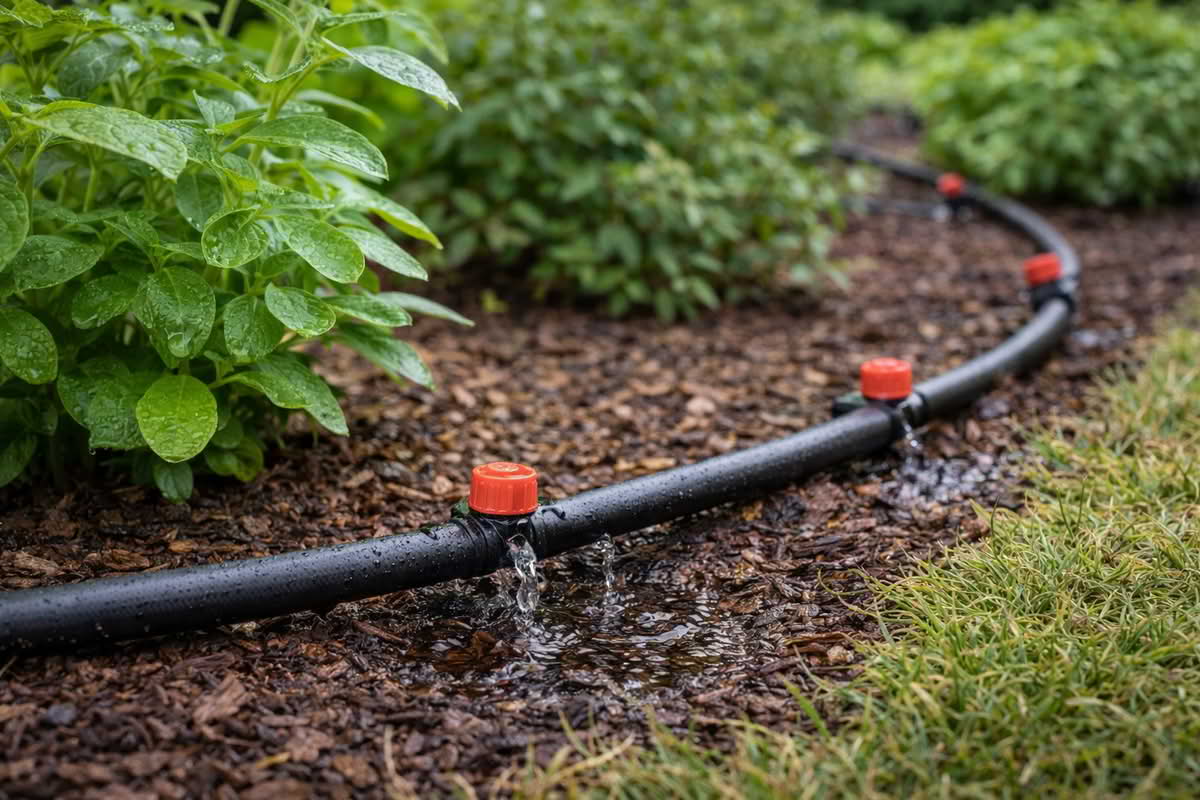
Drip irrigation emitters deliver water slowly at the base of plants, allowing moisture to soak directly into the root zone.
Because water is delivered directly to the soil, drip systems are especially effective in hot or dry climates where overhead watering can lose significant amounts of water to evaporation. They are also useful in densely planted garden beds where sprinklers may struggle to reach every plant evenly.
Water is applied directly to the root zone
Evaporation losses are greatly reduced
Soil moisture remains more consistent
Weed growth may decrease due to targeted watering
Core Components of a Drip Irrigation System
Although drip irrigation systems may look complex at first glance, they are built from a few simple components that work together to regulate and distribute water. Understanding these parts helps homeowners plan a system that operates reliably and efficiently.
Most systems connect directly to a garden faucet or irrigation supply line. From there, water flows through several control components before entering the distribution tubing that runs throughout the garden.
Backflow preventer: protects household water supplies from contamination
Pressure regulator: reduces water pressure to levels suitable for drip systems
Filter: prevents debris from clogging emitters
Distribution tubing: carries water through the garden
Emitters or drip lines: release water at controlled flow rates
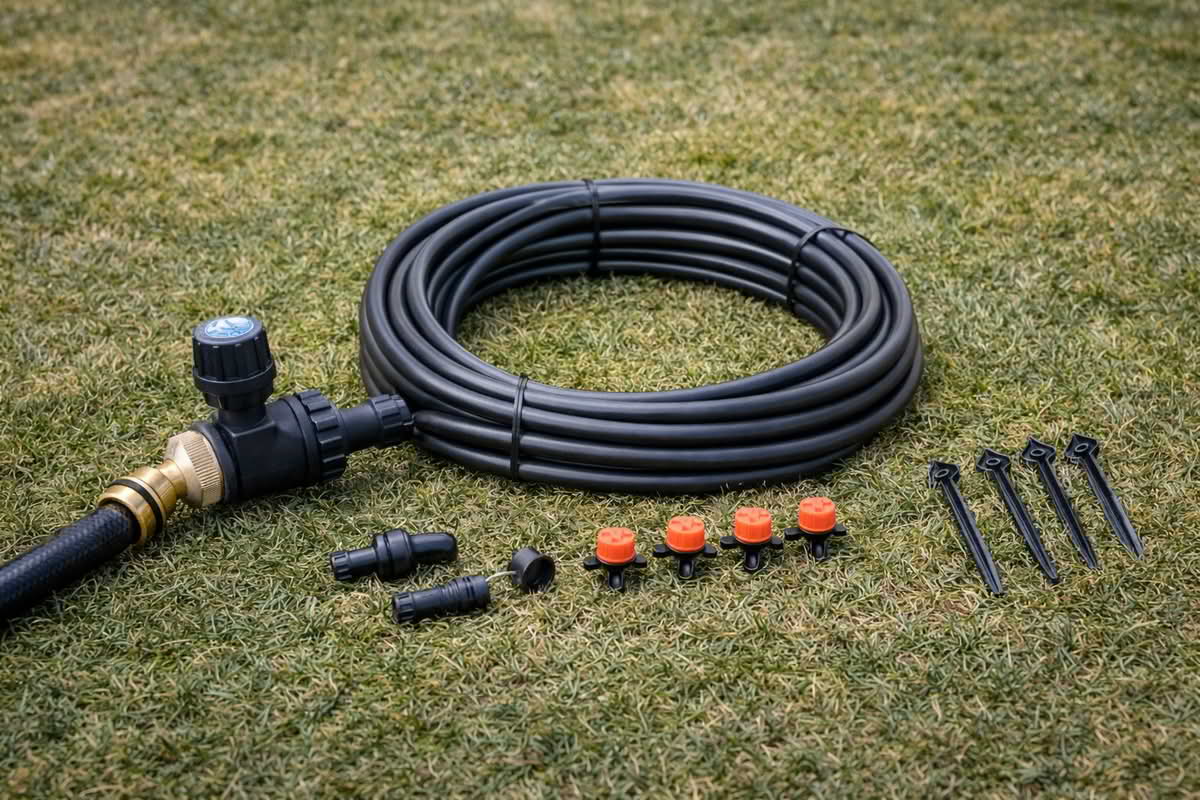
A basic drip irrigation system includes pressure control, filtration, and tubing that distributes water through small emitters.
Each component plays an important role in ensuring consistent water delivery. Without pressure regulation or filtration, small emitters can clog or fail to distribute water evenly across the garden.
Designing a System for Your Garden Layout
One of the advantages of drip irrigation is its flexibility. Systems can be customized for vegetable beds, container gardens, raised planters, and landscaped borders. The key is designing tubing layouts that match the spacing and watering needs of different plants.
Gardens with evenly spaced crops often benefit from drip lines with built-in emitters placed at regular intervals. In contrast, ornamental plantings may require individual emitters positioned near specific plants.
Vegetable beds often use evenly spaced drip lines
Flower beds may require adjustable emitters
Container gardens often use micro-tubing branches
Large landscapes may combine multiple watering zones
Water pressure and distance also influence layout decisions. Long runs of tubing can reduce water flow if too many emitters are connected to a single line. Dividing the garden into smaller zones often improves reliability and makes the system easier to manage.
Planning the layout carefully before installation helps avoid uneven watering and ensures that each plant receives the moisture it needs.
Water Efficiency and Long-Term Benefits
One of the primary reasons gardeners adopt drip irrigation is its ability to reduce water usage without sacrificing plant health. Because water is delivered slowly and directly to the soil, far less water is lost to evaporation, wind drift, or runoff.
This efficiency becomes particularly valuable in regions where water restrictions or drought conditions make conservation essential. Even in areas with abundant water supplies, reducing unnecessary usage can lower utility costs and support more sustainable gardening practices.
Lower water consumption compared with sprinklers
Improved root development due to consistent soil moisture
Reduced fungal disease risk from dry foliage
Compatibility with automated timers for consistent watering
Over time, the consistency of drip irrigation can improve overall plant health. Plants that receive steady moisture tend to experience fewer stress cycles and can focus more energy on growth and production rather than survival.
Common Drip Irrigation Mistakes
Despite their efficiency, drip irrigation systems can perform poorly if installed without proper planning. Many problems occur when systems are designed without considering water pressure, filtration, or plant spacing.
Skipping pressure regulators, which can damage emitters
Failing to install filters that prevent clogging
Placing emitters too far from plant root zones
Overloading a single line with too many emitters
Another common mistake is assuming that drip irrigation eliminates the need for observation. While automated systems reduce daily watering tasks, gardens still benefit from occasional monitoring to ensure emitters remain unclogged and plants receive adequate moisture.
Simple maintenance practices such as seasonal flushing and periodic inspection can keep systems functioning smoothly for many years.
Final Recommendation: Choosing the Right Approach
Drip irrigation systems work best when they are matched to the scale and layout of the garden. While they offer excellent water efficiency, the ideal configuration depends on how plants are arranged and how frequently watering is required.
Small raised-bed gardens: simple drip lines connected to a faucet provide reliable and efficient watering.
Mixed planting beds: adjustable emitters allow targeted watering for plants with different moisture needs.
Large vegetable gardens: multiple drip zones help maintain consistent pressure and coverage.
Busy homeowners: automated timers paired with drip systems simplify routine watering.
In the long run, drip irrigation is less about technology and more about consistency. When water is delivered slowly and predictably to plant roots, gardens become easier to maintain and more resilient during hot or dry periods. With thoughtful planning and simple maintenance, drip systems can provide one of the most efficient and reliable watering solutions available for home gardens.