Garden Hose Storage: How to Choose the Right Reel or Organizer
Garden hoses are one of the most commonly used tools around the home, yet they are also one of the most poorly stored. Many homeowners simply leave a hose coiled on the ground, which leads to kinks, premature wear, tripping hazards, and constant frustration during everyday use. The challenge is that hose storage solutions vary widely in size, durability, and convenience. Wall reels, carts, boxes, and automatic rewind systems all solve different problems. This guide explains how hose storage works, the tradeoffs between different systems, and how to choose a solution that fits your yard, climate, and daily gardening habits.
Why Hose Storage Matters More Than Most People Think
Garden hoses appear simple, but their lifespan and usability are heavily influenced by how they are stored. When hoses are left on the ground or loosely coiled, they develop kinks that weaken the internal structure. Over time, these weak points become leaks or permanent bends that reduce water flow and make watering more frustrating.
Good hose storage also affects safety and convenience. A loose hose across a walkway creates a tripping hazard and can damage lawns or garden beds if it is repeatedly dragged across the same area. Organized storage keeps the hose accessible while preventing it from interfering with normal yard use.
Prevents kinks that shorten hose lifespan
Reduces tripping hazards around patios and walkways
Makes watering faster and less frustrating
Protects hoses from sun exposure and weather damage
Another overlooked factor is UV exposure. Rubber and vinyl hoses degrade when left in direct sunlight for long periods. Proper storage systems elevate or enclose the hose, reducing this exposure and extending the life of the material.
Understanding the Main Types of Hose Reels
Hose reels are the most common storage solution because they keep hoses neatly coiled while allowing them to be easily extended and rewound. However, not all hose reels work the same way. The design determines how convenient the system feels during everyday use.
The most common options include wall-mounted reels, freestanding carts, and automatic retractable reels. Each approach solves a different type of storage problem depending on the size of the yard and the distance the hose needs to reach.
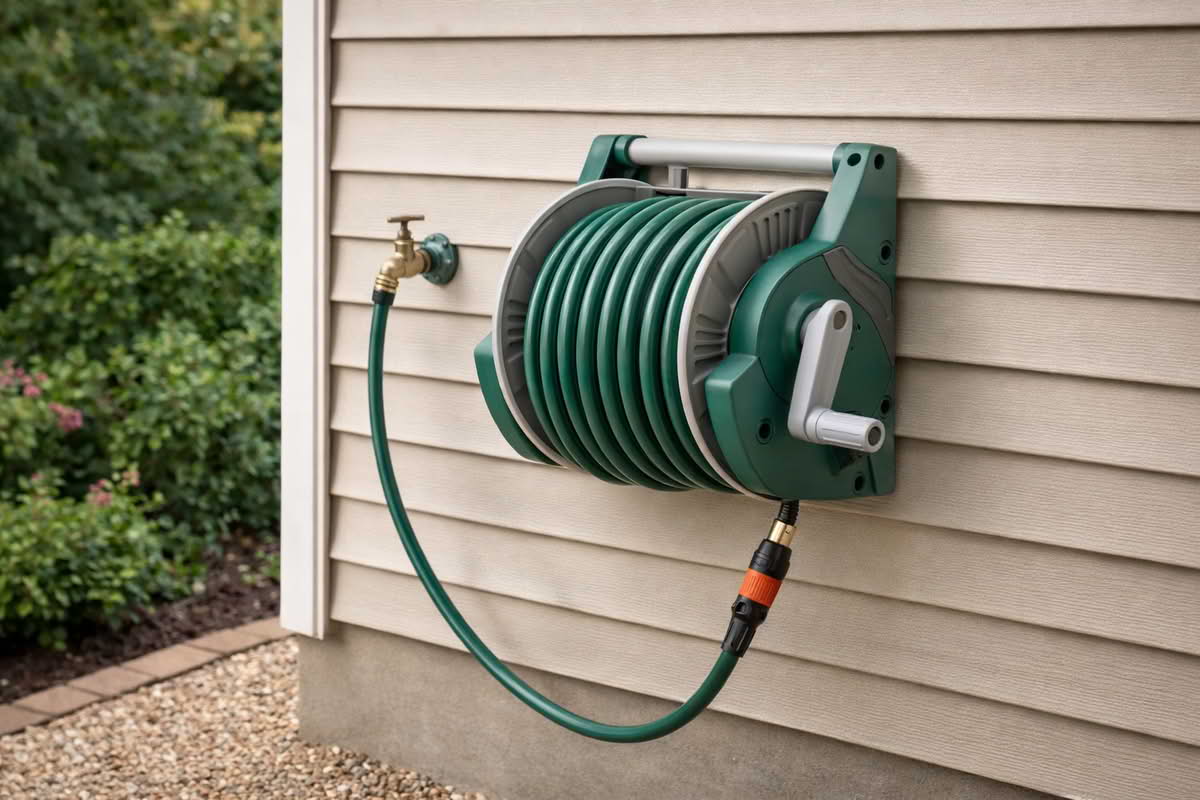
Wall-mounted hose reels keep hoses organized near outdoor faucets and prevent tangles during everyday watering tasks.
Wall-mounted reels are often the most durable option because they attach directly to a structure such as a house wall or fence. This keeps the hose elevated and organized while preventing the reel from tipping or shifting during use.
Wall-mounted reels provide stable storage near a faucet
Hose reel carts allow hoses to move around larger yards
Retractable reels automatically rewind the hose after use
The main tradeoff between these systems is convenience versus flexibility. Fixed reels offer stability and durability, while mobile carts provide reach across larger landscapes. Automatic reels add convenience but typically cost more and may require protected mounting locations.
Hose Storage Boxes and Decorative Containers
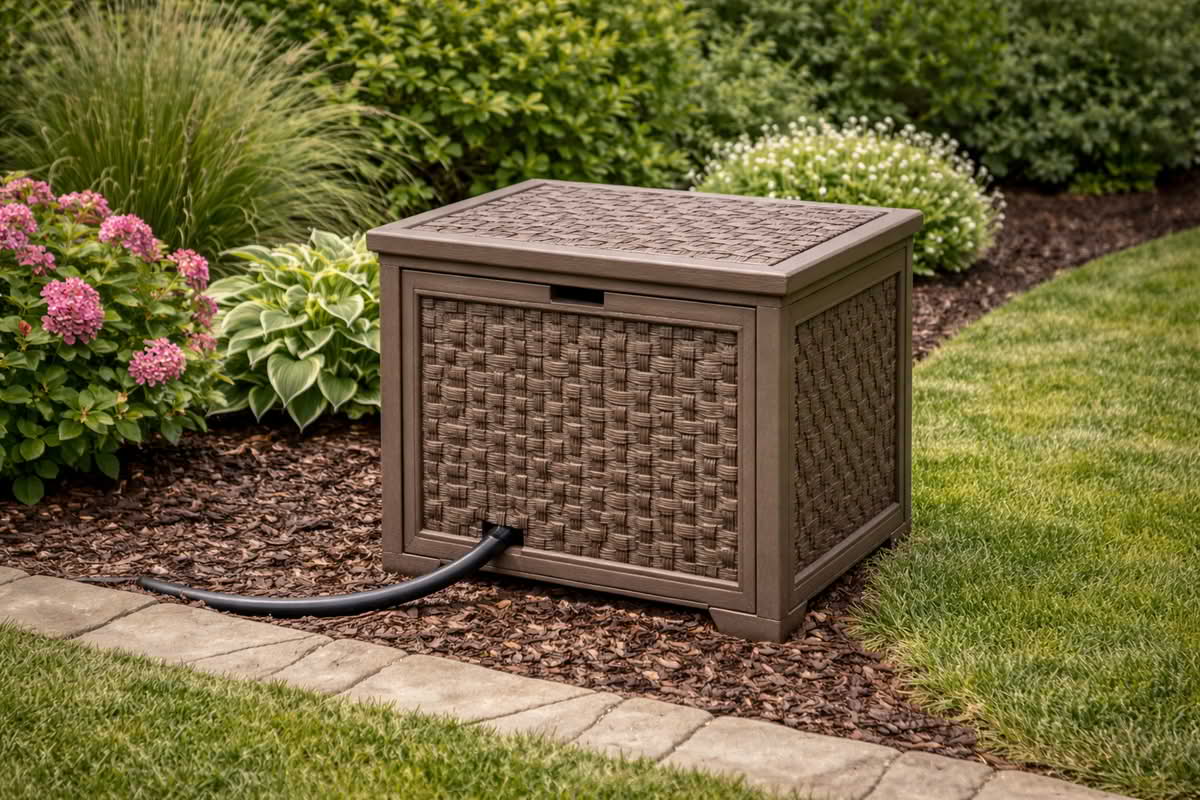
Hose storage boxes provide a different approach to hose organization. Instead of winding the hose around a reel, the hose is loosely coiled inside a container. These boxes are often used in decorative garden spaces where visible equipment would disrupt the overall aesthetic.
Storage boxes typically include a side opening that allows the hose to extend while the majority of the hose remains hidden. When watering is finished, the hose is manually placed back inside the container.
Decorative hose storage boxes conceal garden hoses while maintaining a cleaner visual appearance in landscaped areas.
These systems work well in smaller gardens, patios, and landscaped front yards where visual clutter is a concern. However, they require slightly more manual effort because the hose must be coiled by hand after each use.
Helps hide hoses in decorative garden areas
Protects hoses from direct sunlight
Works well for shorter hoses and compact spaces
Requires manual coiling after use
For homeowners who prioritize landscape design and aesthetics, hose boxes can integrate much more naturally into the environment compared to exposed reels or carts.
Capacity, Durability, and Space Considerations
Choosing the right hose storage solution also depends on the size and weight of the hose being stored. Larger yards often require hoses between 75 and 100 feet long, which are significantly heavier than shorter garden hoses. Not all reels or storage systems are designed to support that weight comfortably.
Capacity ratings typically describe the maximum hose length a reel can hold. However, these ratings assume lightweight hoses. Heavy-duty rubber hoses can exceed the practical capacity of smaller reels.
50 ft hoses work with most compact storage systems
75–100 ft hoses require larger reels or carts
Heavy rubber hoses need stronger metal frames
Plastic reels are lighter but may wear faster
Space also affects the ideal solution. Small patios may benefit from compact wall reels or decorative storage boxes. Larger yards may require a mobile hose cart that can follow watering tasks across multiple garden zones.
Climate exposure is another consideration. In regions with strong sun exposure, UV-resistant materials help prevent cracking and fading. In colder climates, reels that allow hoses to be easily removed before winter can prevent freeze damage.
Common Hose Storage Mistakes to Avoid
Many hose problems are caused by small storage habits that gradually damage the hose over time. Even a good hose reel cannot fully compensate for repeated misuse. Avoiding these common mistakes can significantly extend the life of garden hoses.
Leaving hoses stretched across the yard between uses
Storing hoses with tight kinks or twisted loops
Allowing hoses to sit in direct sunlight for long periods
Using storage systems too small for the hose length
Another common mistake is pulling hoses at sharp angles around corners or garden beds. This creates tension points that weaken the hose wall. Over time, these stress points become leaks that require repair or replacement.
Proper storage works best when it is combined with good watering habits. Rewinding the hose gently, draining excess water, and avoiding sharp bends will help maintain flexibility and water flow.
Final Recommendation: Choosing the Right Approach
The best hose storage solution depends largely on how and where the hose is used. Some homeowners prioritize convenience and fast setup, while others focus on durability or maintaining a clean garden appearance. Understanding these priorities makes it easier to select a system that fits naturally into everyday yard maintenance.
Small patios or front gardens: Decorative hose storage boxes keep hoses organized while blending into landscaped areas.
Typical backyard watering: Wall-mounted hose reels provide reliable storage near a faucet and reduce tangling.
Large yards: Hose carts allow hoses to move freely across multiple watering zones.
Convenience-focused setups: Retractable hose reels offer the easiest daily use with automatic rewinding.
In the long term, the most effective storage systems are the ones that encourage consistent use. If the storage solution is easy to operate and located near the watering area, hoses are far more likely to be stored properly after each use. Over time, this simple habit prevents kinks, reduces wear, and keeps the garden organized.