Garden Hose Buying Guide: What Actually Matters for Real Yards
Buying a garden hose seems simple—until you start using one every week.
That’s when the shortcuts show up: hoses that kink constantly, fittings that leak, lengths that never quite reach, and materials that feel fine in the store but turn frustrating in real use.
Most of that frustration comes from focusing on the wrong features or trusting marketing language that doesn’t reflect how hoses actually behave outdoors.
This guide walks through the handful of decisions that actually matter. Not specs for the sake of specs—but the choices that affect daily use, durability, and long-term regret.
Hose Length — Choosing the Right Reach
The most common mistake people make when buying a garden hose is choosing one that’s too short.
It feels harmless at first. Shorter hoses are cheaper, lighter, and easier to store. But once you start using one, you end up stretching it to reach corners, dragging it across plants, or adding extra hoses and connectors just to make it work. That’s when frustration starts.
Measure the farthest point — then add slack
Before buying anything, measure the distance from your outdoor spigot to the farthest place you’ll realistically water. That might be:
the back edge of your yard
a raised bed
the side of a garage
a corner you don’t think about until midsummer
Once you have that number, add 5–10 feet. That extra length gives you room to move without pulling against the hose, the faucet, or the nozzle—parts that wear out faster when they’re under constant tension.
Longer hoses aren’t “worse” — they’re just heavier
There’s a common belief that longer hoses significantly reduce water pressure. In most residential settings, the difference is negligible unless you’re already dealing with very low pressure or extremely long runs. What does change with length is:
weight
storage difficulty
how tiring the hose is to drag around
That’s the real tradeoff—not performance.
Typical lengths (and who they’re actually for)
25 ft: Best for small patios, balconies, or watering right next to the spigot. Often too limiting for yards.
50 ft: Works for many small-to-medium yards if the spigot is well placed.
75–100 ft: Commonly the least frustrating choice for larger yards, awkward layouts, or homes with a single outdoor faucet.
If you’re deciding between two lengths, the longer one usually causes fewer regrets—even if it’s slightly heavier.
Hose Diameter — Matching Flow to Your Yard
Hose diameter is one of those specs people notice on the label but rarely understand in practice. Most buyers either ignore it entirely or assume bigger automatically means better. Neither approach is quite right.
Why diameter matters (and when it doesn’t)
Diameter affects how much water can move through the hose at once. In simple terms:
smaller diameter = less flow
larger diameter = more flow
But flow only matters if you’re actually using that capacity. If you’re mostly:
watering plants
washing cars
filling small containers
you won’t benefit much from a larger diameter hose. If you’re:
running sprinklers
filling large containers
watering lawns for longer periods
flow starts to matter more.
The common mistake: overbuying diameter
Many people buy a 5/8" or 3/4" hose thinking it will “boost pressure.” In reality, household water pressure is set by your plumbing, not the hose. What a larger diameter really gives you is more volume, which can be useful—but it also means:
more weight
stiffer handling
harder storage
For many households, that extra capacity goes unused while the added bulk becomes a daily annoyance.
Practical guidance
1/2 inch: Lighter and easier to handle. Fine for small yards, gardens, and basic tasks.
5/8 inch: The most balanced choice for typical homes. Enough flow for sprinklers without excessive weight.
3/4 inch: Best for long runs, large yards, or higher-volume needs—but noticeably heavier.
If you’re unsure, 5/8" is usually the safest middle ground.
Hose Material — What Marketing Gets Wrong
Hose materials are where marketing language does the most damage. Words like “industrial,” “contractor-grade,” and “heavy-duty” sound reassuring, but they rarely tell you how a hose will actually behave in your yard—especially over time.
Rubber vs vinyl vs hybrid materials
Vinyl hoses are:
inexpensive
lightweight
easy to coil
They’re fine for light use, but they tend to:
kink more easily
stiffen in cold weather
wear out faster under UV exposure
Rubber hoses are:
heavier
more durable
better in temperature extremes
They resist kinking and cracking better, but the weight can be tiring if you move them often.
Hybrid or reinforced hoses try to split the difference. Some do this well. Others don’t. The label alone won’t tell you which.
The real question to ask
How often will I move this hose?
Will I use it in colder weather?
Do I care more about durability or ease of handling?
A hose that’s technically “better” on paper can still be wrong if it’s unpleasant to use every time.
Flexibility & Kink Resistance — Where Daily Frustration Comes From
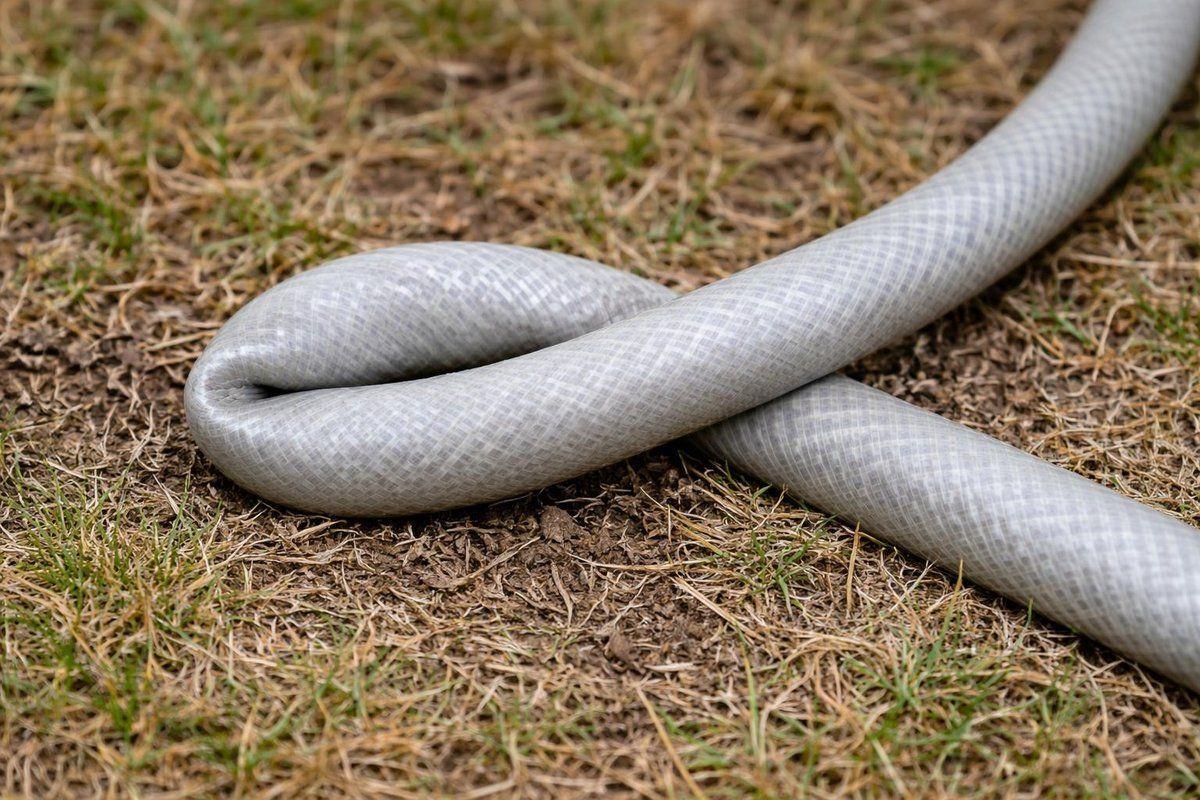
A sharply kinked hose can restrict water flow and increase internal pressure.
Kinking is one of the top reasons people replace hoses—and it’s also one of the least predictable features from a product label. Many hoses claim to be “kink-free.” Very few actually are.
Why kinks happen
Kinks form when a hose twists under tension
Bends sharply near fittings
Stiffens with temperature changes
Material plays a role, but construction matters just as much. A hose can be made of good material and still kink constantly if it lacks proper reinforcement.
The mistake: assuming stiffness equals durability
People often equate stiffness with strength. In reality, overly stiff hoses are more likely to:
fight against movement
loop awkwardly
kink when dragged around corners
What to look for instead
You want controlled flexibility—not limp, but not rigid. Signs of a better design include:
Smooth bending without collapsing
Consistent diameter through curves
Fittings that rotate or relieve twist
If a hose feels awkward to coil in the store, it won’t get better at home.
Fittings & Connections — The Small Parts That Cause Big Leaks
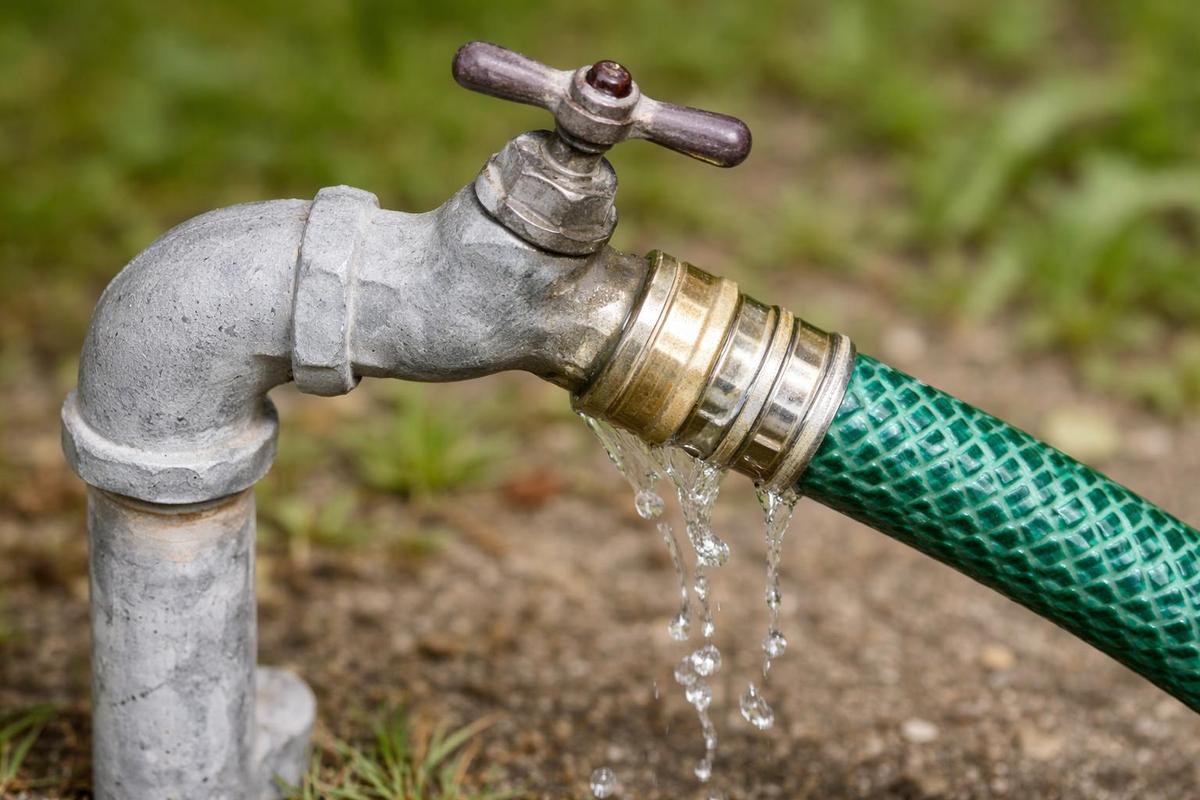
Poorly sealed or worn fittings can cause leaks at the hose connection point.
Most leaks don’t start in the hose body. They start at the connections. This is one of the most overlooked aspects of hose quality because fittings are small, quiet failures—until they’re not.
Plastic vs metal fittings
Plastic fittings are lighter, cheaper, and more prone to cracking and thread wear
Metal fittings last longer, but quality varies. Thin aluminum can deform just as easily as plastic under stress
Where failures usually happen
Poor threading
Internal washers wearing out
Fittings pulling away from the hose body
Practical advice:
Look for solid-feeling fittings with clean threads
Reinforced hose ends
Replaceable washers
And avoid overtightening. Many fitting failures come from trying to “fix” a leak by forcing the connection tighter than it was designed to go.
Storage, Weight, and Real-World Use
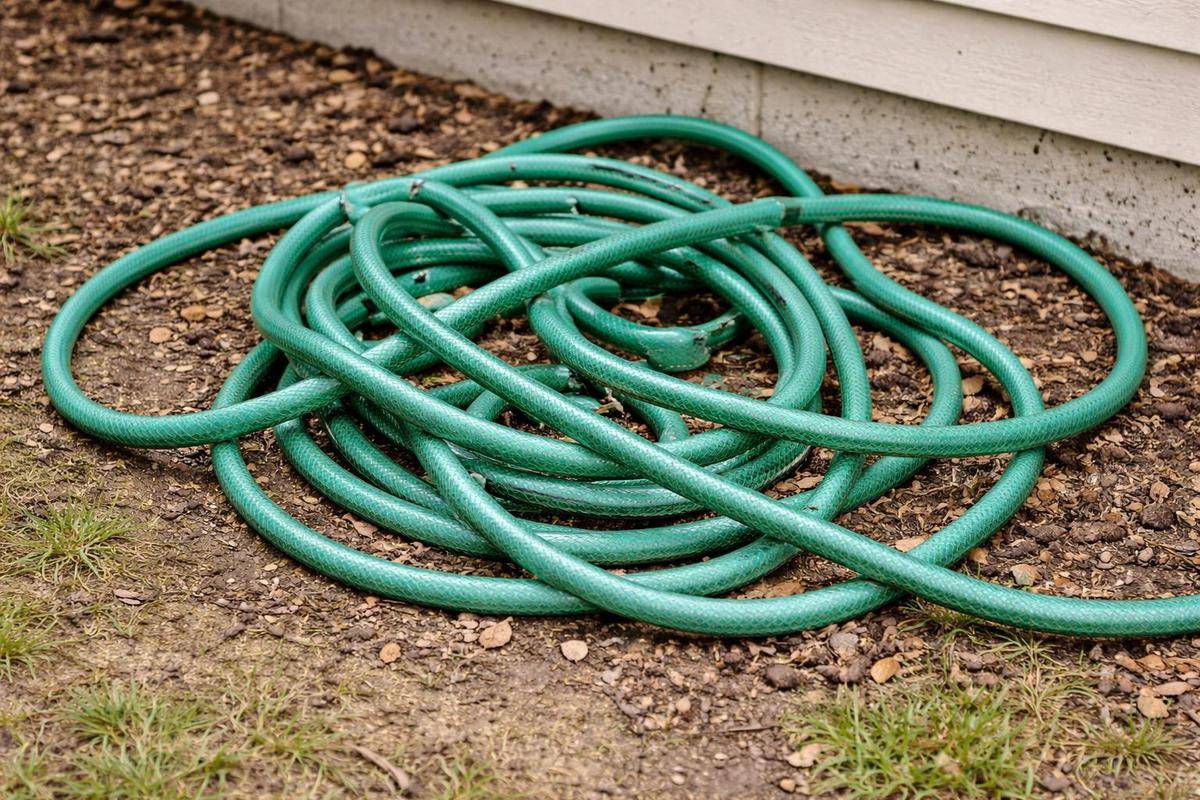
Low-quality hoses often twist and tangle when left on the ground, making storage and reuse frustrating.
This is the section most buyers don’t think about until they’re already annoyed. How a hose stores—and how it feels to move—affects whether you enjoy using it or avoid it.
Weight adds up fast
Longer, thicker, rubber hoses can weigh significantly more than people expect. That matters if you:
Move the hose frequently
Carry it across the yard
Lift it onto a reel or hook
A hose that’s durable but exhausting to use often ends up being replaced anyway.
Storage isn’t just about space
Poor storage leads to:
Permanent kinks
Twisted coils
Premature wear
Think about how you’ll actually use it
Will I leave it connected most of the time?
Will I coil it by hand?
Will it live in the sun year-round?
The right hose for one setup can be the wrong one for another—even in the same yard.
Final Recommendations — How to Make the Least-Regret Choice
A good garden hose isn’t about chasing specs or buying the most expensive option. It’s about matching the hose to how you actually live and work in your yard.
If you remember nothing else:
Buy slightly longer than you think you need
Choose a diameter that matches your tasks, not marketing
Prioritize flexibility and fittings over labels
Consider weight and storage before durability claims
The best hose is the one you don’t have to think about every time you turn on the water. If it disappears into the background of your routine, you chose well.