Paint Sprayer Buying Guide for Cabinets, Fences, and Larger Projects
Paint sprayers attract buyers for an understandable reason: they promise speed, smoother finishes, and less obvious brush or roller texture. But they also create a different set of problems that many first-time users do not anticipate. Overspray travels farther than expected. Cleanup takes longer than the quick demonstration on the box suggests. Thicker coatings can clog or spray unevenly. A sprayer that seems ideal for fence panels may feel excessive for interior trim, while a compact unit that works on small furniture may become frustrating on walls or siding. The right buying decision is less about finding the most powerful machine and more about understanding how much finish quality, material flexibility, setup time, and masking effort your project actually demands. This guide breaks down the tradeoffs so you can choose a sprayer that fits the scale of the job, the type of finish you want, and the amount of preparation you are realistically willing to do.
Sprayer Types and Project Fit
The most important paint sprayer decision is choosing the right system type. Buyers often start by comparing power claims, container size, or included accessories, but those details matter only after the basic platform makes sense for the work. In practical use, the wrong sprayer type creates more frustration than a merely average sprayer within the correct category.
Handheld sprayers are usually the entry point for homeowners. They are relatively compact, easier to store, and appealing for smaller projects such as furniture, touch-up repainting, shutters, garden structures, or short runs of fencing. Their advantage is simplicity. They are generally quicker to pull out for modest jobs and less intimidating for people who do not spray often. Their weakness is endurance. A handheld unit can feel heavy once filled, and the smaller capacity means more stopping to refill. That is manageable on a chair or side table, but far less appealing on a long perimeter fence.
HVLP sprayers make sense when finish quality and control matter more than raw speed. They are often better suited to cabinets, furniture, doors, trim, and other work where a more refined spray pattern is part of the goal. They can be especially useful for people who want more control over material output and pattern size rather than simply trying to cover the largest possible area quickly. The tradeoff is that some HVLP systems require more attention to material thickness and may not be the easiest answer for heavier coatings or fast exterior coverage.
Airless sprayers are the productivity-focused option. They are built for larger surfaces, repetitive work, and projects where time savings become meaningful enough to justify a more involved setup. Exterior walls, long fences, sheds, garages, and larger repainting jobs are where they begin to make practical sense. They can move material quickly and handle broader coverage demands, but that speed comes with more overspray risk, more masking, and a stronger need for technique. For occasional users, an airless sprayer may solve the speed problem while creating a preparation problem that ends up being just as large.
The project itself should determine the platform. Cabinets and furniture usually reward control, adjustability, and a finish-oriented workflow. Large fences and outbuildings reward speed and coverage. Mixed household use is trickier. If you want one sprayer for everything, you are really deciding which compromise you can live with. A finish-focused system may feel too slow on broad exterior work, while a speed-focused system may feel too aggressive indoors or around detailed surfaces.
Choose handheld systems for smaller projects, simpler storage, and occasional use.
Choose HVLP platforms when finish control matters more than maximum coverage speed.
Choose airless systems for large-area work where setup effort is justified by project size.
Do not buy for the largest hypothetical project if most real use will be smaller and more detailed.
This category often exposes a common buyer mistake: assuming “more machine” always creates a better experience. In reality, a sprayer that is oversized for your typical work is harder to manage, harder to clean, and more likely to sit unused after the first ambitious project. Low-regret buying starts with honest project sizing, not optimistic assumptions about future workload.
It also helps to think about working position. Painting overhead, spraying vertical fence lines, finishing cabinet doors laid flat, and moving around tight indoor corners all place different demands on weight distribution, hose management, and pattern control. A system that looks powerful on paper can become awkward if it fights the way you actually need to move through the job.
Finish Control and Material Compatibility
Once the platform category makes sense, the next decision is how much control you need over the finish itself. Not every project asks for the same result. A fence, utility shed, or garage wall usually tolerates a more utilitarian spray outcome. Cabinets, furniture, and visible trim often do not. That difference should drive how much value you place on pattern adjustment, flow control, and smooth material delivery.
A good sprayer should let you balance coverage rate against precision. Too much output too quickly leads to runs, puddling, or uneven sheen. Too little output can create dry spray, thin coverage, and the temptation to move too slowly in one area. The more visible the surface, the more important that balance becomes. Many users blame the coating when the real issue is that the sprayer is poorly matched to the level of finish control required.
Material compatibility matters just as much. Thin stains and sealers behave very differently from primers, thicker paints, enamels, or specialty coatings. Some systems handle a broad material range with less fuss, while others work best when the finish is within a narrower viscosity window. That does not automatically make one system better. It simply means you need to consider what you actually spray most often. A sprayer that excels with furniture coatings may not be the easiest choice for repeated exterior repainting, and a machine that handles heavy wall coatings efficiently may not offer the finesse you want for more visible finish work.
Beginners often underestimate how much the wrong material match affects both finish quality and speed. If the sprayer struggles with the coating, the user usually compensates by changing pace, moving too close, lingering too long, or making more passes than necessary. That creates inconsistency, not efficiency. A machine that accepts the coating comfortably is easier to learn because it lets the user focus on movement and overlap rather than constant troubleshooting.
Pattern width and adjustability also matter. Broad patterns help on large flat surfaces where consistency and speed need to work together. Narrower or more controlled patterns help when spraying rails, cabinet parts, furniture edges, trim, or partial repairs. A machine with limited adaptability may still work well if your projects are predictable, but it becomes less useful as soon as your work shifts from one type of surface to another.
Prioritize finish control for cabinets, doors, trim, and visible furniture surfaces.
Prioritize broader coverage and material throughput for fences, sheds, and large exterior areas.
Match the sprayer to the coatings you actually use rather than assuming all paints behave similarly.
Look for adjustability that supports both output control and pattern management, not just faster spraying.
Another issue is tolerance for minor imperfection. On some projects, speed and acceptable coverage are enough. On others, uneven texture or visible overlap is exactly what you are trying to avoid by buying a sprayer in the first place. If your goal is to replace brush or roller marks on detail-oriented work, then finish behavior deserves more weight than raw output claims.
Long-term versatility comes from buying for the surfaces that matter most, not the surfaces that seem easiest. A sprayer used on visible interior pieces needs to inspire more confidence than one used occasionally on lower-stakes outdoor work. If you buy a machine that handles only rough utility spraying well, you may still end up borrowing or buying a second system once the project focus shifts toward finer finishes.
Setup, Masking, and Cleanup Often Matter More Than Spray Time
The most misleading part of paint sprayer ownership is how little of the job is actual spraying. On many projects, preparation and cleanup take longer than application. This does not mean sprayers are a bad idea. It means the value of a sprayer depends on whether the time saved during spraying outweighs the time spent masking, thinning if needed, flushing lines, and cleaning components afterward.
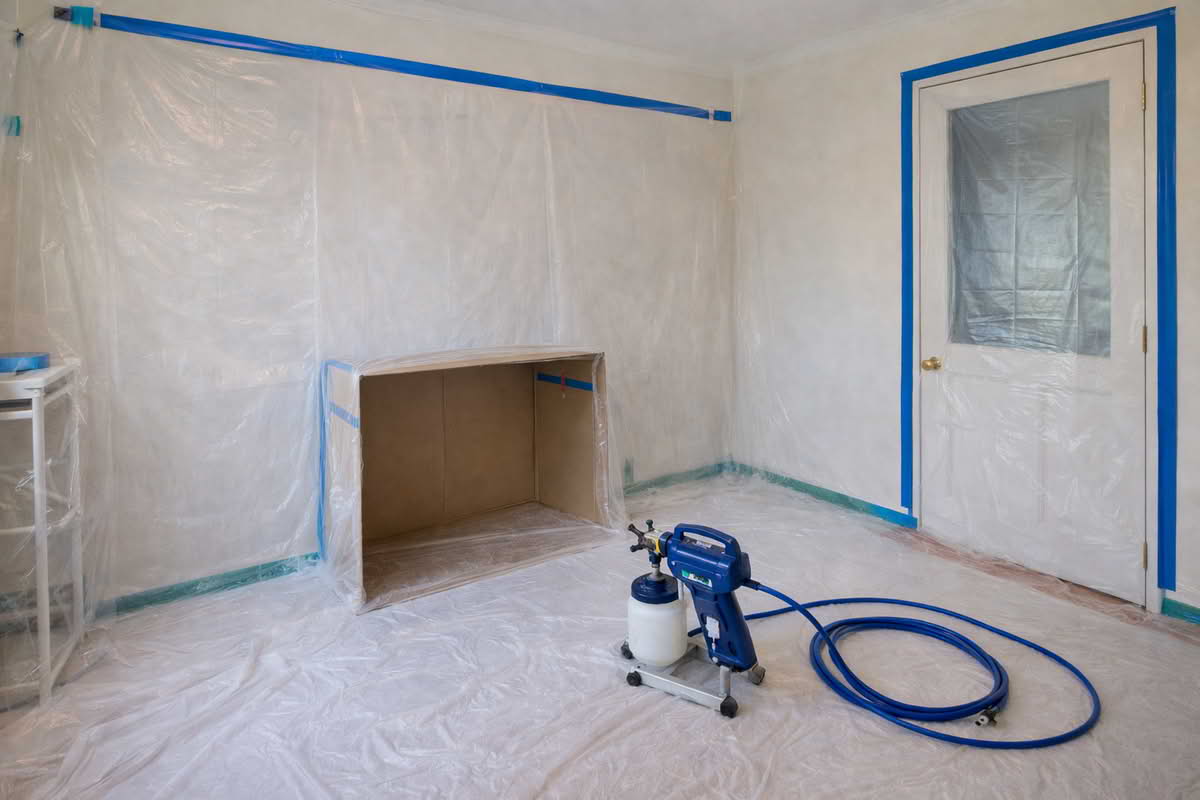
Overspray is the central issue. Indoors, it can travel onto floors, fixtures, glass, nearby walls, and hardware much more easily than new users expect. Outdoors, wind turns a manageable task into a messy one very quickly. A sprayer that works well in controlled conditions can become impractical if the work area is tight, occupied, or difficult to shield. This is why many sprayer purchases disappoint people using them in lived-in spaces where masking tolerance is low.
Cleanup should be treated as a buying criterion, not an afterthought. Some systems are more straightforward to rinse, disassemble, and store between coats. Others are more involved but worthwhile when used on larger jobs that justify the effort. If your real use case is a handful of smaller household projects per year, overly complex cleanup can quietly erase much of the convenience you were trying to buy.
Storage and maintenance also shape long-term satisfaction. Hoses, spray guns, filters, extra tips, cleaning tools, and partially used coatings all require organization. A large system may technically fit your project list, but if it is cumbersome to store and annoying to maintain, it becomes easier to postpone using it. That tends to push homeowners back toward brush-and-roller work even after spending more upfront on a sprayer.
The surrounding space matters too. Large exterior projects with room to move, place equipment, and mask broadly are naturally better candidates for sprayers than occupied bedrooms, tight hallways, or cluttered garages. Similarly, cabinets removed and staged in a temporary workspace are easier to spray well than fixed elements in a busy kitchen where containment is harder. Good spraying often depends as much on the workspace as on the machine.
A paint sprayer performs best when the workspace is planned for overspray, movement, and cleanup rather than treated like a quick substitute for a roller.
Another practical question is whether the project comes in bursts or in volume. If you are repainting several connected surfaces, repeated setup and cleanup become more worthwhile. If you are touching up one room feature or one small furniture piece at a time, the burden of setup may outweigh the speed benefits. The machine is not just competing against other sprayers. It is competing against a simpler workflow that may already be good enough.
Buy a sprayer only if you are willing to mask thoroughly and clean it properly afterward.
Assume setup and cleanup time are part of the job, not exceptions.
Favor simpler systems when your projects are occasional, small-scale, or space-constrained.
Favor larger-capacity systems only when your typical project size repeatedly justifies the extra process.
In the long run, the right sprayer is the one you will actually use well. That usually means a system matched not only to surface area and finish type, but also to your tolerance for preparation, cleaning, and storage. A theoretically capable machine that feels burdensome will not become more useful with age. A well-matched machine will.
Final Recommendations — choosing the sprayer that fits the real workload
For most homeowners, the safest choice is not the biggest or fastest sprayer. It is the system that matches the scale, finish expectations, and setup reality of the projects you actually do. Smaller and finish-oriented platforms make more sense for controlled work such as furniture, trim, and cabinets. Larger, productivity-focused platforms make more sense only when broad surfaces and repeated use are large enough to justify masking and cleanup overhead.
Choose a handheld or compact system for occasional small projects where storage and simplicity matter.
Choose an HVLP-style setup when a smoother, more controlled finish matters more than raw speed.
Choose an airless platform only when large surfaces or repeated spraying make the extra process worthwhile.
Judge every sprayer by the full workflow: preparation, spraying, cleanup, storage, and likelihood of future use.
The long-term low-regret decision in this category comes from respecting the hidden workload. Paint sprayers can absolutely save time and improve results, but only when the surrounding conditions support them. If the machine fits your typical coatings, your workspace, and your willingness to mask and clean properly, it can become one of the most useful upgrade tools in paint prep and finishing. If it does not, it quickly turns into a bulky shortcut that never really saves time.