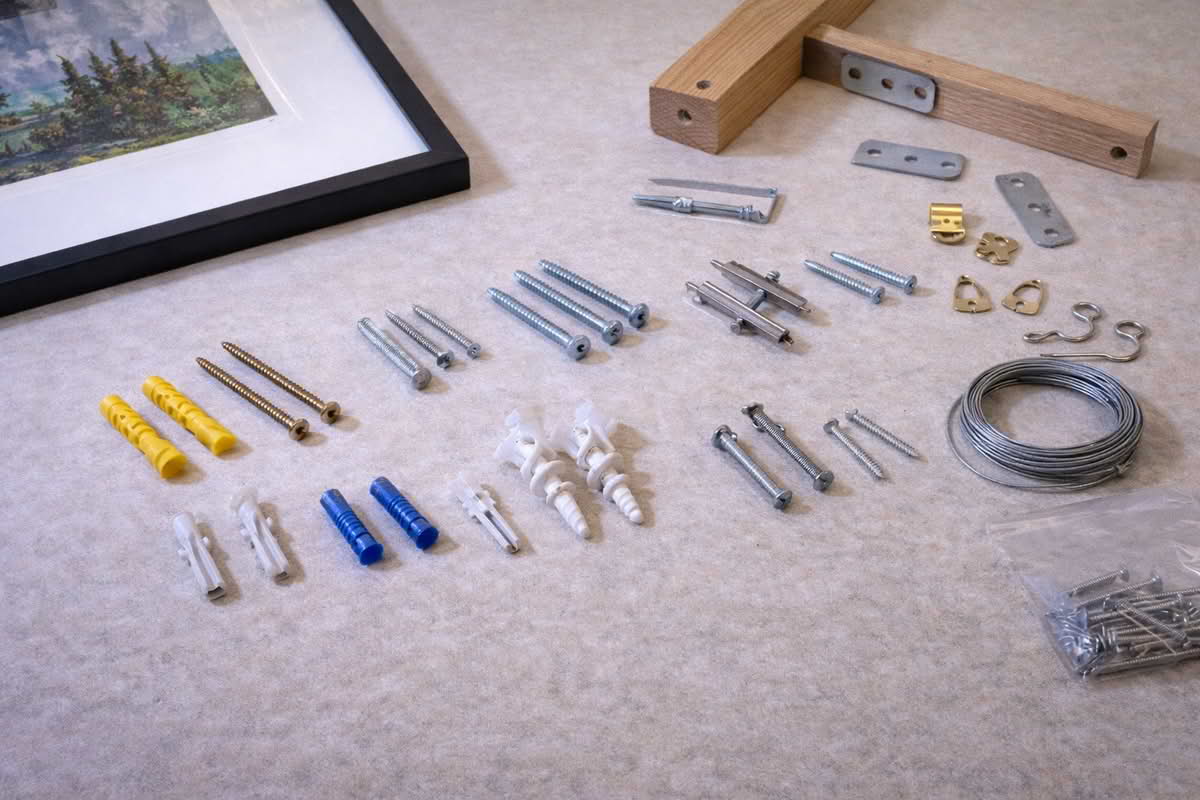
Wall Anchor and Hanging Hardware Buying Guide for Shelves, Art, Mirrors, and Everyday Wall Mounting
Wall anchors and hanging hardware are easy to shop for badly because the packaging often makes everything sound strong, universal, and simple. In practice, wall mounting problems usually come from mismatch. The wall type is different than expected, the anchor is sized for the wrong kind of load, the object sits farther off the wall than a picture frame would, or the hardware is technically strong enough but poorly suited to repeated pull, vibration, or awkward leverage. That is why the same anchor that works fine for a light frame can be a poor choice for a shelf bracket, mirror, or wall-mounted organizer. Good buying starts with understanding what the wall is made of, how the mounted item loads the fastener, and how visible or replaceable the damage would be if the first choice fails. This guide explains how to choose wall anchors and hanging hardware based on wall material, load behavior, installation method, and damage tolerance so the mounting feels secure without becoming more invasive or complicated than the project actually requires.
Wall Type and Load Behavior
The first decision in this category is not what the package says it can hold. It is what the wall actually is and how the mounted item will behave once it is hanging. That matters because wall mounting is rarely just about weight. A light decorative item that hangs flat can be easier to support than a modestly sized shelf or organizer that projects outward and creates leverage against the fastener. Good buying starts with the wall and the shape of the load, not the headline weight number.
Drywall is where many anchor questions begin because it is common and somewhat forgiving, but only up to a point. Drywall anchors are useful because they spread load or create mechanical support where a simple screw alone would not hold confidently. But drywall does not behave like solid wood backing, and that matters when the mounted object extends out from the wall or may be bumped, adjusted, or reloaded over time. A wall anchor that is fine for a small picture is not automatically a good choice for a floating shelf bracket or a wall-mounted basket.
Heavy-duty wall anchors make more sense when the item creates stronger pull-out force, repeated stress, or a larger safety consequence if it shifts. That does not mean every larger object needs the heaviest anchor in the aisle. It means the load path needs to be taken seriously. A mirror, media accessory, tool rack, or storage piece often loads the wall differently than framed art because the object may sit away from the surface, flex during use, or receive more incidental contact.
Picture hanging kits belong in a different category because they are often built around lighter, flatter decorative loads and more controlled visual placement. Their strength is usually convenience and finish sensitivity rather than broad structural versatility. They make sense when appearance, easy spacing, and lower damage are the main priorities. They make much less sense when the object creates torsion, forward pull, or meaningful daily handling.
Self-drilling anchors are popular because they reduce installation steps and feel simple, especially in drywall. Their main appeal is speed. But speed can hide mismatch. A self-drilling anchor may be very convenient for light or moderate wall mounting, yet still be the wrong fit when the item is heavier, projects forward, or needs more confidence over time. The anchor type is only one piece of the problem. The leverage the item creates matters just as much.
Choose wall hardware by wall material and load shape, not by weight rating alone.
Choose lighter hanging systems for flatter decorative items that do not create much outward leverage.
Choose stronger anchors for shelves, organizers, and objects that project away from the wall.
Be cautious with convenience-first anchors when the object will be used, adjusted, or bumped regularly.
A useful way to think about mounted items is to ask whether they hang, lean, or pull. Frames mostly hang. Shelves and brackets lean outward under load. TV accessories, baskets, and some organizers can pull and shift in more than one direction. Once that behavior is clear, the anchor category becomes easier to narrow.
Low-regret buying in this category starts with respecting how the object loads the wall over time, not just how much it weighs on a label. That difference is what separates a mount that stays calm from one that slowly loosens or damages the wall.
Anchor Styles, Hanging Systems, and Real Use Cases
Once the wall and load behavior are understood, the next step is choosing the anchor or hanging style that actually fits the use case. This is where drywall anchor kits, heavy-duty anchors, picture hanging kits, and self-drilling anchor sets start to diverge. They are often sold side by side, but they serve very different mounting priorities.
Drywall anchor kits are often the most practical general starting point because they cover many common household mounting tasks in one package. They can be useful when you want flexibility for mirrors, small shelves, organizers, hooks, and other medium-duty needs without buying hardware one piece at a time. Their value comes from convenience and range. The downside is that broad kits often include multiple anchor types without much guidance on which problems each one solves best. That can encourage hardware guesswork if the project is more demanding than it first appears.
Heavy-duty wall anchors become more valuable when the mount matters enough that failure would create more than cosmetic trouble. Shelves with meaningful load, larger mirrors, storage systems, and brackets that hold objects away from the wall all deserve more attention here. The point of a heavy-duty anchor is not only strength. It is also reducing the likelihood that the hardware shifts gradually, enlarges the hole, or feels uncertain once the item is in regular use. But more hardware is not automatically better if the wall does not support the installation method or the object would still be better located on framing.
Picture hanging kits are best understood as finish-friendly convenience systems. They shine when the goal is level decorative placement, modest wall disruption, and flexibility across art, frames, and lighter wall decor. These kits often make sense in living rooms, hallways, bedrooms, and other places where visual spacing matters and the object load is low and mostly static. Their weakness is that they are often mistaken for general hanging solutions when they are really specialized decorative solutions.
Self-drilling anchor sets sit in the middle because they combine convenience with more everyday utility than basic picture hardware. They can be very practical for common light-to-moderate wall mounting in drywall where the user wants a straightforward installation process and a cleaner hardware workflow. But they should still be treated according to the load they are carrying. An easy install does not change the wall’s underlying limitations or the leverage of the item.
Another useful distinction is between permanent-feeling installs and changeable installs. Some hardware is best when the object is likely to stay put for a long time. Other hardware makes more sense for items that may be rearranged, swapped, or moved. The more likely the wall will be revisited, the more damage pattern and ease of patching deserve attention alongside simple holding strength.
Wall anchors and hanging systems work best when the hardware style matches both the wall and the way the mounted object applies force over time.
Choose anchor kits for flexible household use when the project range is broad but mostly moderate.
Choose heavy-duty anchors when the object creates meaningful leverage, repeated use, or greater consequence if it loosens.
Choose picture hanging kits for decorative items where low damage and clean placement matter most.
Choose self-drilling anchors for convenient everyday drywall installs only when the load behavior still fits the hardware realistically.
A helpful decision frame is to ask whether the install is decorative, functional, or structural-feeling. Decorative installs prioritize clean placement and low damage. Functional installs prioritize stable everyday support. Structural-feeling installs push closer to the limits of the wall system and deserve more caution. Once that is clear, hardware choice becomes much less generic.
In long-term ownership, the most useful wall hardware is usually the hardware that matches the intended permanence of the object. Buying a highly invasive anchor for something likely to move soon often creates regret. Buying light decorative hardware for something that becomes part of daily use creates a different kind of regret. Both come from mismatch rather than bad hardware.
Damage Tolerance, Installation Workflow, and Low-Regret Choices
Wall anchors and hanging hardware should also be judged by how much wall disruption the project can realistically tolerate. That question matters more than many buyers think. Some installs need to feel secure first and foremost, even if patching later is more involved. Others need to balance support with the reality that the object may be repositioned, removed, or replaced in a year or less. Good buying in this category is partly about exit strategy, not just initial holding power.
Damage tolerance matters because anchors leave different kinds of holes and demand different amounts of follow-up work if removed. A small decorative picture fastener is one thing. A larger self-drilling or expanding drywall anchor is another. A mounting decision that feels minor when the object goes up can feel larger when the room changes, the wall is repainted, or the item no longer belongs in that location. That does not mean stronger hardware should be avoided. It means the level of wall commitment should match the permanence of the install.
Installation workflow matters too. Some hardware systems are appealing because they reduce measuring error, simplify insertion, or make level alignment easier. That is valuable, especially in decorative work. But convenience should not distract from whether the hardware actually supports the load style well. A very easy install that ends in a slowly loosening mount is not simpler in the long run. Low-regret choices usually balance ease with appropriate holding behavior.
Another practical factor is repeatability. In many homes, wall mounting is not a one-time task. Hooks, frames, shelves, organizers, and mirrors get added gradually over time. A sensible anchor kit can be valuable because it creates a consistent household standard for everyday installs. That standard matters because it reduces the chance that every new mount becomes a separate guess about what might work. But this only helps if the kit itself is well matched to the kinds of objects you actually hang.
Visibility also shapes the decision. In a utility room or inside a closet, the hardware’s visual footprint may matter less than pure holding stability. In a living room or hallway, neat installation and low visible disturbance often matter more. A picture-hanging solution that is perfect for a gallery wall can be a poor match for a laundry shelf. A more robust anchor that is ideal behind a wall-mounted organizer may feel excessive and visually intrusive for lighter decorative work.
The final layer is confidence. A wall mount should feel understandable once installed. If the hardware type still feels like a compromise after the object goes up, the selection was probably not well aligned with the job. The right anchor creates less mental noise. You do not keep checking it, nudging it, or wondering whether the wall is slowly giving way behind the item.
Match the wall damage you are willing to create with how permanent the install is likely to be.
Value installation ease only when the hardware still fits the load realistically.
Use anchor kits to create household consistency only if the kit matches the kinds of objects you mount most often.
Choose hardware that feels calm after installation, not hardware that still feels like a compromise once the item is up.
A useful way to frame the decision is to ask whether the mount is temporary, long-term, or infrastructure-like. Temporary mounts reward lower-damage approaches. Long-term mounts justify more deliberate anchors. Infrastructure-like installs such as shelving or repeated-use storage deserve the most stable and least improvisational hardware. That question often clarifies the best choice faster than comparing anchor names.
The long-term low-regret decision in this category usually comes from matching hardware strength, wall damage, and permanence honestly. When those three things line up, the installation feels secure without feeling overbuilt or unnecessarily invasive.
Final Recommendations — choosing the hanging hardware that fits both the wall and the way the item is used
For most households, the safest approach is to choose wall anchors and hanging hardware by wall type, load behavior, and permanence rather than by headline holding claims alone. Picture hanging kits make the most sense for lighter decorative items where neat placement and low damage matter. General drywall anchor kits make sense for moderate household mounting tasks. Heavier-duty anchors make more sense when the object projects outward, sees repeated handling, or creates more consequence if it loosens.
Choose decorative hanging hardware for lighter frames and art that hang flat and stay mostly untouched.
Choose drywall anchor kits for moderate everyday mounting where flexibility and convenience matter.
Choose heavier-duty anchors when the object behaves more like a shelf, bracket, or organizer than simple decor.
Judge every hardware choice by wall type, leverage, and permanence rather than by package weight numbers alone.
The long-term low-regret choice in this category is to treat wall mounting as a load-and-wall problem first and a hardware-shopping problem second. When the anchor matches both the wall material and the way the item stresses it over time, the result feels steadier and requires less rethinking later. That is what makes a good mounting choice worthwhile: it keeps the item secure without creating more wall damage or uncertainty than the job actually needs.