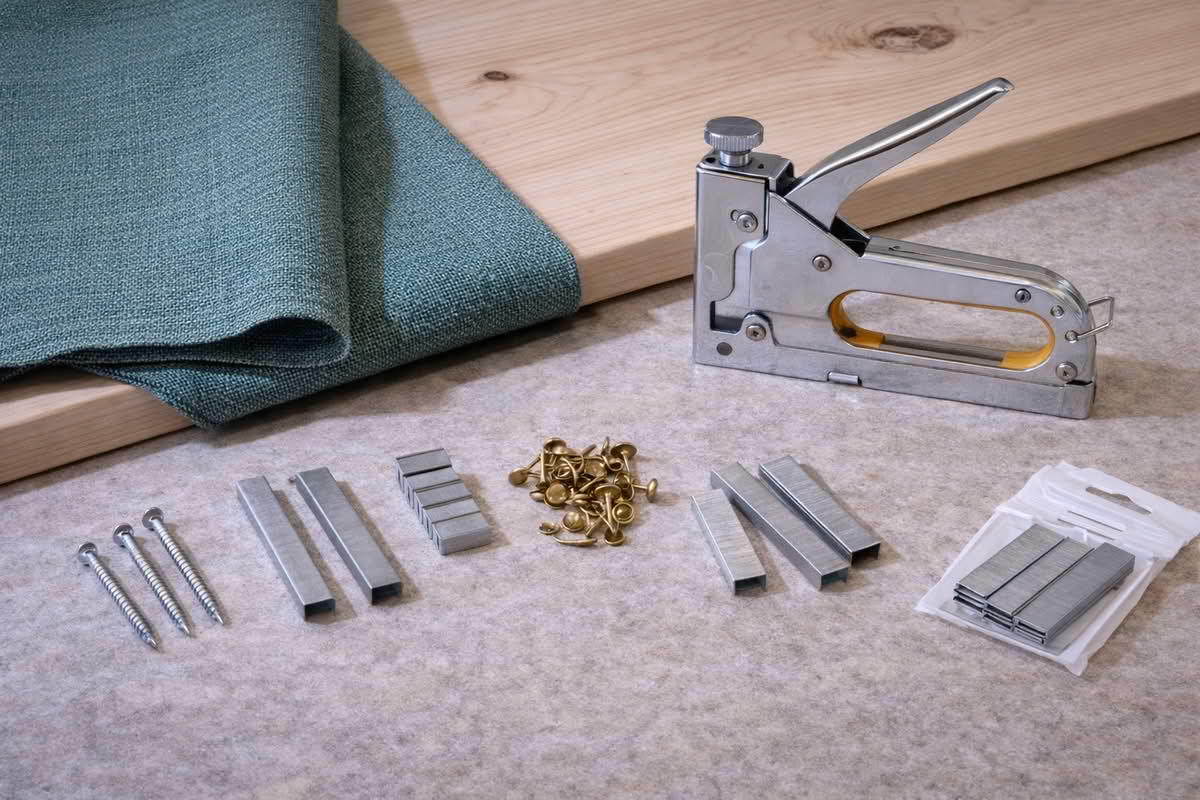
Staple Gun Buying Guide for Upholstery, Insulation, Trim, and Everyday Repair Work
Staple guns get treated as general-purpose household tools, which makes them easy to buy too casually. A model that feels fine for attaching light fabric may struggle with denser material, awkward overhead work, or repeated fastening into harder wood. Another may have plenty of power but feel too abrupt for thin trim backing, delicate upholstery, or other work where staple placement needs to stay controlled. The result is often a tool that technically works, but only after excess hand strain, bent staples, torn material, or repeated jams. A staple gun is most useful when it matches both the fastening force and the pace of the project. Upholstery, insulation, housewrap-adjacent tasks, craft-style repairs, and light trim support do not all place the same demands on the tool. This guide explains how to choose a staple gun based on power type, material thickness, staple size, and workflow so the tool feels more predictable in use and less like a compromise that only shows its limits once the work has already started.
Power Type and Project Scale
The first staple gun decision is power type, because that shapes how the tool feels long before questions of brand or included fasteners matter. Manual, electric, and heavier-duty staplers can all be useful, but they fit different project rhythms. The right choice depends on whether the work is occasional and controlled, repetitive and tiring, or demanding enough that light-duty tools become inefficient quickly.
Manual staple guns are often the most sensible entry point for households because they are straightforward, compact, and easy to store. They make sense for lighter upholstery refresh work, simple fabric attachment, some basic repair tasks, and smaller fastening jobs where the staple count stays modest. Their main advantage is simplicity. There is no battery to manage, no cord to route, and very little setup between noticing a task and starting it. For occasional use, that matters more than many buyers expect.
The tradeoff is physical effort. Manual tools can feel perfectly acceptable for the first few staples and steadily less pleasant once the work becomes repetitive or the material gets denser. Hand fatigue changes accuracy. As the squeeze becomes harder, users are more likely to shift placement slightly, rush alignment, or accept partially set staples they would have corrected earlier. This is why manual staple guns are best judged not just by whether they fire, but by how many staples you realistically want to place in one session.
Electric staple guns become more attractive when repetition is the real problem. If the project involves long runs of fastening, larger upholstery sections, repeated material attachment, or household work that would otherwise mean dozens or hundreds of squeezes, electric assistance can make the process calmer and more consistent. The value is not only reduced effort. It is the ability to keep staple placement more stable even after the job stops being physically convenient.
Heavy-duty staple guns belong in projects where the material or substrate asks more of the tool. Denser fastening tasks, thicker material stacks, tougher wood backing, or utility-focused installations may justify more driving force and a sturdier frame. But heavier-duty is not automatically better for all jobs. In lighter material, too much force or too abrupt an action can create overdriving, surface damage, or a tool that feels less controlled than the work requires.
Choose manual staple guns for lighter occasional tasks where simplicity and storage matter most.
Choose electric staple guns when repetitive fastening and reduced hand strain are the bigger priorities.
Choose heavy-duty tools only when the materials or substrate clearly require more force.
Judge power type by session length and fastening resistance, not just by whether the tool can fire the staple.
A useful way to frame the decision is to ask whether the main problem is access, repetition, or resistance. Access and quick tasks often favor manual tools. Repetition favors electric tools. Resistance favors heavier-duty construction. Once the dominant issue is clear, the category becomes much easier to narrow.
Low-regret buying in this category usually comes from matching the staple gun to the actual workload instead of buying a more forceful or more complex tool simply because it sounds more capable on the package.
Material Thickness, Fastener Control, and Tool Feel
After power type, the next important question is what the tool needs to fasten cleanly. Staple guns are often used across soft fabric, thin backing, insulation, light wood, and flexible sheeting, but those materials do not respond the same way. Good buying depends on whether the staple needs to sit neatly, hold without tearing, and drive to the right depth without constant correction.
Upholstery work often rewards control more than brute force. Fabric, batting, light backing boards, and furniture repairs usually benefit from a staple gun that places the fastener cleanly without crushing the surface or forcing the user to fight the tool. If the tool feels jumpy or overpowered, staple lines become less tidy and material tension becomes harder to manage. In that context, precision and predictable seating matter more than maximum depth capacity.
Insulation and housewrap-adjacent fastening tasks can shift the priority. These jobs may involve more repetitive placement, more awkward body positioning, and materials that need to stay attached across longer spans rather than look cosmetically perfect up close. The staple gun still needs control, but productivity and comfort rise in importance. A tool that is excellent for small upholstery touch-ups may feel tedious in this kind of repetitive utility work.
Light trim support and general household repairs occupy a middle ground. Here, the tool often needs to be predictable across different materials rather than ideal for just one. That can make general-purpose staple gun kits appealing, especially if they come with a useful staple range and a tool that handles mixed tasks calmly. But general-purpose only works when the tool’s actual feel remains manageable. A kit that covers many staple sizes does not help much if the gun itself is tiring, jam-prone, or too abrupt in lighter materials.
Depth behavior matters because a staple that sits too proud forces extra finishing work, while one that overdrives can damage the material or reduce holding quality. This is especially noticeable in visible fabric work and thin sheet goods, where a slightly poor seat changes both the appearance and the integrity of the fastening. A good staple gun should make staple seating feel predictable rather than slightly random from shot to shot.
Tool feel matters more than many buyers expect. A staple gun that is only slightly uncomfortable, slippery, or awkward in balance often becomes much more frustrating after repeated use. This is especially true with manual tools, where grip shape, squeeze distance, and handle return directly affect fatigue. With electric tools, nose control and trigger predictability matter more because the user needs confidence in where the staple will land without excess movement.
Staple guns are most useful when their driving force and handling style match the thickness and sensitivity of the material being fastened rather than just the need to fire a staple.
Choose more controlled tools for upholstery and visible fabric work where staple placement matters.
Choose more repetition-friendly tools for insulation and broader utility fastening tasks.
Match the tool to staple seating quality, not just to staple compatibility on paper.
Prioritize handle comfort and nose control because placement quality declines quickly when the tool feels tiring.
A helpful decision frame is to ask whether the material is delicate, repetitive, or resistant. Delicate materials reward control. Repetitive materials reward comfort and ease. Resistant materials reward stronger drive. Once that is clearer, tool choice becomes more grounded and less generic.
In long-term ownership, the most satisfying staple guns are usually the ones that help you place fasteners neatly without having to overthink every shot. That predictability matters far more than buyers often realize when they first compare tools side by side.
Workflow, Jam Management, and Long-Term Use
Staple guns should also be judged by how well they fit into the pace of the project. A tool can be technically capable and still be the wrong choice if it disrupts the job with awkward loading, frequent jams, or enough bulk that it becomes annoying to reposition. Good buying here is partly about maintenance rhythm, not just fastening power.
Loading convenience matters because staple guns are often used in stop-and-start tasks. You align material, fasten a section, pull or reposition, then fasten again. A magazine that reloads cleanly and predictably keeps that rhythm intact. A clumsy or fiddly loading system turns short repair jobs into tool-management exercises. This matters especially for DIY households, where many staple gun tasks are small enough that the tool should feel almost frictionless to use.
Jam behavior matters for the same reason. Every fastening tool can jam eventually, but some tools make clearing the issue straightforward while others turn it into a small repair session of its own. In manual tools, jams are often most frustrating when they interrupt careful placement and require forceful clearing. In electric tools, jam handling matters because the user expects the powered system to reduce interruptions rather than introduce them. A staple gun that is slightly more reliable or slightly easier to clear can feel meaningfully better over time.
Storage and readiness also affect value. Manual staple guns are often attractive because they can sit in a drawer or utility shelf and remain ready for quick use. Electric models can still be excellent choices, but their value rises most when the household is actually willing to keep them charged, accessible, and part of normal repair routines. A more capable tool is not automatically more useful if it creates just enough extra friction that it stays on the shelf until the project becomes annoying enough to justify the effort.
Staple gun kits with fasteners can be helpful when the included staples genuinely match the likely work. They reduce one layer of shopping and can make a new tool more usable immediately. But like many bundled tool categories, the quality of the core tool matters more than the bundle size. A dependable staple gun with a modest starter supply is usually a better purchase than a weaker tool padded out with a large assortment of fasteners that do not fit the most common household tasks particularly well.
Another useful ownership question is whether the staple gun is meant to solve recurring maintenance or a one-time project. For recurring maintenance, simplicity and accessibility matter a great deal. For a one-time but large task, comfort and output may matter more. The best purchase depends on which of those patterns is closer to the way the tool will actually live in your home.
Choose tools with clean loading and manageable jam clearing because staple work often happens in short repeated bursts.
Choose electric tools only if the added readiness steps still fit how you actually handle household repairs.
Judge staple gun kits by the quality of the gun first and the bundled fasteners second.
Buy for recurring use patterns rather than the most extreme single project you might do once.
A useful way to think about ownership is to ask whether the staple gun will be a grab-and-go tool or a project tool. Grab-and-go tools need low friction and easy storage. Project tools can justify more setup if the work volume supports it. Once that is clear, the field narrows much faster.
The long-term low-regret decision in this category usually comes from choosing the staple gun that fits your real maintenance behavior. A tool that is slightly less powerful but much more likely to be used well often creates better results than a more impressive tool that never feels convenient enough to reach for early.
Final Recommendations — choosing the staple gun that fits the material and the workload
For most households, the safest approach is to choose a staple gun based on session length, material sensitivity, and fastening resistance rather than on headline power alone. Manual staple guns make the most sense for lighter occasional work where storage and simplicity matter most. Electric tools make more sense for repetitive tasks where hand fatigue would otherwise reduce control. Heavy-duty tools make sense when denser materials or harder fastening conditions clearly justify them.
Choose manual staple guns for lighter upholstery, repair, and occasional fastening tasks.
Choose electric staple guns for longer sessions and repetitive fastening where reduced strain matters.
Choose heavier-duty models only when material resistance and project scale genuinely require more force.
Judge every staple gun by seating consistency, comfort, and workflow ease rather than by power claims alone.
The long-term low-regret choice in this category is to treat the staple gun as a control tool, not just a fastening shortcut. When the tool matches the material thickness, the pace of the job, and the way you actually work, staple placement becomes more predictable and the project feels less fatiguing. That is what makes a staple gun worth having: it turns repeated fastening into manageable, accurate work instead of a series of small frustrations.