Brad Nailer Buying Guide for Trim, Molding, and Finish Carpentry Projects
Brad nailers are one of those tools that seem easy to shop for until you start thinking about how they are actually used. Installing trim, pinning molding, attaching small finish pieces, and handling interior detail work all sound similar, but they place different demands on the tool. A nailer that feels fast and convenient for one room may feel heavy, awkward, or too aggressive for another. Some buyers prioritize cordless freedom and later realize the weight changes how precise the tool feels. Others focus on pneumatic simplicity but underestimate the space, hose, and compressor workflow that comes with it. The right brad nailer is not just the one that can drive nails. It is the one that helps you place fasteners accurately, keep surface damage low, and move through trim work without fighting the tool. This guide explains how to choose a brad nailer based on power type, handling, nail size range, and finish quality so the tool matches the pace and precision of the projects you are most likely to do.
Power Type and Project Style
The first brad nailer decision is usually power type, because that choice affects almost everything else about the tool. Cordless and pneumatic brad nailers can both handle finish work well, but they create very different working environments. The better option depends less on abstract performance claims and more on where you work, how often you use the tool, and how much setup friction you are willing to accept.
Cordless brad nailers are appealing because they remove the hose and compressor from the job entirely. That matters in occupied homes, smaller rooms, punch-list work, and projects where the tool needs to move through hallways, closets, stairwells, and finished rooms without dragging extra equipment behind it. The convenience is real. For many homeowners, that convenience is the main reason the tool actually gets used. A cordless nailer often turns finish fastening into a one-tool task rather than a staging exercise.
The tradeoff is weight and bulk. Cordless nailers tend to carry more of their system on the tool itself, which can make them feel heavier during repetitive trim installation or awkward angle work. That difference matters when you are reaching into corners, holding crown or casing position, or making repeated precise placements near delicate surfaces. A heavier tool can still be worth it, but the user should understand that cordless freedom often comes with more hand weight and sometimes a slightly different feel at the nose.
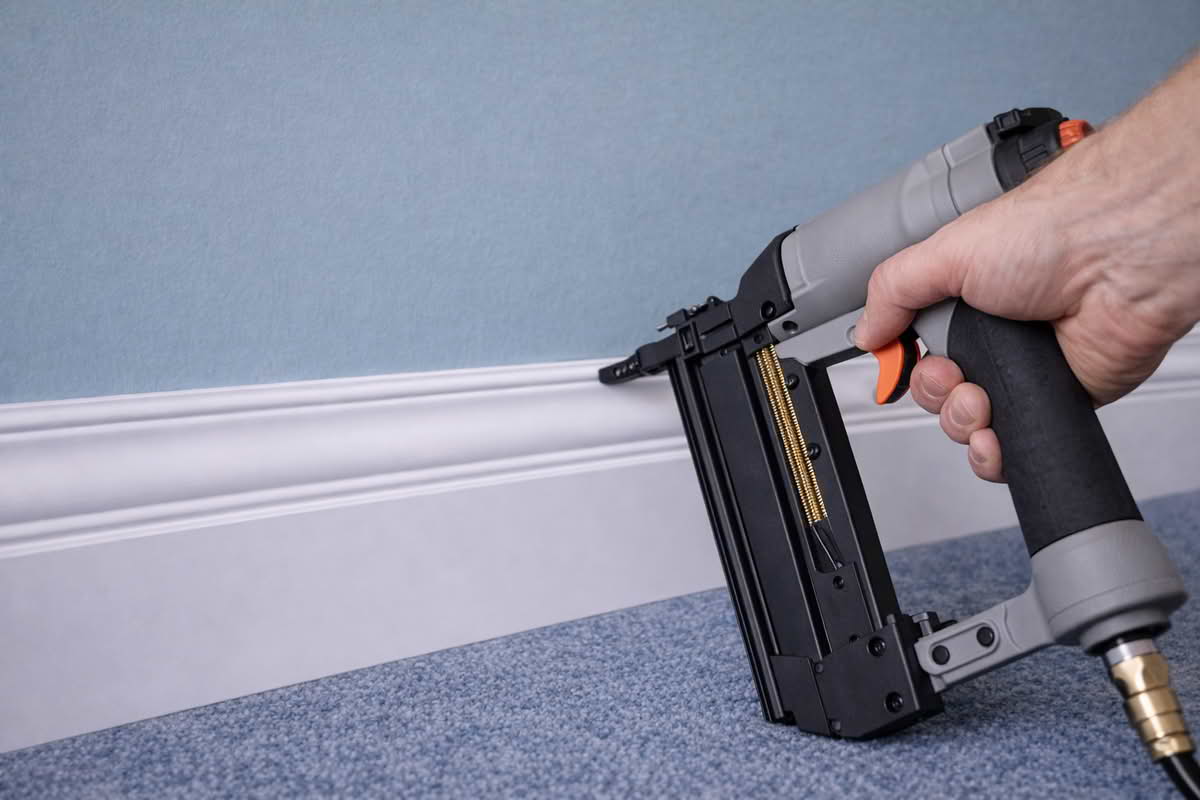
Pneumatic brad nailers usually make more sense when lighter in-hand feel, long-session repetition, and predictable driving rhythm matter most. The hose changes mobility, but it also allows the nailer body to stay slimmer and lighter. For trim-intensive work, that can make the tool feel more precise and less tiring over the course of a room. Pneumatic setups also fit well in workshop-like environments or renovation settings where the compressor is already part of the normal workflow.
This is why there is no single best power type. A homeowner doing occasional room-by-room trim, baseboard touch-ups, or cabinet-side finishing may get more value from cordless simplicity even if the tool is heavier. A user doing repeated trim installation, longer casing runs, or more regular finish carpentry may prefer pneumatic balance and reduced hand fatigue. The right choice depends on whether the main friction in your work is setup or in-use comfort.
Choose cordless nailers when mobility, fast deployment, and hose-free work matter most.
Choose pneumatic nailers when lighter in-hand control and repeated trim work matter more than setup convenience.
Buy for the way you actually move through rooms, not just for theoretical tool performance.
Do not assume cordless is automatically more efficient if the extra tool weight makes finish work less controlled.
Another useful question is whether the tool will mostly be used for short runs or long sessions. Short-run projects reward low setup friction. Long sessions reward better balance and lower hand fatigue. That distinction usually clarifies the cordless-versus-pneumatic decision faster than feature comparisons do.
Low-regret buying in this category usually comes from choosing the system that reduces the most friction in your real workflow. For some households that is dragging less equipment. For others it is holding a more manageable tool for hundreds of precise fasteners.
Size, Balance, and Finish Control
Once the power type makes sense, the next issue is how the nailer actually feels during finish work. Brad nailers are precision tools more than raw fastening tools. They are used around visible trim, delicate moldings, smaller stock, and edge conditions where control matters more than brute force. That makes size, nose access, balance, and depth behavior especially important.
Compact brad nailers are attractive because they tend to feel easier to position in tighter spaces. This matters around inside corners, window stool returns, cabinet trim, narrow face pieces, and any other area where the line of sight matters. A more compact nose area can make fastener placement more predictable, which reduces the chance of small alignment mistakes that still show up after paint or caulk.
Larger or bulkier nailers can still perform well, but they are more likely to obscure the line of fire or feel slightly less nimble around detailed work. That is not always a deal-breaker. If the project is broader trim such as baseboard, casing, and larger repetitive pieces, the slight loss in compactness may matter less than general comfort or battery runtime. But for smaller finish details, the tool’s physical footprint becomes part of the accuracy equation.
Balance affects fatigue and placement quality. A front-heavy tool may feel stable on some surfaces and tiring in others. A rear-heavy tool may clear the nose area visually but feel less settled during one-handed positioning. The best balance is usually the one that lets the user hold the nailer close to the work with minimal correction. That matters because finish carpentry often involves one hand holding trim and the other hand placing the fastener in a narrow target zone.
Depth control also matters more than many first-time buyers expect. Brad nailers are often working in painted trim, primed stock, or finished-facing material where overdriving leaves extra patching and underdriving slows the project with manual setting work. A tool that lets you keep fastener depth predictable across different trim stock and wood density levels reduces cleanup and finish correction later. Small depth errors repeated across a room can create a surprising amount of extra touch-up work.
Nail size range is part of the same decision. A broader compatible range can make the tool more flexible across baseboards, casing, lighter trim, and small assembly work. But range only matters if the nailer still feels accurate and well suited to the material thickness you most often handle. Buyers sometimes overvalue versatility and underweight day-to-day trim control. For many households, the right size range is the one that covers common finish tasks confidently rather than every possible fastening scenario.
A brad nailer should be judged by how calmly it handles visible trim work, especially nose access, balance, and depth control near delicate finish surfaces.
Choose compact nailers when nose visibility and tight-space placement matter more than maximum feature count.
Choose a tool balance that stays manageable during repeated one-handed finish work.
Prioritize consistent depth control because finish fastening is judged by the surface correction it leaves behind.
Choose nail range by the trim thickness you actually install most often, not just by the widest spec sheet numbers.
A useful way to think about size and control is to ask whether the tool will be doing visible trim work or general fastening-adjacent work. Visible trim work demands a calmer nose, better placement feel, and more predictable depth behavior. Once that is the priority, many secondary features matter less.
In long-term ownership, the most satisfying brad nailers are often the ones that help you place the fastener correctly the first time with minimal surface fuss afterward. That is where real value shows up in finish carpentry.
Workflow, Fasteners, and Low-Regret Ownership
Brad nailers should also be judged by what they do to the pace of the project. A tool that feels good in isolation can still become the wrong choice if it complicates loading, encourages jams, or does not fit the kind of work sessions you actually do. Good buying here is partly about ownership rhythm, not just tool specs.
Fastener loading and magazine behavior matter because finish work often involves repeated stops, angle changes, and short sequences of nailing rather than long uninterrupted runs. A tool that reloads cleanly and keeps jam handling simple creates less friction during trim installation. This matters especially for DIY users because the job already involves measuring, fitting, coping, cutting, and checking reveals. The nailer should reduce friction, not add another frequent interruption point.
For cordless tools, runtime and battery ecosystem matter mostly in relation to project length. If the nailer lives inside a broader battery family you already use, that can make cordless ownership much more practical. But this only helps if the in-hand feel of the nailer still suits the work. Battery convenience is meaningful, but it should not outweigh fit and control if the tool will be used for visible finish tasks where handling quality matters every minute.
For pneumatic tools, the ownership question is really about whether the compressor and hose are already part of your working life. If they are, the brad nailer can feel simple, light, and efficient. If they are not, the total system can feel like more commitment than the nailer itself suggests. This is why pneumatic tools can be both extremely sensible and oddly impractical depending on the rest of the setup around them.
Beginner-friendly finish nailers are often most valuable not because they are simplified, but because they make the common mistakes less costly. Clear depth adjustment, manageable weight, a confident nose, and straightforward loading all help new users fasten trim without scarring the material or second-guessing every shot. For many homeowners, that matters more than premium productivity features that only pay off in long repetitive sessions.
Another practical issue is storage and frequency of use. Brad nailers are not everyday tools for most homes, but they are also not one-time tools if you do recurring trim work, paneling, small built-ins, or finish upgrades room by room. The best ownership choice is usually the one that stays practical enough to pull out again without feeling like an entire project just to get started. That favors cordless for some users and pneumatic simplicity for others.
Choose tools with straightforward loading and jam handling because trim workflow already includes enough interruptions.
Let battery ecosystem matter only after handling and finish control make sense for the actual work.
Choose pneumatic only if the surrounding compressor workflow is realistic and not a burden for the projects you do.
Prioritize beginner-friendly control over advanced features when the main goal is cleaner visible trim installation.
A helpful decision frame is to ask whether the brad nailer is meant to disappear into the job or dominate it. The right nailer should disappear. It should let you focus on the trim fit and reveal lines, not on managing the tool itself. That is often the clearest sign of a good purchase in this category.
The long-term low-regret decision in this category usually comes from choosing the nailer that best supports the type of trim work you will actually repeat. When the tool matches your setup tolerance, your room conditions, and your finish expectations, it becomes much easier to use carefully and much less tempting to rush.
Final Recommendations — choosing the brad nailer that fits your trim workflow
For most households, the safest approach is to choose a brad nailer based on how and where the trim work happens rather than on abstract power claims. Cordless nailers make the most sense when mobility and fast deployment matter most. Pneumatic nailers make the most sense when lighter in-hand control and repeated finish work are the bigger priorities. Beyond power type, compact nose access, manageable balance, and predictable depth control deserve more attention than buyers usually give them.
Choose cordless brad nailers for hose-free room-to-room use and lower setup friction.
Choose pneumatic brad nailers for lighter feel and repetitive trim work when compressor use is already practical.
Choose compact, controlled tools when visible finish precision matters more than raw convenience features.
Judge every nailer by how well it protects trim quality, not just by whether it can drive the fastener.
The long-term low-regret decision in this category is to treat the brad nailer as a finish control tool, not a simple speed tool. When the power system, balance, and nose behavior all match the trim work you actually do, the installation feels cleaner and the surface needs less correction later. That is what makes a brad nailer worth owning: it helps the trim go up neatly without making the tool itself the hardest part of the job.