Under-Bed Storage Buying Guide: How to Use Hidden Space Without Creating Dusty Clutter
Under-bed storage looks like an easy way to reclaim unused space, especially in smaller bedrooms, apartments, and homes where closet capacity is limited. But it often disappoints for a simple reason: buyers treat the area under the bed like free storage volume rather than a space with real constraints. Containers end up too tall to slide smoothly, too deep to access easily, too soft to keep their shape, or too flimsy to protect what is inside from dust, shifting, and neglect. Good under-bed storage is not just about finding something low enough to fit. It is about choosing a container that matches bed clearance, room layout, item type, and how often those items will actually be retrieved. Whether you are storing out-of-season clothing, spare bedding, shoes, keepsakes, or household overflow, the best option is the one that stays accessible, protects the contents, and supports a realistic storage routine instead of turning hidden space into a place where clutter quietly disappears.
Clearance, Size, and Fit Matter More Than Claimed Capacity
The first mistake in this category is assuming that all under-bed space is equally usable. In reality, the shape and clearance under a bed determine nearly everything. Some beds offer generous, unobstructed space from side to side. Others have center supports, narrow entry points, low rails, or uneven clearance that limits what can actually slide beneath them. A container that looks ideal online can become useless if it catches on a support leg, rubs against the frame, or only fits when completely empty and perfectly aligned.
Height is the most obvious measurement, but it is also the one buyers often misjudge. The available gap under the bed is not just the distance from floor to rail. You also need room for the container lid, zipper line, handle profile, wheel height if present, and enough tolerance for smooth movement. A storage box that technically matches the measured clearance may still scrape, bind, or become frustrating to pull out. In practical terms, under-bed storage works better when the container is comfortably smaller than the maximum space rather than tailored right to the edge.
Width and length matter just as much. A wider container can maximize hidden volume, but it also becomes harder to maneuver, especially in tighter bedrooms where there is not much open floor beside the bed. Long containers may seem efficient, yet they can be awkward when the bed sits near a wall, dresser, or nightstand. In many rooms, two or more moderately sized containers work better than one oversized box because they are easier to pull out, sort, and return without disrupting the room.
Choose under-bed storage only after measuring the actual usable clearance, not just estimating based on bed style.
Choose containers with some tolerance below the maximum height so they slide without scraping or catching.
Choose multiple manageable containers when room access is tighter or the bed is bordered by other furniture.
Container shape should also match the item category. Flat, soft items such as folded linens, seasonal clothing, and extra blankets often work well in broader low-profile containers. Shoes, keepsakes, gift wrap, and mixed household items may need more structure or interior separation so they do not shift into a difficult-to-sort pile. This is where buyers often go wrong by shopping only for low profile instead of low profile plus useful organization. A shallow container that wastes the contents into one compressed layer may fit the bed while still failing as storage.
Another overlooked point is whether the bed frame itself supports regular retrieval. If the bed skirt, side rail, or surrounding furniture makes access annoying, the stored items will naturally drift toward long-term neglect. Under-bed storage works best when the bed offers simple, repeatable access. If the room layout turns every retrieval into a minor effort, only lower-frequency items should be stored there.
Under-bed storage works best when the container dimensions respect real bed clearance and allow smooth access instead of using every available inch too aggressively.
Materials, Protection, and Access Determine Whether Under-Bed Storage Stays Useful
Once the dimensions make sense, the next question is what kind of protection the contents actually need. Under-bed storage lives in a strange middle ground. It is out of sight, but not always well protected. Dust, lint, pet hair, and room-level debris can accumulate under beds quickly, especially in homes with carpet, pets, or infrequent low-clearance cleaning. That means the material and closure system matter much more than they do in some other storage categories.
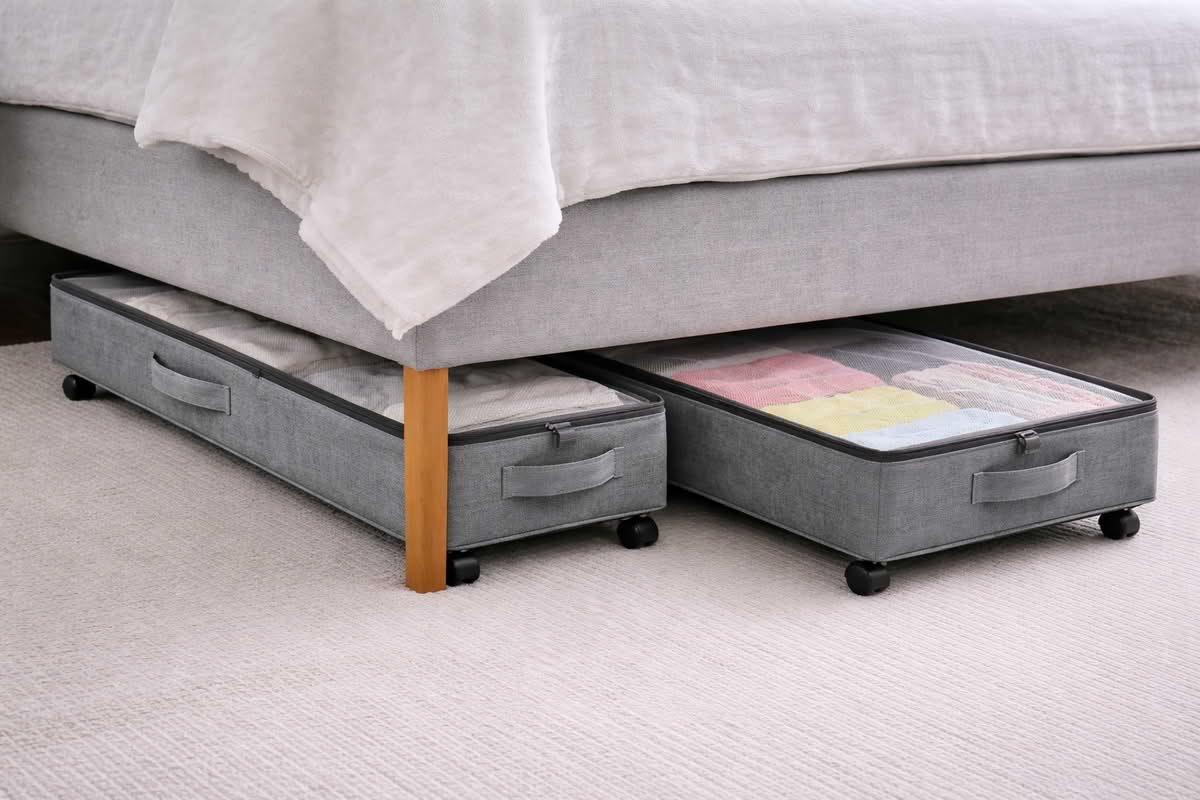
Fabric under-bed storage is often chosen because it is lightweight, compressible, and easy to fit into tight spaces. It can be a very good choice for soft items such as spare bedding, sweaters, out-of-season clothing, and extra linens. The tradeoff is that softer containers tend to collapse if not filled well, offer less protection against crushing or rough handling, and may not slide as smoothly when partially loaded. They work best when the contents help support the structure rather than fight against it.
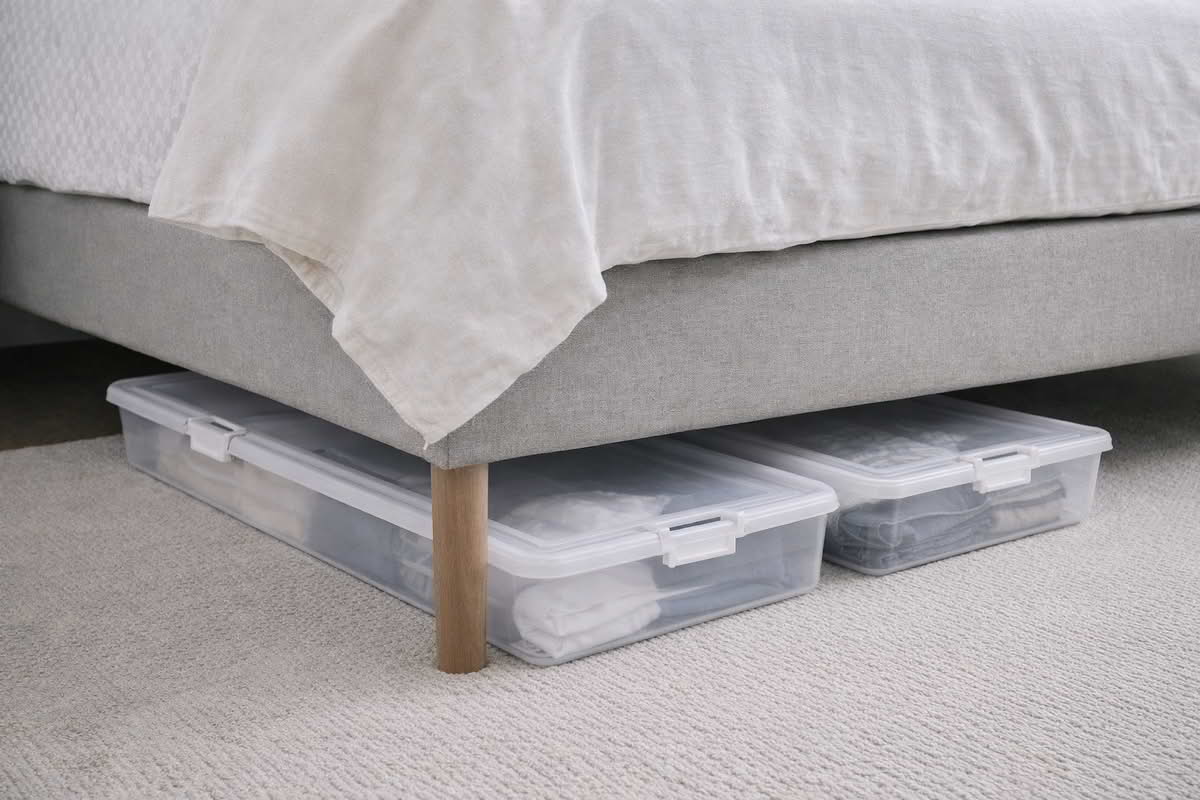
Plastic or hard-sided containers solve a different set of problems. They generally provide better dust protection, stronger shape retention, and more dependable stacking or sliding behavior. They often make more sense for shoes, keepsakes, papers, and mixed categories that benefit from a firmer shell. The tradeoff is that hard-sided boxes need more precise fit and can be less forgiving in tight under-bed clearances. A rigid box that is just slightly too tall or too wide is far more frustrating than a soft container that can flex around small obstacles.
Choose soft-sided under-bed storage for clothing, bedding, and other compressible items that do not need rigid protection.
Choose harder-sided containers when dust control, shape retention, and better protection matter more than compressibility.
Choose the closure type around the room conditions and item sensitivity rather than assuming every stored item needs the same level of protection.
Closure design matters because under-bed storage often goes untouched for weeks or months at a time. Zippers, fitted lids, and latched covers all create different ownership experiences. A zippered fabric container can protect soft goods from dust effectively, but only if the zipper is easy enough to use that people will actually close it fully. A simple open-top basket or uncovered tray may seem convenient, yet it often turns hidden storage into a dust shelf rather than true containment. The best choice usually balances ease of access with enough protection that the contents still feel worth storing there.
Handle and pull design also deserves more attention than most buyers give it. A low-profile container is no good if it is difficult to grip from the floor. Fabric loops, cutout handles, front-facing pulls, and wheel-assisted fronts all change how practical the storage feels. A box that requires awkward pinching or reaching under the bed rail every time it is needed may technically work, but it adds just enough friction to discourage use. Good storage reduces these small annoyances instead of building them in.
Front access details matter. Handles, pulls, and closures strongly affect whether under-bed storage feels easy enough to use regularly.
Another common issue is overestimating how much protection under-bed storage really provides. Being out of sight is not the same as being fully sealed or climate-controlled. Items that are highly delicate, prone to wrinkling, or especially sensitive to dust may need more care than a typical under-bed container can provide. The best use of this space is usually for durable household categories that benefit from hidden storage without requiring perfect preservation conditions.
Mobility, Visibility, and Long-Term Use Separate Smart Storage From Hidden Neglect
Under-bed storage succeeds when it stays accessible enough to remain part of the household's real organization system. It fails when it becomes a hiding place for low-value clutter or items so hard to retrieve that nobody wants to deal with them. This is why mobility matters. Wheels, smooth bases, pull tabs, and manageable size all affect whether a container comes out easily or becomes something you avoid unless absolutely necessary.
Rolling under-bed bins can be especially useful when the bed is high enough to accommodate them and the floor surface supports smooth movement. They reduce friction, make heavier loads more realistic, and encourage the under-bed zone to stay usable instead of becoming a dead storage pocket. But wheels are not an automatic advantage. On thick carpet, in very low clearances, or with flimsy wheel construction, they can add height and complication without improving the experience much. A smoother low-profile base may work better in those cases.
Visibility is another tradeoff to think through. Clear under-bed containers make it easier to confirm contents quickly, which reduces rummaging and forgotten duplicates. Opaque fabric or decorative containers create a calmer hidden-storage look, but they depend more on labeling and memory. Since under-bed storage is already outside normal sight lines, overly opaque systems can make it easy to forget what is there. That does not make them a poor choice, but it does mean they work best for simple, stable categories rather than constantly changing mixed items.
Use rolling storage when floor surface, bed height, and load weight make easier mobility genuinely useful.
Use clearer containers when forgetting contents would create friction or duplicate storage.
Use labeled opaque containers only when the stored categories are stable enough to remain easy to identify later.
Long-term satisfaction depends heavily on choosing the right frequency of access. Under-bed storage is usually best for medium- and lower-frequency categories such as off-season clothing, guest bedding, keepsakes, extra shoes, or project materials not needed every week. It is less ideal for items you reach for daily, because even well-designed under-bed storage still requires crouching, pulling, and resetting. People often know this intuitively, but then store daily items there anyway because the hidden space feels available. That usually creates frustration and weakens the whole system.
Category discipline matters too. Under-bed storage tends to stay cleaner when each container has a single clear job. One box for winter scarves and gloves, another for extra sheets, another for wrapping supplies, another for archived keepsakes. Mixed catch-all containers are much more likely to become neglected because there is no simple mental map of what lives where. Since the space is already low-visibility, it benefits more than most from predictable labeling and restrained category assignment.
There is also a psychological side to hidden storage. Space under the bed can feel like “bonus” capacity, which tempts households to keep low-value items simply because there is somewhere to put them. The best under-bed storage decisions avoid that trap. They use the space for genuinely useful overflow, not for delaying decisions about what should have been discarded, donated, or moved elsewhere. When the space is treated intentionally, it becomes a strong tool for small-space living. When it is treated as invisible overflow, it often becomes organized neglect.
The most successful under-bed storage setups usually share the same traits: containers fit comfortably, the contents are appropriate for hidden access, and the retrieval process is simple enough that people will actually keep using the system. When those conditions line up, under-bed storage can meaningfully extend a room's capacity without making it feel more crowded or visually cluttered.
Final Recommendations — Choosing Under-Bed Storage With Less Friction Later
The right under-bed storage is the option that respects clearance, protects the contents appropriately, and stays easy enough to access that it remains part of your real storage system. Buyers usually get better results when they treat under-bed space as controlled overflow for the right categories rather than as an all-purpose hiding spot for whatever does not fit elsewhere.
Choose low-profile hard-sided containers when you want better dust protection, more structure, and clearer shape retention.
Choose zippered fabric storage when you are storing soft goods and want lighter, more flexible under-bed organization.
Choose rolling options when bed height and floor conditions make mobility meaningfully easier rather than just more complicated.
Choose clearly defined, lower-frequency categories so the hidden space stays useful instead of becoming a neglected overflow zone.
A low-regret under-bed storage purchase keeps the room calmer without creating one more difficult storage layer to manage. When fit, material, and access all align with the real job, the space under the bed becomes practical hidden storage rather than a dusty place where household clutter slowly disappears.