Storage Basket Buying Guide: How to Choose Baskets That Organize Without Looking Temporary
Storage baskets are easy to underestimate because they sit at the softer, more decorative end of the storage category. That makes many buyers treat them like interchangeable accessories, when in reality the wrong basket can waste shelf space, sag under normal use, snag on furniture, look messy once filled, or become irritating to move around every day. Good storage baskets do more than hide clutter. They help define categories, soften open shelving, and make frequently used items easier to contain without turning a room into a stack of hard plastic bins. The best basket choice depends on material, structure, handles, dimensions, and how visible the basket will be in the room. Whether the goal is tidier shelves, calmer entryway storage, better toy control, or more flexible organization in a bedroom or bathroom, the right basket should feel durable enough for daily life while still fitting the space cleanly and looking intentional over time.
Material and Structure Matter More Than Decorative Style
The most common mistake in this category is choosing baskets mainly for appearance and assuming function will follow. Storage baskets often look attractive in staged photos because they are shown half-filled, perfectly shaped, and placed in ideal lighting. In real homes, baskets get used for gloves, cords, toiletries, toys, folded linens, mail, pantry packets, charging cables, craft supplies, and general household overflow that rarely behaves as neatly as the styling suggests. That is why material and structural integrity matter at least as much as color or weave.
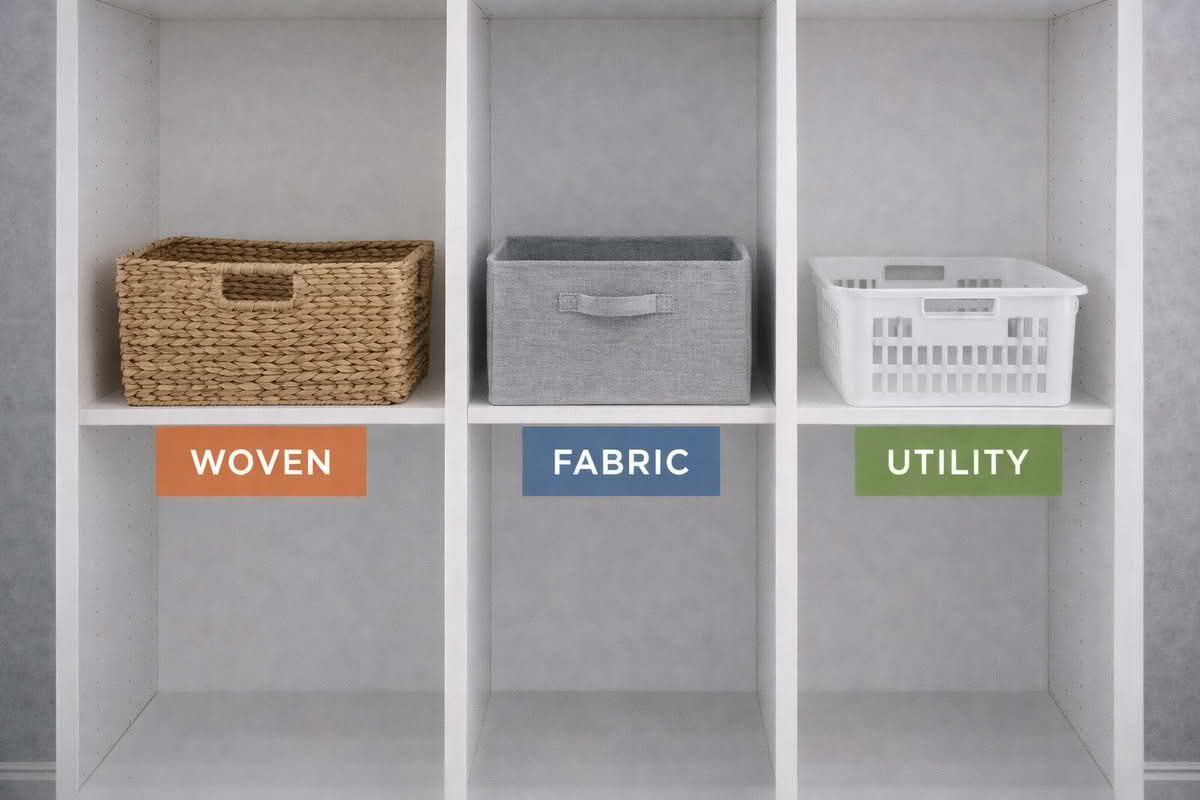
Woven natural-fiber baskets can add warmth and softness, which is one reason they remain popular in visible rooms. They often work well where storage needs to feel integrated into the décor rather than purely functional. But natural woven materials can vary quite a bit in rigidity, texture, and resistance to wear. Some hold their shape well and age gracefully. Others bend, fray, or become harder to clean once they enter more demanding household use. A basket that looks refined on a shelf may not respond well to repeated grabbing, dragging, or heavier contents.
Fabric baskets often solve a different problem. They are usually lighter, softer, and more forgiving around furniture, children, and multi-purpose rooms. They can work particularly well for lower-weight categories such as accessories, folded clothing, soft toys, or overflow items that benefit from gentle containment rather than rigid protection. The tradeoff is that softer baskets can lose shape, slump when partially filled, or look untidy if the contents do not support the structure from within. That makes them better for some categories than others.
Choose more rigid baskets when the contents are heavier, the basket will be moved often, or the room needs a cleaner visual line.
Choose softer fabric baskets when the contents are lighter and the storage needs to feel less harsh around furniture or family spaces.
Choose woven materials carefully when appearance matters, but do not assume decorative texture automatically means long-term durability.
Plastic, resin, or coated utility-style baskets can be less visually warm, but they often make sense in bathrooms, pantries, laundry spaces, and other rooms where easy cleaning matters. These baskets are usually better suited to moisture, spills, or routine wipe-downs than natural woven options. That does not make them superior in every room. It simply means the best basket material depends on where it will live and how much maintenance you are realistically willing to do.
Basket edges, seams, and reinforcement details also deserve attention. Many baskets look strong until they are filled with ordinary household items and picked up from one side. If the rim flexes too easily, the handles pull uncomfortably, or the sides bow under modest weight, the basket may still function, but it will feel temporary. That matters more than buyers expect because baskets are frequently used in open storage systems where visual order depends on the container keeping its shape.
Basket material changes both appearance and performance. Shape retention, surface feel, and ease of cleaning all influence whether a basket stays useful in daily life.
Size, Shape, and Shelf Fit Decide Whether Baskets Improve the Storage System
Even a well-made basket can be a poor choice if it does not fit the shelf, drawer opening, cubby, or room zone where it will be used. Buyers often shop by rough dimensions or visual impression, then discover that the basket wastes vertical space, leaves awkward side gaps, or becomes difficult to pull in and out once placed on a shelf. Because baskets are often used in sets or repeated across one storage area, small sizing errors compound quickly.
Width and depth are the first practical filters. A basket should fit its storage zone with enough room to move comfortably, but not so much leftover space that the shelf looks fragmented or inefficient. This is especially important in cube shelving, linen closets, pantry shelves, and entryway benches where the basket is part of a repeated organizational pattern. A basket that is slightly too narrow or too shallow may still work, but it often creates the kind of visual and functional looseness that makes the whole system feel improvised.
Height matters just as much. Tall baskets can be useful for containing vertical clutter such as bottles, rolled items, paper goods, or taller pantry supplies. But they can also hide contents too effectively, making it harder to scan what is inside. Lower baskets usually make retrieval easier and encourage better category discipline, though they may expose more visual clutter if the contents are irregular. The better choice depends on whether the storage problem is one of concealment, control, or quick access.
Choose basket dimensions around the actual shelf or cubby instead of assuming approximate fit will be good enough.
Choose lower baskets when visibility and everyday access matter more than hiding clutter completely.
Choose taller baskets when loose vertical items need stronger containment and the shelf height can support it cleanly.
Shape also influences efficiency. Rectangular baskets generally make better use of shelf space than round ones, especially in closets, pantries, and cube systems where straight edges reduce wasted gaps. Round baskets can look softer and more decorative, but they are often better suited to open-floor storage, side tables, or single-use accent zones than to tightly organized shelf systems. This is not a rule of style so much as a rule of spatial efficiency. Straight-sided baskets usually support systematic organization better.
Another issue is how the basket behaves once filled. Some baskets that look tidy when empty become difficult to use because their sides collapse inward, their openings narrow under load, or their base lacks enough structure to slide smoothly. That is especially frustrating in shelf storage, where a basket must often be pulled partially out, searched, and returned. A basket that fights that motion can make even simple storage tasks feel more annoying than they should.
It also helps to think in category sets rather than single baskets. If the goal is to organize a family closet, living-room shelving, pantry zone, or bathroom system, repeated sizes and shapes usually work better than mixing many different basket forms. Variation can look charming in theory, but in practice it often reduces efficiency and weakens the visual calm that baskets are supposed to create. Consistency helps the storage zone feel deliberate and easier to maintain.
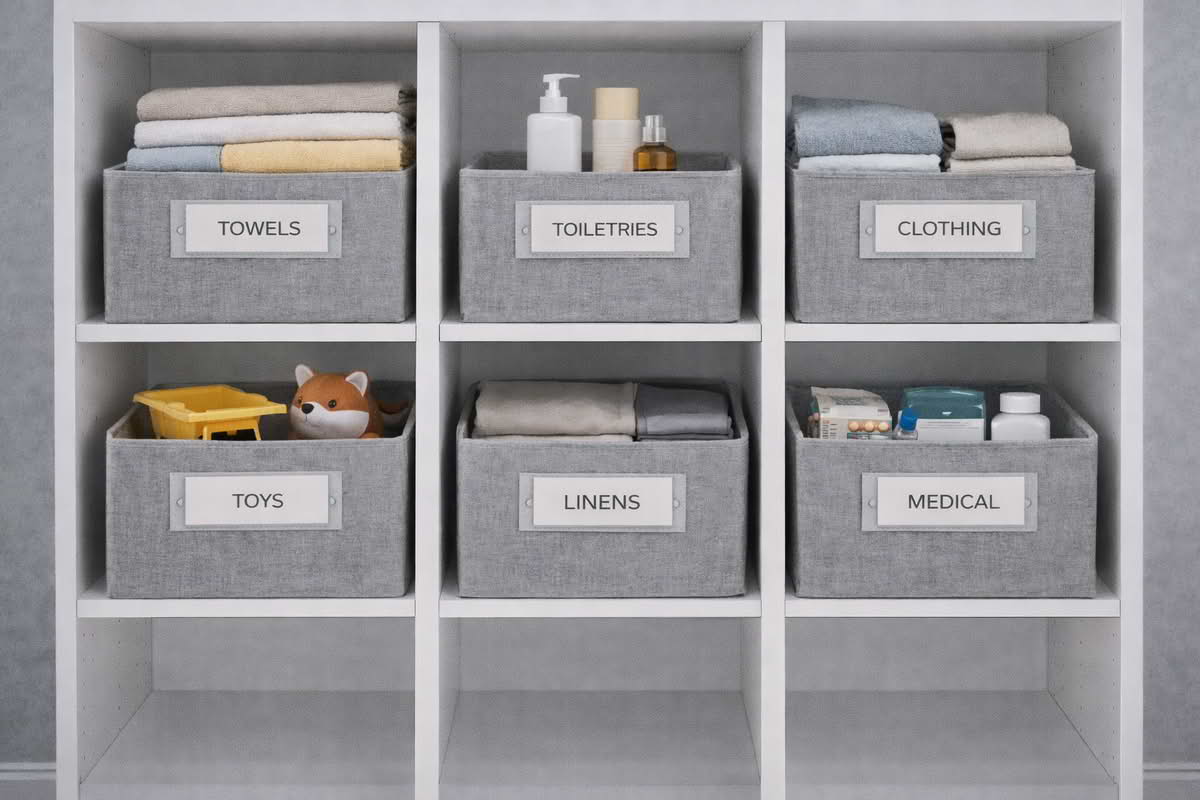
Storage baskets usually work best when dimensions are selected for the shelf or cubby first, creating cleaner spacing and easier everyday retrieval.
Handles, Visibility, and Long-Term Use Separate Useful Baskets From Clutter Containers
One reason storage baskets remain popular is that they can make open storage feel calmer. But that benefit depends on how easy the basket is to use repeatedly. Handles are a good example. They seem like a small feature, yet they strongly affect how the basket functions. Cutout handles, sewn handles, rope handles, and rigid side grips all create different experiences. A basket that is awkward to grip from a shelf, uncomfortable to carry with one hand, or likely to twist when lifted will gradually become less appealing to use properly.
Handle placement matters most when baskets live above waist height, inside deep shelves, or in areas where the user is often moving quickly. In children’s rooms, entryways, bathrooms, and family storage zones, a basket should be easy to pull, set down, and return without much thought. If the handle system is decorative first and functional second, the storage may look good but perform poorly. This is one of the subtle differences between a basket that supports daily habits and one that only works in a styled photo.
Visibility is another tradeoff buyers should think through. Baskets are often chosen because they soften visual clutter, but too much concealment can also create category drift. If every basket looks similar and none of them reveal or clearly label their contents, people tend to treat them as generic catch-alls. That usually leads to baskets full of mixed items, which makes the storage less functional over time. Good basket storage still needs category boundaries, whether through labels, dedicated use, or enough visual distinction between what lives where.
Choose handle designs that feel easy to grip from the specific shelf height or room position where the basket will live.
Choose some form of category identification when baskets are likely to hold changing or mixed household items.
Choose baskets with enough structure to keep open storage looking orderly even when the contents are not perfectly arranged.
Long-term use also depends on whether the basket suits the frequency of access. Daily-use baskets should be lighter, easier to move, and more forgiving when filled imperfectly. Lower-frequency baskets can be more decorative or more specialized because they are not being handled as often. This is an important distinction. A beautiful woven basket for spare throws has different performance demands than a basket used every morning for shoes, mail, or family accessories.
Cleaning and upkeep deserve more attention than they usually get. Baskets in bathrooms, kitchens, laundry rooms, mud-adjacent spaces, and homes with pets or children are exposed to more dirt, dust, and handling than decorative storage in a bedroom. Some materials wipe clean easily. Others collect lint, snag on rough objects, or show wear faster. A basket that looks attractive on day one but is difficult to maintain can quietly become a poor value even if the initial style felt right.
In the long run, the best basket purchases are usually the ones that stay in their lane. They fit the shelf, suit the room, match the category weight, and make open storage feel more controlled rather than simply more concealed. When baskets are chosen with clear purpose, they can do something hard storage bins often cannot: provide functional containment without making a room feel cold or overbuilt. When chosen casually, they often become attractive clutter holders that never quite solve the problem.
Final Recommendations — Choosing Storage Baskets That Stay Practical After the Styling Phase
The right storage basket is the one that fits both the room and the storage behavior it needs to support. Buyers usually get the best result when they treat baskets as working storage tools with visible design impact, not as decorative accessories that might happen to organize something. Structure, fit, and usability generally matter more than weave pattern or color once the baskets enter everyday life.
Choose rigid or semi-rigid baskets when shelf use, repeat handling, and cleaner visual lines matter most.
Choose softer fabric baskets when the contents are light and the room benefits from gentler, less hard-edged storage.
Choose rectangular basket shapes for shelves and cubbies where space efficiency and repetition matter.
Choose handle styles and materials that support how often the basket will actually be moved, not just how it looks when empty.
A low-regret basket purchase creates category control, visual calm, and easier daily reset without feeling flimsy or improvised. When material, fit, and handling all align with the real job, storage baskets become one of the most flexible ways to organize a home while keeping it livable and visually relaxed.