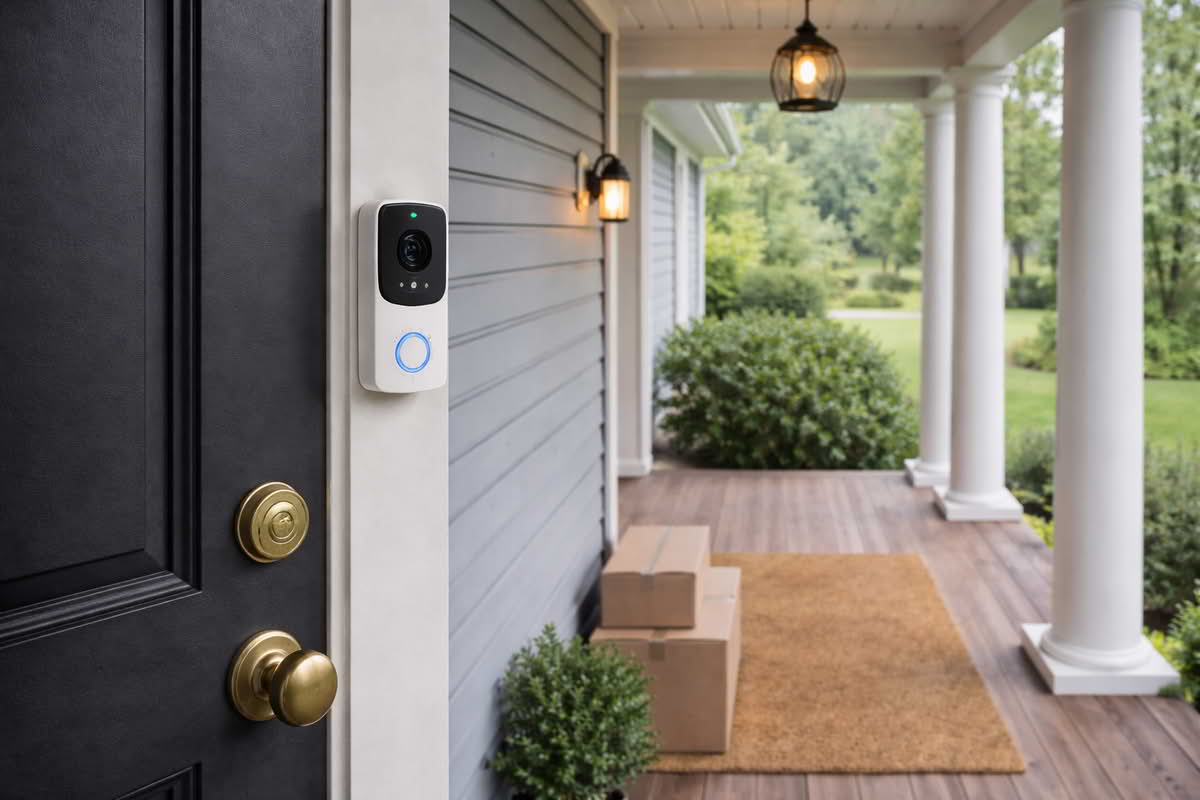
Video Doorbell Buying Guide for Everyday Front Entry Security
Video doorbells are often marketed as a simple upgrade, but the real buying decision is less about novelty and more about how your front entry works day to day. A good doorbell camera should help you see visitors clearly, reduce uncertainty around deliveries, and make it easier to respond when you are not home. A weak one can create delayed alerts, partial views, charging hassles, and a long list of notifications you stop trusting. The front door is also a uniquely demanding location because it combines facial visibility, package activity, changing light, weather exposure, and frequent motion from people who are not security concerns at all. That means the best choice usually comes from thinking through entry layout, power source, app behavior, and how much ongoing maintenance you actually want. This guide focuses on those practical tradeoffs so you can choose a video doorbell that stays useful after setup, not just impressive during installation.
Match the doorbell to your entry layout and viewing needs
A video doorbell has a narrower job than a general outdoor security camera, but it performs that job in a more demanding position. It needs to capture people standing close to the door, show enough of the walkway to explain how they approached, and ideally provide useful visibility for packages left below the camera. Those needs can compete with each other. A doorbell that seems technically strong on paper can still perform poorly if it is installed beside a recessed doorway, behind a storm door, or on an entry with awkward steps and limited side angles.
The first practical question is what you most want to see. Some households care mainly about identifying visitors and speaking through the app. Others care just as much about package placement, delivery timing, or whether someone approached the front entry without ringing. Those goals affect the kind of viewing angle and framing that will feel successful over time. If package visibility matters, a tall and narrow front-entry view may be more useful than a wider landscape-style image that looks more cinematic but misses what is sitting directly under the lens.
Front entry architecture also changes the buying decision more than many people expect. A flush-mounted suburban front door, a narrow townhouse entry, an apartment hallway, and a deep covered porch all create different viewing problems. Side walls can block part of the image. Bright daylight beyond a shaded porch can complicate exposure. Stairs and railings can distort where motion begins. In some cases, the best doorbell performance comes from modest adjustments such as wedge mounts, angle correction, or slightly rethinking where the camera is intended to watch.
Start by defining whether visitor recognition or package visibility matters more.
Check how recessed walls, columns, railings, and screen doors may affect the image.
Assume that your entry geometry matters more than a generic advertised field of view.
Consider whether the doorbell needs to see the porch floor, the walkway approach, or both.
This is also where common advice can fail. Buyers are often told to prioritize the highest resolution they can afford, but front-door clarity is shaped by distance, framing, lighting, and lens design as much as by resolution itself. A sharper sensor does not automatically fix an entryway that places visitors at an awkward side angle or that creates heavy backlighting during certain hours of the day. In practice, a well-positioned doorbell with balanced visibility is often more useful than a technically stronger one installed in a compromised spot.
Night performance deserves similar realism. Front porches often sit between bright and dark conditions: a porch light may illuminate the doorway while the path beyond stays dim, or the street may add spill light that changes the way the camera reacts. Some doorbells produce reasonable night footage but struggle with faces when subjects are close and moving. Others give cleaner views when the entry has stable lighting. It helps to think less in terms of “night vision” as a feature and more in terms of whether your particular front door has predictable nighttime lighting conditions.
The usefulness of a video doorbell depends heavily on front entry layout, especially when you need to balance visitor visibility with package coverage.
Apartment and condo buyers should think especially carefully about privacy and shared-space context. A doorbell may be capturing a hallway, stair landing, or neighboring doorway more than a freestanding home owner expects. In those cases, good motion zoning and sensible placement matter as much as image quality. The doorbell should help you understand your own entry, not turn everyday shared-building movement into constant irrelevant alerts.
Decide how much maintenance and response delay you can tolerate
One of the most important tradeoffs in a video doorbell is power source. Wired models usually appeal to buyers who want more consistency and less routine maintenance. Battery models appeal to people who want easier installation or who do not have compatible existing doorbell wiring. Both routes can work well, but they create different ownership experiences, and that difference becomes obvious after a few months of normal use.
Battery doorbells are often the easiest entry point into front-door video monitoring. They can work in homes without usable doorbell wiring, in rentals where invasive installation is undesirable, or in entries where quick setup matters more than optimization. The cost of that flexibility is usually some combination of charging responsibility, reduced tolerance for heavy traffic, or slightly less seamless live response. A front door is often one of the busiest motion zones around the home, so a battery-powered unit may be asked to wake, record, and notify more often than buyers anticipate.
Wired video doorbells generally make more sense when the entry is active and central to daily life. If you expect frequent deliveries, neighborhood foot traffic, family comings and goings, or repeated visitor use, permanent power can reduce the small annoyances that eventually shape satisfaction. A wired setup is also often better for buyers who do not want another device that needs periodic charging discipline. The installation step is less flexible up front, but the system tends to fade into the background more successfully once it is working properly.
Response speed matters too. At the front door, delays feel more frustrating than they do with yard cameras because interactions happen quickly. If a person rings, waits briefly, and leaves, a slow alert or sluggish live view can make the doorbell feel unreliable even when it technically recorded the event. Many buyers focus on storage plans and image specs before asking a simpler question: how fast can I tell who is there, and can I act on that information while it still matters?
Battery models reduce installation barriers but add maintenance responsibility.
Wired models usually fit busier front entries more naturally over time.
At the front door, a fast usable alert often matters more than maximum image detail.
Think about how often people and packages appear at your entry before choosing power type.
It is also worth thinking through what happens during vacations, cold snaps, or stretches of heavy delivery traffic. A system that works comfortably during quiet weeks may become more demanding during periods of frequent motion. Buyers sometimes underestimate how much front-entry activity increases during holidays, weather events, or busy household routines. Choosing a power setup that still feels manageable during peak use can prevent regret later.
Wi-Fi strength deserves special attention because a video doorbell sits at the literal edge of the house. The router may perform well in the living room but poorly through exterior walls, brick, metal doors, or porch structures. A weak signal at the front entry can make everything feel worse, from delayed notifications to unstable live view. Before blaming a camera choice, it is worth remembering that network conditions at the installation point often shape the ownership experience as much as the doorbell hardware itself.
Recording method adds another layer. Some buyers want the simplest possible cloud-based history with minimal setup. Others prefer local storage or reduced subscription dependence. The better fit depends on how often you plan to review footage and whether you are comfortable trading convenience for lower ongoing costs. The key is not to treat storage as an afterthought. Storage rules define what you can recover later, how long clips remain available, and whether the system feels complete or limited after the first incident you actually need to review.
Focus on alerts, delivery visibility, and app quality
Because video doorbells live in such a busy location, alert quality matters even more than it does with many other security devices. A front entry naturally sees package drops, family members, neighbors, solicitors, maintenance visits, and harmless passing motion. If the doorbell cannot distinguish between events that matter and events that do not, the system quickly becomes background noise. That makes notification discipline a central buying criterion, not a secondary feature.
Delivery use cases have become especially important. Many buyers want reassurance that a package arrived, visibility into where it was placed, and a clear clip showing whether someone later approached the porch. That means the camera needs not only decent image quality but also effective downward visibility, useful event timing, and an app experience that makes it easy to review the right moment. A technically capable device can still disappoint here if it misses the lower porch area or makes event review feel slow and cluttered.
App design is often the real long-term quality test. You will interact with the software far more often than the physical button or housing. A good app makes live view, event history, motion tuning, shared household access, and visitor review feel quick and understandable. A poor app turns routine tasks into friction. That is why a longer feature list should not automatically win. If the app is confusing, slow, or overloaded with upsells and noise, the whole front-door system feels less dependable even when the hardware itself is competent.
Two-way talk is worth treating realistically. It can be useful for brief delivery instructions, telling someone you are not home, or screening unexpected visitors. But it is rarely the main reason a video doorbell succeeds. Clear visitor visibility, timely alerts, and easy clip review usually matter more. Buyers sometimes overemphasize the idea of having a remote conversation and underemphasize the practical question of whether they can quickly understand what happened at the door without effort.
Reliable delivery awareness usually depends on framing and app review speed, not just resolution.
Smart alerts only help when they reduce noise rather than multiply it.
The quality of the app often determines whether the device stays useful long term.
A doorbell should help you make quick decisions, not create more front-entry ambiguity.
Households should also think about who needs access. In some homes, one person manages the app. In others, several adults need equal visibility into visitors, deliveries, and alerts. That makes account sharing, notification customization, and general ease of use more important than a one-person setup might suggest. A device that fits only one technically confident user can become a poor household tool if everyone else finds it inconvenient.
Long-term physical upkeep is easy to overlook because a doorbell appears static once mounted. But front-door hardware faces weather, dust, fingerprints, moisture, and changing seasonal light. In battery models, charging access matters. In wired models, stable mounting and reliable transformer compatibility matter. These issues are rarely dramatic, but they shape satisfaction over time because the front entry is used constantly. A product that demands repeated adjustment in such a visible location becomes more irritating than a backyard device with occasional quirks.
The strongest buying mindset is to treat a video doorbell as a front-entry visibility tool, not as a complete security system in miniature. Its job is narrow but important: help you understand who came to the door, what happened on the porch, and whether a short-lived event needs attention. The more clearly you define that job, the easier it becomes to ignore marketing excess and choose a doorbell that fits your home and routine.
Final Recommendations — choosing a doorbell that stays useful at the front door
The best video doorbell is usually the one that fits your entry layout, motion volume, and maintenance tolerance without adding daily friction. Start with the physical reality of your front door, then choose a power and recording approach that matches how busy that entry actually is. This leads to better decisions than beginning with resolution claims or app features alone.
Choose wired video doorbells when your front entry is active and you want lower long-term maintenance.
Choose battery video doorbells when installation flexibility matters most or existing wiring is not practical.
Prioritize visitor and package visibility over broad feature lists that do not improve real front-door decisions.
Value fast alerts, sensible motion tuning, and a clean app experience above marketing-heavy extras.
In the long run, the lowest-regret video doorbell is the one that helps you understand ordinary front-entry activity quickly and calmly. It should make deliveries, visitors, and missed calls at the door easier to manage, not turn the most used entrance to your home into another source of technical upkeep and notification fatigue.