How to Choose a Hand Mixer or Stand Mixer for Home Baking
Mixers are easy to shop for the wrong way because the category invites a kind of kitchen ambition. A glossy stand mixer suggests serious baking. A compact hand mixer suggests practical simplicity. In real kitchens, neither is automatically the better choice. The right fit depends on what you actually mix, how often you bake, how much counter or cabinet space you can spare, and whether you want speed, power, or lower-friction cleanup. Many buyers either overbuy a large mixer that becomes a countertop monument to occasional baking, or underbuy a smaller mixer that struggles once dough, thick batters, or regular batch baking become part of the routine. The better decision usually comes from defining the role first. A good mixer should make repeated work easier, not just look more capable in a product listing. Bowl size, motor strength, attachments, storage demands, and mixing style all matter more over time than the machine's visual appeal.
Start with the mixing jobs you actually do
The most useful place to begin is not the machine type. It is the work itself. Some kitchens need help with cake batter, whipped cream, mashed potatoes, cookie dough, and occasional frosting. Others regularly bake bread, double batches of cookies, thicker doughs, or recipes where long mixing times and hands-free operation matter. Those are different workloads, and they do not all justify the same appliance. A hand mixer and a stand mixer may both be described as baking tools, but they solve different kinds of kitchen friction.
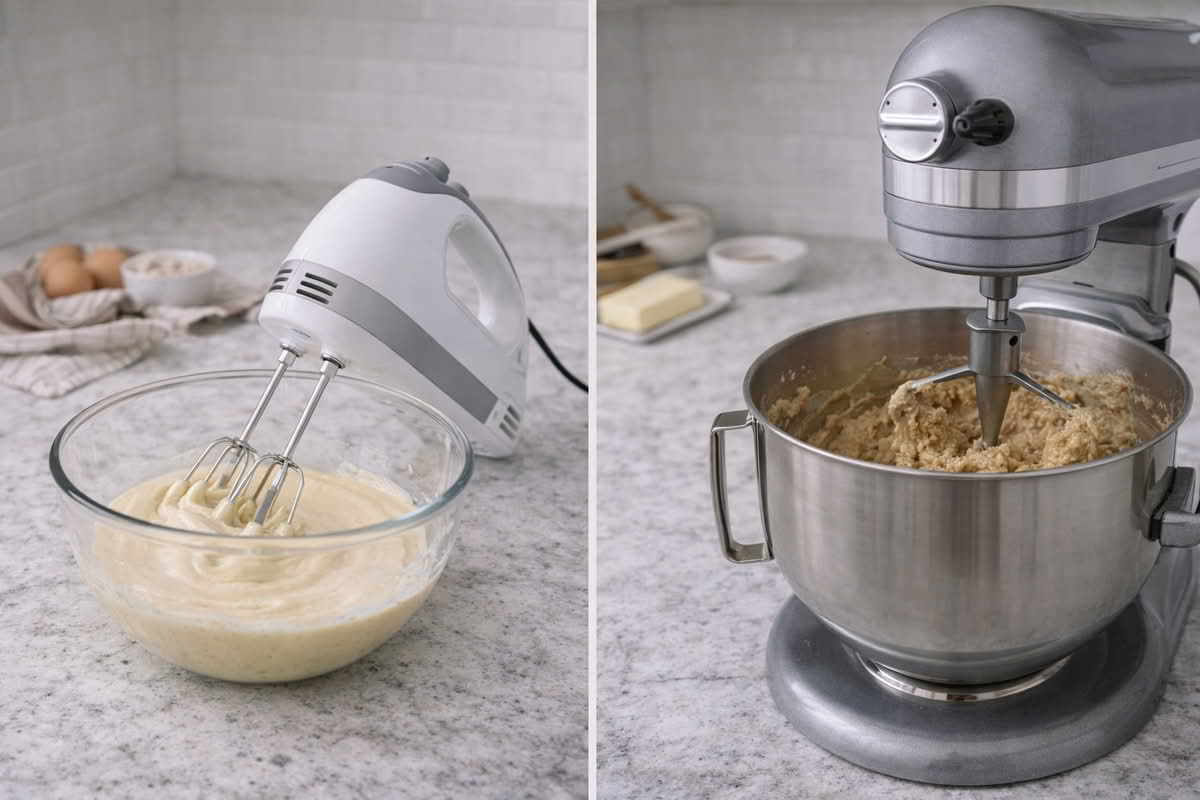
Hand mixers and stand mixers are most useful when matched to the actual weight, frequency, and type of mixing a kitchen repeats.
This is where many buying mistakes begin. People shop for the version of their kitchen life they want to have rather than the one they already repeat. A stand mixer may sound like the responsible long-term purchase because it feels more capable and more complete. But if baking is occasional, batch sizes are small, and counter space is limited, that greater capability may never become greater usefulness. The same kind of mismatch happens in reverse. A hand mixer can feel sensible and efficient at first, then become frustrating when recipes grow heavier, volumes increase, or the cook wants both hands free during mixing.
It helps to think about mixing in terms of resistance and frequency. Light jobs such as whipping cream, mixing cake batter, beating eggs, or preparing simple frostings place different demands on an appliance than bread dough, dense cookie dough, or repeated holiday baking sessions. A machine that is excellent for lighter work is not necessarily the right tool for heavier mixing. At the same time, it may still be the smartest purchase if heavy mixing only happens once or twice a year. The correct choice depends on repeated workload, not on the most demanding task you might attempt occasionally.
Another overlooked issue is pace. A hand mixer tends to suit kitchens where prep is flexible, interactive, and relatively short. You hold the tool, guide it, and stay involved the whole time. That can be perfectly efficient for many recipes. A stand mixer changes the pace of work. It makes more sense when the value comes from stability, reduced hand effort, and being able to multitask while the machine handles longer or heavier mixing. Neither pace is inherently better. The right one depends on whether you want a quick tool for short bursts or a more permanent kitchen appliance that takes on sustained work.
Choose based on repeated recipe types, not the most ambitious baking project you may attempt once.
Think about whether your mixing jobs are mostly light batters and whipping or heavier doughs and dense mixtures.
Match the mixer to how often you bake, not just how much you admire a more capable machine.
Decide whether you value hands-on speed or hands-free support more in your kitchen routine.
It is also useful to separate kitchen identity from kitchen workflow. Some appliances become symbols of a serious home kitchen, and stand mixers often fall into that category. But symbolism does not create practical value. A good purchase should reduce effort, improve consistency, or make repeated kitchen jobs more manageable. If a machine mainly occupies space while simpler tools keep doing the actual work, then its theoretical versatility is not helping much. The better buying framework is simple: what kind of mixing feels like real friction now, and which machine solves that friction most cleanly?
This question matters especially for buyers crossing over from casual baking into more regular use. A growing interest in baking does not always mean a stand mixer is the automatic next step. Sometimes it does. Other times, a stronger hand mixer is enough to support that growth without introducing major storage and counter costs. The goal is not to minimize or maximize the appliance. It is to match the machine to the real trajectory of your kitchen.
A mixer becomes valuable when it fits the rhythm of prep, the weight of the work, and the space available in the kitchen. When those elements are ignored, even a well-built mixer can become the wrong household tool.
How hand mixers and stand mixers change the work
Once the actual workload is clear, the differences between hand mixers and stand mixers become much easier to judge. Hand mixers usually appeal because they are compact, lower-commitment, and fast to bring into a recipe. They work well when the job is short, the mixture is not too heavy, and the cook does not mind staying physically involved. In many kitchens, that combination describes the majority of mixing tasks. For that reason alone, a hand mixer can be the most sensible choice more often than buyers expect.
The strengths of a hand mixer are practical rather than dramatic. It is easier to store, easier to clean, and usually easier to justify in smaller kitchens. It can also feel more flexible for quick recipes because there is less setup around the machine itself. But those strengths come with tradeoffs. A hand mixer asks more from the user during mixing, can feel tiring with thicker ingredients, and usually offers less stability and less consistency once recipes become heavier or more frequent. It is efficient when the task stays within its comfort zone. Outside that zone, its convenience begins to shrink.
Stand mixers make the most sense when the value of the machine comes from taking weight, time, or repetition out of the cook's hands. They tend to become more worthwhile as doughs get thicker, batches get larger, and mixing time gets longer. They also support a different kind of workflow. Because the machine works in place, the cook can measure, scrape, or prepare the next step while mixing happens. That can be a meaningful advantage in baking-heavy kitchens where timing and sequence matter.
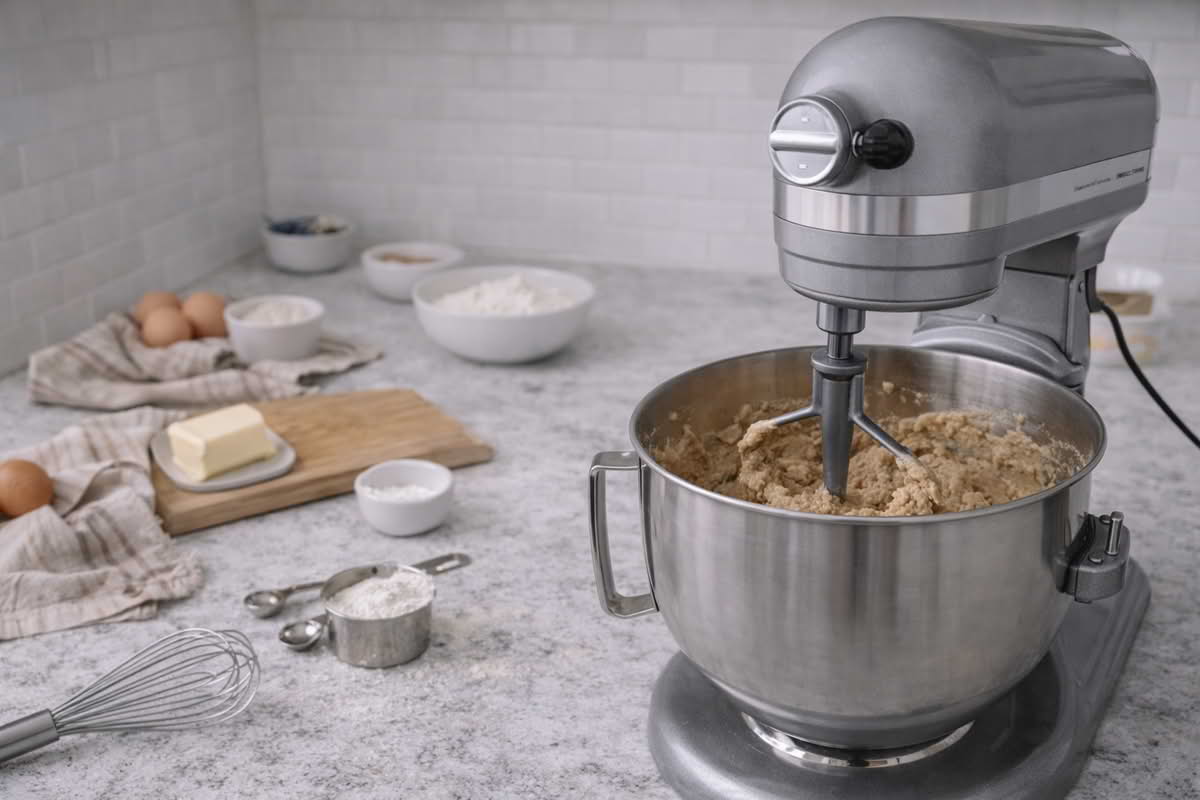
A stand mixer earns its value when hands-free mixing meaningfully improves baking workflow rather than simply adding a larger appliance to the kitchen.
The tradeoff is that stand mixers are not neutral additions to a kitchen. They take space, ask for storage decisions, and are often heavy enough that moving them changes how often they get used. A stand mixer that stays on the counter may feel highly accessible. The same mixer stored in a lower cabinet or a hard-to-reach pantry may feel far less practical in daily life. This is why stand mixers should not be judged only by performance. Their usefulness depends heavily on where they live and how easy they are to bring into a recipe.
Attachments complicate the decision in a predictable way. Buyers are often attracted to stand mixers because of the ecosystem around them: dough hooks, paddles, whisks, and sometimes broader accessory systems. Those features can absolutely matter. But they should be viewed through actual use, not accessory potential. A mixer with multiple tools is only more valuable if those tools are used often enough to justify the cost, space, and extra cleanup. Otherwise, attachments can inflate the sense of value without changing everyday usefulness very much.
Hand mixers usually make more sense for lighter work, quick recipes, and kitchens with limited space.
Stand mixers usually make more sense for thicker mixtures, repeated baking, and longer mixing sessions.
Hands-free operation is valuable only if the machine gets used often enough to justify its size and weight.
Judge attachments by repeated use, not by the appeal of broader capability alone.
Control also matters. Some cooks want a mixer that feels simple and predictable, with enough speed options to handle common recipes without a learning curve. Others care more about how steadily the machine handles thicker ingredients or how well it ramps through different textures. A mixer that feels too abrupt, too weak under load, or too awkward to adjust can create frustration even if it looks strong on paper. This is especially true with recipes where overmixing or inconsistent mixing matters.
Noise and physical effort are part of the experience too. A hand mixer may seem lighter overall as an ownership choice, but it places more of the work in the user's hands during operation. A stand mixer removes that effort, but often in exchange for greater appliance bulk and a more permanent kitchen footprint. Buyers should treat these as real tradeoffs, not minor details. The machine should fit not just the recipe but the way you want the work to feel while it is being done.
The strongest choices in this category usually come from seeing the mixer as a workflow tool. A hand mixer speeds up shorter, lighter tasks without demanding much space. A stand mixer takes on heavier and more repetitive work while demanding more kitchen commitment. Both can be excellent. Problems begin when buyers expect one to behave like the other without accepting the corresponding tradeoffs.
Capacity, storage, and long-term value
Long-term satisfaction with a mixer depends at least as much on kitchen fit as on mixing performance. Capacity is part of that fit. A machine should be able to handle the size of the batches you actually make, but oversized capacity is not always a benefit. A larger stand mixer bowl or more robust mixing system may sound like future-proofing, yet in some kitchens it mainly creates extra bulk for recipes that rarely demand it. The reverse problem also happens. A compact machine may feel efficient until it starts straining under holiday baking, bread recipes, or doubled batches that the household ends up making more often than expected.
Storage is often the decisive factor buyers overlook. Hand mixers usually win here by default. They are easier to tuck into a cabinet, easier to move, and less likely to shape the kitchen around themselves. That matters in apartments, smaller homes, and multipurpose kitchens where every appliance has to justify its footprint. Stand mixers ask a much bigger question. Will the machine live on the counter, or will it be stored? If it will be stored, is the storage location convenient enough that the machine still gets used without hesitation?
The answer changes everything. A stand mixer that lives on the counter and gets used regularly may feel like one of the most justified appliances in the room. The same machine, if too heavy or awkward to move comfortably, may become a special-occasion tool despite being purchased for weekly use. This is one of the clearest examples of how physical kitchen realities can overwhelm product capability. An appliance is only as useful as its placement allows it to be.
Cleanup also shapes long-term value. Hand mixers usually have an advantage in simpler cleanup because the main removable parts are limited. Stand mixers bring bowls, paddles, whisks, hooks, splatter shields, and a larger base presence into the equation. None of that is necessarily a problem, especially when the machine is handling heavier work. But the ownership equation changes if the recipes being made are light enough that the bigger cleanup burden starts to feel unnecessary. A more capable mixer is not truly more valuable if it creates a larger cleanup routine for jobs a smaller tool could have handled comfortably.
Cost should be framed around frequency and workload. A budget or mid-range hand mixer can be an excellent choice for kitchens that bake occasionally, make lighter batters, or want a reliable support tool without a large appliance commitment. A stand mixer usually becomes easier to justify when baking is frequent, doughs are common, batch sizes are larger, or the cook truly benefits from hands-free operation. Higher spending only makes sense when the machine's strengths show up repeatedly in the kitchen. Otherwise, the purchase can drift into symbolic value more than practical value.
Choose capacity around repeated batch size, not rare high-demand scenarios.
Let storage location influence the decision, because access strongly affects long-term use.
Include cleanup burden in the value equation, especially for lighter mixing jobs.
Spend more only when the extra power or stability clearly supports recipes you make often.
Another useful way to think about value is replacement pressure. A hand mixer that feels slightly underpowered for the way your baking is growing may lead to a later upgrade, while a stand mixer that is too large or too inconvenient may leave you reaching for manual tools or a smaller mixer anyway. The lowest-regret purchase usually sits where the machine feels proportionate. It should support the kitchen you have now while leaving reasonable room for how you are actually likely to use it over the next few years.
It is also worth asking whether the mixer is meant to be the central baking appliance or a supporting tool. In some kitchens, the answer is clearly central. In others, baking is important but not dominant, and the better purchase is the one that handles common tasks without turning the counter into a dedicated appliance zone. This distinction matters because it clarifies whether you are buying for identity or utility. Utility usually produces the better long-term outcome.
The best mixer purchase usually feels quietly justified. It handles the work you actually do, fits the kitchen without constant inconvenience, and remains easy enough to use that it becomes part of normal baking rather than a machine you keep planning to use more often. That kind of fit is what makes the appliance valuable over time.
Final Recommendations — choosing the mixer that fits your baking routine and your kitchen
A good mixer should be chosen by workload, kitchen space, and ownership style rather than by size or prestige alone. Buyers who mainly make lighter batters, whipped mixtures, and occasional baking recipes usually do best with a hand mixer that keeps storage and cleanup simple. Buyers who bake frequently, work with thicker doughs, or want hands-free support for larger batches usually benefit more from a stand mixer, but only if the kitchen can accommodate it in a practical way. In both cases, the goal is the same: make mixing easier often enough that the appliance earns its place.
Match the mixer to the weight and frequency of the recipes you actually repeat.
Choose hand mixers for lower-friction ownership and stand mixers for heavier, more sustained work.
Let storage, accessibility, and cleanup influence the decision as much as motor strength.
Spend for better long-term fit, not just for the appearance of greater capability.
The lowest-regret mixer purchase is usually the one that feels proportionate to the kitchen it lives in. When the machine matches the baking routine, the available space, and the amount of work you want it to remove, it stops feeling like a category choice and starts feeling like a dependable part of the kitchen.