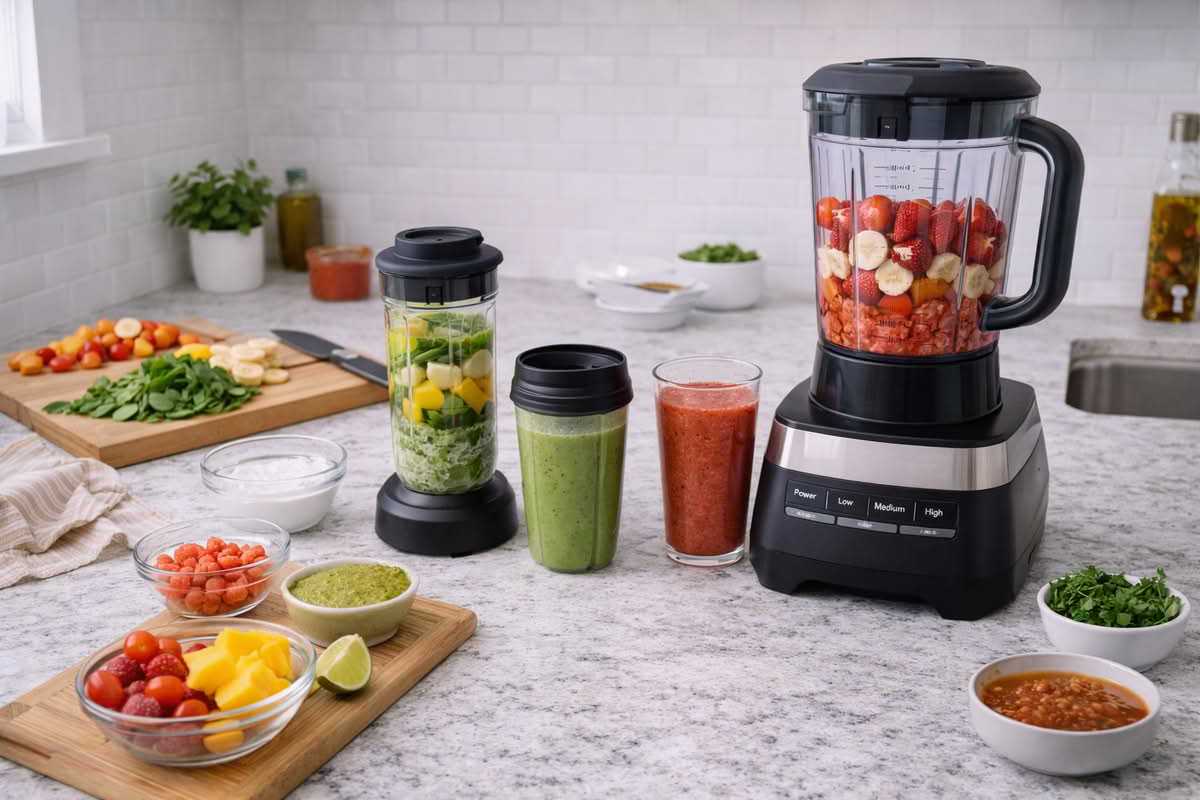
A blender seems like a straightforward appliance until you try to match one to real kitchen habits. Buyers often get pulled toward motor claims, preset programs, or dramatic demonstrations without first deciding what the blender is actually supposed to do in their home. That is where many disappointing purchases begin. A machine that looks powerful in a product listing may be too large for quick daily use, too loud for frequent morning blending, too difficult to clean, or poorly suited to the textures you care about most. A compact blender may feel convenient at first and then prove frustrating for larger batches or tougher ingredients. The better decision usually comes from thinking about the blender as part of kitchen workflow rather than as a generic countertop appliance. Jar size, blending style, control, cleanup, and storage all affect whether the machine becomes a regular tool or a bulky object that only comes out occasionally.
Start with what you actually blend
The most useful blender decision starts with ingredients and routines, not specifications. Some households mainly blend smoothies, protein drinks, and quick breakfast mixes. Others want a blender for soups, sauces, dressings, frozen drinks, or occasional purees. Some want an all-purpose countertop machine that can handle bigger family batches, while others mostly care about single-serve convenience. Those use cases may overlap, but they do not always point to the same kind of blender. The better you define the blender's repeated jobs, the easier it becomes to avoid overbuying or underbuying.
A blender is most useful when its size and style match the recipes, texture goals, and batch sizes a kitchen actually repeats.
This is where many purchases go wrong. Buyers often assume that broader capability automatically means better value, so they jump to a larger, more powerful machine even if their everyday use is modest. In practice, a blender that is too large or cumbersome for the tasks you repeat most can become strangely inconvenient. If the appliance is mostly used for one fast breakfast drink, a large base and oversized jar may feel like too much setup, too much noise, and too much cleanup. The opposite problem also happens. A compact or personal blender may seem ideal for convenience, then disappoint once the household wants to make soup, crushed-ice drinks, or larger blended recipes with more than one serving.
Texture expectations matter as much as volume. Some buyers are perfectly happy with a blender that handles soft ingredients and ordinary liquids well enough. Others care a great deal about smoothness, especially when fibrous greens, frozen fruit, nut-based mixtures, or thicker blends are involved. The difference between "good enough" and "consistently smooth" can matter a great deal in daily satisfaction. A machine does not have to fail dramatically to disappoint. Minor graininess, uneven blending, or repeated need for manual stirring can make the appliance feel less useful than expected over time.
It also helps to separate blenders from nearby appliance categories in your own planning. A blender is not automatically the best tool for every prep job involving a blade and a motor. Some buyers quietly expect it to replace a food processor, immersion blender, or mixer for a wide range of tasks. That expectation can lead to frustration because the strengths of a blender are usually concentrated around liquid-based blending, pureeing, and breaking down ingredients in a vertical jar environment. Once you ask it to handle jobs that depend more on controlled chopping or low-liquid mixing, the limitations become more obvious.
Choose the blender around your most repeated blending tasks, not the widest possible list of occasional use cases.
Think carefully about whether you mainly want single-serve convenience or larger-batch flexibility.
Match the machine to your texture expectations, especially if frozen ingredients or fibrous produce are common.
Do not assume a blender should replace every other prep appliance in the kitchen.
Frequency of use is another important filter. A blender that will be used daily for breakfast should be judged differently from one that comes out occasionally for soup or weekend drinks. Daily-use appliances need to be easier to access, easier to clean, and more compatible with quick routines. Occasional-use appliances can justify a little more complexity if their performance on those less frequent tasks is especially valuable. This is one reason why buyers who shop only by power or brand often miss the best fit. The appliance has to make sense in the timing and pace of the kitchen, not just in a feature comparison.
The number of people in the household matters too, but it should be interpreted realistically. A family-sized blender may sound safer even for smaller households because it appears more flexible. Yet many smaller households blend in short bursts and small amounts, which means oversized jars can actually reduce satisfaction if the machine performs poorly with modest volumes or feels needlessly large on the counter. At the same time, larger households that regularly prepare smoothies, sauces, or blended soups for multiple people can outgrow a personal blender very quickly. The goal is not to match the machine to abstract household size. It is to match it to actual batch behavior.
A blender becomes a good purchase when it removes friction from repeated tasks. If it makes common recipes easier, faster, and more consistent, it is doing its job. If it mostly introduces setup, cleanup, and storage burden in exchange for capabilities you rarely use, then even a technically capable machine can become the wrong household tool.
Jar size, power, and control in real kitchens
Once the blender's role is clear, the next questions are jar size, motor strength, and how the machine behaves in actual use. These are often treated as separate comparison points, but they work together. A high-powered motor does not solve every blending problem, and a large jar is not automatically a more useful jar. The better choice usually comes from how these elements interact with the ingredients you use and the way you like to blend.
Personal blenders often appeal because they are simple and direct. In many kitchens, that simplicity is the entire value. They usually make the most sense when the goal is one serving at a time, quick cleanup, and minimal storage burden. Their weakness is that they can feel narrow in purpose. Once the household wants to blend larger volumes, serve more than one person, or work with thicker mixtures that need stronger circulation, the convenience starts to look like a limitation.
Full-size countertop blenders make more sense when batch size, broader recipe range, or stronger all-purpose use matters more than minimal footprint. They usually offer a better fit for larger smoothies, soups, sauces, frozen blends, and households where the blender is expected to do more than one small job. But a larger jar also changes the ownership experience. It takes more room, can be awkward to wash if cabinet and sink space are tight, and may not perform as gracefully with very small amounts unless the design is especially good. Bigger is not automatically more flexible in every direction.
Power matters, but often less as a headline number than as a blending experience. Buyers are understandably drawn to stronger motors because blending tougher ingredients can be frustrating with underpowered machines. But motor strength only becomes meaningful when the jar shape, blade design, and controls support it well. A powerful blender that creates dead zones, requires constant stopping and scraping, or feels overly aggressive with softer ingredients may not be as satisfying as a well-balanced model that handles ordinary kitchen tasks more predictably.
Control is one of the most overlooked parts of blender ownership. Some households want simple one-touch convenience and do not want to think about speed ranges, pulse behavior, or manual adjustments. Others care a great deal about being able to control texture, gradually increase speed, or pulse ingredients without overprocessing them. A machine that only seems powerful at full speed may feel crude during everyday use if finer control matters. This is especially true for recipes where texture is part of the outcome rather than something to be blended away completely.
Choose personal blenders when quick single-serve use matters more than maximum flexibility.
Choose full-size blenders when you regularly make larger batches or want broader recipe coverage.
Treat motor strength as important, but not as a shortcut to overall blending quality.
Pay attention to control options if texture and repeatability matter in your kitchen.
Jar design influences daily use more than many buyers expect. The height, shape, handle comfort, and pouring behavior all affect whether the blender feels easy to live with. A jar that is difficult to pour cleanly or awkward to grip when full can turn simple recipes into small annoyances. Lids matter too. A lid that is secure and easy to remove is far more useful than one that feels messy, stiff, or unreliable during repeated use. These details rarely dominate marketing, yet they strongly influence long-term satisfaction because they show up every single time the blender is used.
Noise is another practical factor that buyers often ignore until after purchase. In some kitchens that does not matter much. In others, especially where blending happens early in the morning or in shared living spaces, it becomes a real quality-of-life issue. A high-powered blender may be worth the noise if the performance gain clearly supports daily use. But if the machine is being chosen for relatively simple tasks, extreme power can become part of the tradeoff rather than a clear advantage.
The best blender choices usually come from systems thinking rather than specification chasing. Jar size, blending power, ingredient circulation, control, pouring, and general handling all combine to shape the ownership experience. Looking at any single factor in isolation makes it easier to miss the more important question: does the blender behave well for the recipes and routines that actually define your kitchen?
Cleanup, storage, and long-term value
A blender can perform beautifully and still be a poor fit if it is annoying to clean or difficult to store. This category tends to expose the gap between purchase excitement and long-term ownership very quickly. On day one, power and features get most of the attention. By month two, buyers usually care more about whether the jar is easy to rinse, whether the lid traps residue, whether the base stays in the way, and whether the machine feels worth pulling out for ordinary recipes.
Cleanup burden is especially important when the blender is meant for frequent use. A daily smoothie blender that leaves the user fighting around blade structures, thick gasket areas, or awkward lid parts will often lose its place in the routine. The same machine might still feel perfectly acceptable if it is only used occasionally. That is why frequency has to stay connected to the buying decision all the way through. A blender should not just match the recipe type. It should match the cleanup patience level attached to that recipe type.
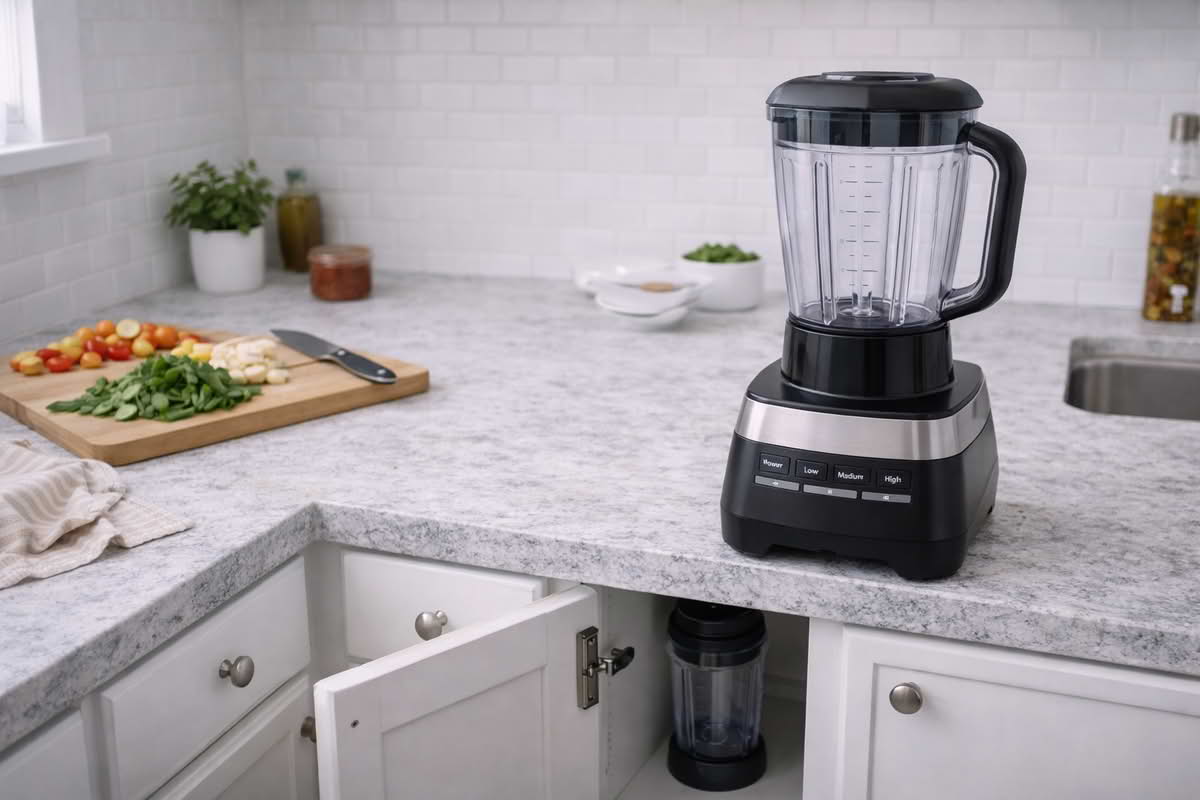
Storage fit can be just as decisive. Some kitchens have enough counter space to keep a blender available, which can dramatically increase real use. Others need every appliance to be stored away, lifted out, and put back after each session. In those kitchens, machine weight, jar height, cord management, and overall footprint matter much more than buyers sometimes expect. A full-size blender stored in a high cabinet or tucked behind other appliances may become an occasional tool even if it was purchased for daily use. Accessibility changes behavior, and behavior ultimately determines value.
Long-term blender value depends not just on blending performance, but on whether the machine is easy enough to clean, store, and reach for regularly.
Countertop presence matters too. Some buyers are comfortable dedicating visible space to a frequently used appliance, while others prefer a cleaner counter and only want appliances that justify permanent placement. A blender should earn whatever footprint it demands. If the machine takes up substantial space but mainly handles a narrow task a few times a month, the long-term satisfaction can drop. On the other hand, an appliance that genuinely saves time every day often justifies a larger presence much more easily.
Durability should be interpreted through routine, not just reputation. A budget blender can be a smart fit for light use, a small household, or a narrow purpose such as quick shakes and simple blends. A mid-range blender often makes the most sense for many kitchens because it can improve consistency, jar quality, and long-term usability without demanding premium-level spending. Higher-priced models make more sense when the kitchen blends often, uses tougher ingredients regularly, or genuinely benefits from smoother textures, broader control, and stronger long-term performance. The key is making sure the blender's strengths actually show up in the way the household cooks.
Judge cleanup effort as part of everyday usability, especially if the blender will be used frequently.
Choose a size and weight that fit the way the machine will be stored and retrieved.
Let countertop space influence the decision, because appliance visibility affects long-term use.
Spend more only when better blending performance clearly improves recipes you make often.
Another common regret pattern is buying too much blender for too little need. This happens when a buyer is persuaded by maximum capability but does not truly need or regularly use it. The opposite mistake is buying for convenience alone and then feeling limited almost immediately once recipes expand. Both outcomes come from shopping without a firm sense of role. A blender should either be a simple, frequently used convenience tool or a broader kitchen workhorse. Trouble starts when it is expected to be both without the kitchen habits to support that expectation.
Replacement logic is worth thinking about as well. Some households do best with one strong, general-purpose blender that anchors a wide range of blending tasks. Others are better served by a smaller, more convenient blender because the rest of the kitchen already covers adjacent functions with other tools. A good purchase does not need to be the most universally praised blender in the category. It needs to make sense within the broader appliance system you already have.
The best long-term blender purchase usually feels quietly practical. It blends what you actually make, fits the kitchen without constant negotiation, and stays simple enough that using it never feels like its own separate project. That kind of low-friction performance is what makes the appliance valuable over time.
Final Recommendations — choosing the blender that fits your routine instead of your assumptions
A good blender should be chosen by blending pattern, batch size, and ownership style rather than by power claims alone. Buyers who mainly want fast individual servings usually do best with a simpler machine that supports speed and easy cleanup. Buyers who blend for multiple people, work with tougher ingredients, or want broader kitchen flexibility usually benefit more from a fuller-size countertop model with better jar capacity and control. In both cases, the goal is the same: make blending useful often enough that the appliance earns its place.
Match the blender to the recipes and batch sizes you actually repeat.
Choose convenience or broader capability intentionally instead of trying to maximize both without a reason.
Prioritize jar usability, cleanup, and control alongside raw blending power.
Spend for better long-term fit, not just for stronger numbers or trend-driven features.
The lowest-regret blender purchase is usually the one that becomes part of the kitchen rhythm without demanding constant compromise. When the machine fits the recipes, the space, and the daily pace of the household, it stops feeling like a category decision and starts feeling like a tool that simply belongs there.