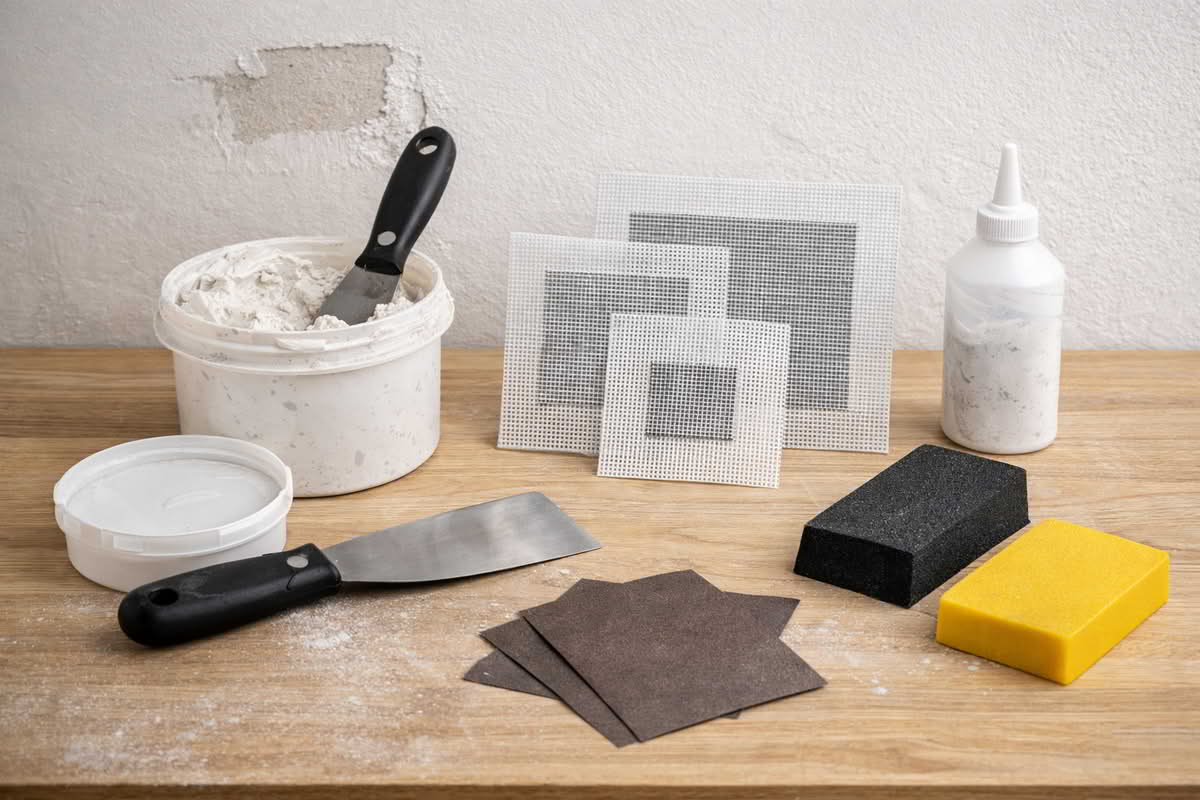
Drywall Repair Kit Buying Guide for Holes, Dents, and Everyday Wall Damage
Drywall repair kits look deceptively simple. Most promise that a damaged wall can be fixed with a few quick steps, a little compound, and some sanding. Sometimes that is true. Just as often, though, the wrong kit creates a repair that is technically covered but still obvious under normal room lighting. A patch can sit too high, a compound can shrink, a mesh square can print through, or a repair can look smooth until primer makes every edge stand out. The biggest mistake is buying for convenience alone instead of buying for the type of damage and the level of finish the wall actually needs. Small dents, doorknob holes, torn paper, and wider patch zones do not all respond well to the same kit. This guide breaks down how to choose a drywall repair kit based on hole size, patch structure, compound behavior, and the amount of finish blending the room demands, so the final result looks less like a visible fix and more like normal wall surface.
Damage Size and Kit Type
The first drywall repair kit decision is not brand or price. It is scale. Many disappointing repairs happen because the kit was matched to the idea of “wall damage” in general rather than the actual shape and size of the defect. Small dents, nail pops, shallow gouges, punctures, and larger broken-out areas are different problems, and they place different demands on the patch system. A kit that feels convenient for one type of repair can become frustrating or visibly bulky on another.
Small hole repair kits are usually the right starting point for minor punctures, screw holes, anchor damage, and shallow surface flaws where the wall still has most of its structure intact. These kits often rely more on filler or lightweight compound than on a rigid structural patch. That makes them useful when the goal is restoring surface continuity without adding much thickness. For low-stress wall areas, this type of kit is often enough. The tradeoff is that it becomes less reliable as the opening gets wider or the surrounding drywall becomes weaker.
Larger hole repair kits usually include mesh, metal-reinforced patch material, or a broader support system that bridges the opening rather than simply filling it. These are valuable when the damaged area no longer has enough intact face material for compound alone to perform well. But bigger is not automatically better. Oversized patches can sit proud of the wall plane, requiring more feathering and sanding to disappear visually. In a hallway or living room with side lighting, that extra buildup often matters more than people expect.
All-in-one repair kits appeal to homeowners because they reduce shopping friction. They often include a patch, compound, putty knife, sanding pad, and sometimes primer-like finishing material in one box. That convenience is real, especially for occasional users. But bundled kits vary widely in balance. Some include a serviceable patch and a poor tool. Others include too little compound for the kind of feathering the patch really needs. A kit can be complete and still be badly matched to the repair. What matters is not whether everything is included, but whether the included parts are proportionate to the job.
Texture-matching or finish-oriented repair kits matter most when the wall surface is visible and even small inconsistencies stand out. Smooth walls often reveal patch edges under lighting, but orange peel, knockdown, and similar textures create their own problem: a repair can become obvious because it is too flat even if the hole itself was covered well. In those cases, the right kit may need to support both structural patching and finish blending. A basic patch that technically fills the opening may still leave a cosmetic mismatch that requires extra steps later.
Choose smaller, filler-oriented kits for minor punctures, dents, and shallow wall damage.
Choose reinforced or larger patch systems only when the opening needs real bridging support.
Use all-in-one kits for convenience, but judge whether the included materials are actually sufficient.
Give more weight to finish-matching tools when the wall texture or lighting makes flaws easier to see.
A useful buying question is whether the wall needs structural help, surface rebuilding, or visual blending. A small anchor tear may only need the surface rebuilt. A punched-through wall section may need a supported patch. A repaired area near a window may need much more visual blending than the same defect inside a closet. Once you identify the real problem, the category becomes less confusing.
Buyers often overestimate how universal drywall kits are. In reality, the best kit is usually the one that solves the narrowest version of the problem without creating unnecessary bulk or extra sanding. Low-regret buying in this category often means resisting the urge to buy the most “heavy-duty” box unless the damage clearly justifies it.
Patch Material and Compound Behavior
Once the repair size is clear, the next question is how the kit actually rebuilds the wall surface. This is where patch material and compound behavior matter far more than the packaging language. Two kits can look almost identical on a shelf but behave very differently once they are pressed onto the wall and covered with filler.
Mesh patches are common because they are easy to position and help bridge missing material. They are often the default choice for moderate holes because they create a quick framework that compound can cover. The problem is not that mesh patches are ineffective. It is that they are often treated as if they vanish under a thin coat. In practice, many need a wider feathered area than first-time users expect. If the patch is stiff, thick, or poorly blended into the surrounding wall plane, the repair can remain visible even after sanding and paint.
Metal-reinforced patches add rigidity and are helpful when the damaged area needs a firmer bridge. That added structure is useful on wider openings or places where the surrounding drywall edge is weak. The tradeoff is thickness. The stronger the support layer, the more attention you usually need to give to feathering the repair outward so it does not appear as a raised square after repainting. This is not a reason to avoid reinforced patches. It is simply a reminder that support and invisibility are sometimes in tension.
Compound type shapes the repair just as much as the patch. Lightweight repair compounds are easier for many homeowners to spread and sand, which makes them appealing for small repairs and quick cosmetic fixes. They often work well when the patch is minor and the goal is simplicity. But some lighter compounds shrink more or lack the body needed to cover larger mesh transitions cleanly in fewer passes. Heavier or more substantial compounds can build a repair better, but they may demand more sanding discipline and more patience between stages.
This is where many drywall repair kits quietly fail. The patch itself may be acceptable, but the included compound is too little, too light, or too prone to shrinking for the size of the repair the box implies it can handle. A kit marketed for larger holes may still leave the user needing more compound, a second sanding pass, or a broader feather zone than expected. That does not make the kit useless. It means the kit may be a starting point rather than a complete solution.
Application tools inside the kit matter too. Small plastic putty knives are fine for tight repairs and occasional use, but they can make larger patches harder to blend because they do not span enough area smoothly. A kit that includes only a very narrow knife may still patch the hole, yet leave extra ridges and edges that need more sanding later. In a category built around convenience, this is a common hidden cost: what looks quick in the package becomes more labor-intensive on the wall.
Drywall repair kits vary less by branding than by how well their patch and compound system matches the size and finish demands of the damage.
Choose mesh or reinforced patches when the wall needs bridging support, not just filler.
Expect stronger patch materials to require broader feathering for a cleaner-looking finish.
Choose compound behavior based on repair size: simple and sandable for small fixes, more substantial for wider transitions.
Check whether the included application tools are large enough to smooth the repair without creating unnecessary ridges.
In long-term use, the best drywall repair kits are not always the ones with the most included pieces. They are the ones where the patch system, compound amount, and tool size make sense together. When those pieces are balanced, the repair process feels predictable. When they are not, the user ends up improvising around a kit that only solved half the job.
A good rule is to buy for finish behavior, not just hole coverage. Covering a hole is easy compared with making the repaired area disappear under ordinary paint and room lighting. The better kits help with both.
Finish Quality, Sanding, and Workflow
Drywall repairs are judged less by whether the hole is gone and more by whether the wall still looks flat, consistent, and believable afterward. That makes finish quality the final and often most important buying consideration. A drywall repair kit is not only a patch tool. It is part of a workflow that includes filling, drying, smoothing, sanding, dust removal, and repainting. If the kit supports only the first step well, the project can still feel disappointing by the end.
Sanding is central here. Some kits include a small abrasive pad or sanding sponge, which can be enough for minor repairs. But wider patches usually require more careful surface blending than a tiny sanding square can manage comfortably. If the kit gives you only the minimum sanding tool, the patch may become technically smooth in one spot while still remaining visually abrupt around the edges. This is especially noticeable on smooth painted walls, long hallways, or rooms with light grazing across the surface.
Drying behavior matters just as much. Quick-dry compounds sound appealing, particularly for homeowners who want to finish the repair in one session. But speed can create impatience. If the surface skins over before it is spread evenly, or if the repair is sanded before the inner material is truly ready, the patch can drag, crumble, or leave a weaker finish. Slower, more forgiving materials are often easier for beginners because they give more working time and more predictable shaping.
Another practical issue is repair visibility after paint. Many wall patches look acceptable before primer and much more obvious afterward because the sheen, porosity, and edge feathering are not yet right. This is one reason better kits are often worth it in more visible rooms. They reduce the chance that the repair looks flat but unfinished once the wall coating goes on. In rooms where cosmetic expectations are lower, such as utility areas or secondary spaces, a simpler kit may be perfectly adequate. The room standard should influence the purchase.
Workflow also depends on the user’s patience and confidence. Some people want a compact kit that lets them handle a few household wall fixes with minimal setup. Others are comfortable doing a broader repair sequence and would rather buy a kit that supports cleaner finish quality even if it takes longer. Neither approach is wrong. The mistake is buying a finish-demanding repair system when you want pure speed, or buying a quick cosmetic kit for a wall location where the finish will be closely scrutinized every day.
Cleanup and storage are part of the equation as well. Compact kits are easier to keep on hand for recurring anchor holes, moving damage, furniture scuffs, and small household repairs. Larger, more specialized kits are more justified when you expect repeated patching or more visible wall restoration. If the kit will live in a utility closet for occasional maintenance, simplicity matters. If it is part of a more active renovation workflow, tool quality and finish control matter more.
Choose kits with sanding support that matches the visual quality expected from the repaired wall.
Do not let fast-dry claims outweigh ease of shaping and finish predictability.
Buy more finish-oriented kits for visible rooms, smooth walls, and high-light areas.
Buy simpler compact kits for low-stakes repairs where convenience matters more than flawless blending.
One helpful framework is to separate “repair success” from “paint-ready success.” Repair success means the hole is filled and stable. Paint-ready success means the repaired area is blended enough that finish coats do not call attention to it. The best drywall repair kits help bridge those two stages. The weakest ones solve only the first.
In long-term ownership, that distinction matters more than marketing promises. A kit that makes small recurring wall fixes manageable and visually cleaner will earn repeated use. A kit that only covers damage without helping the wall look normal again will usually end up feeling less complete than it first appeared.
Final Recommendations — choosing the repair kit that fits the damage instead of just covering it
For most households, the safest drywall repair kit is the one that matches both the size of the damage and the finish expectations of the room. Smaller cosmetic kits are often the better choice for minor dents, punctures, and anchor damage because they create less buildup and simpler sanding. Reinforced or larger patch kits make more sense when the wall opening truly needs support, but they should be chosen with the understanding that broader feathering and better finish work will usually follow.
Choose simple filler-oriented kits for small damage where surface rebuilding matters more than structural bridging.
Choose mesh or reinforced patch kits only when the opening is too large for compound alone to look stable and clean.
Give extra weight to compound quality, sanding support, and tool size if the repair will be visible in normal room lighting.
Judge a kit by whether it helps the wall become paint-ready, not just by whether it claims to fill the hole quickly.
The long-term low-regret approach in this category is to buy for the real finish standard of the space. A fast patch that remains visible every time you walk past it is rarely a satisfying repair. A well-matched kit makes the process more predictable, reduces rework, and gives you a better chance of making the wall look ordinary again, which is usually the real goal.