Laundry Shelving and Over-Washer Storage Buying Guide: How to Add Storage Without Making the Room Harder to Use
Laundry storage often feels like a simple space-efficiency problem, but poorly chosen shelving can make the room more frustrating instead of more useful. Buyers see open wall area above a washer and dryer, or a narrow gap beside the machines, and assume almost any shelf or storage tower will turn that space into practical organization. Then the real problems appear: shelves block lids or controls, the unit wobbles over vibrating appliances, detergent is stored too high to reach comfortably, and the room begins to feel tighter even though it technically holds more. Good laundry shelving should do more than stack baskets and bottles above machines. It should respect appliance clearance, daily reach patterns, cleaning needs, and the way a laundry space actually functions when loads are moving in and out. Whether you need a freestanding over-washer rack, a narrow utility shelf, or a fuller vertical storage tower, the right choice is the one that creates easier access and cleaner routines instead of adding one more awkward layer to the room.
Fit, Clearance, and Appliance Behavior Matter Before Shelf Count
The biggest mistake in this category is shopping by dimensions too loosely. Buyers often see a shelving unit that seems “about right” for the width above a washer and dryer, then assume the rest will work itself out. But laundry rooms are full of practical constraints that make approximate fit risky. Appliance lids may open upward, front-load doors need swing clearance, hoses and plugs occupy rear space, and some machines vibrate more than expected during spin cycles. A shelf system that technically fits the footprint can still interfere with how the room actually behaves.
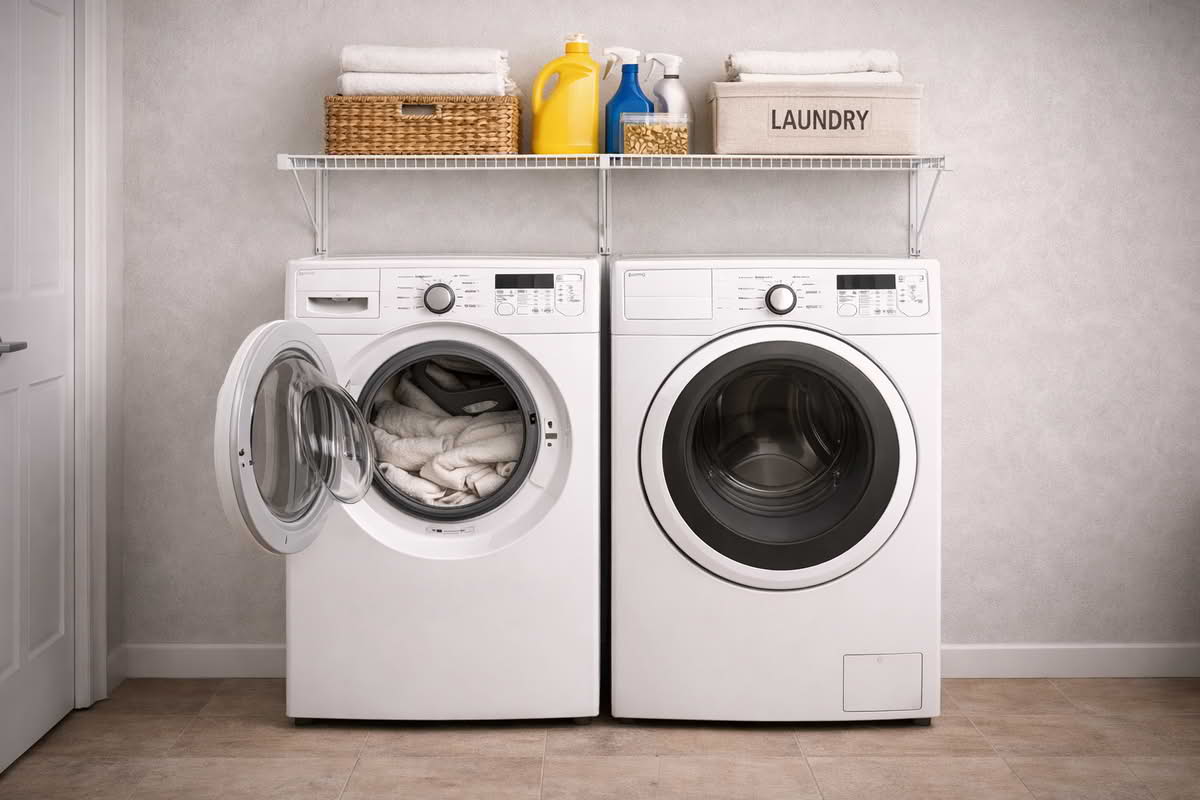
This is especially true for over-washer shelving. The area above machines looks like unused vertical space, but it is only useful if the shelving allows comfortable access to detergent, baskets, stain treatments, and folded items without forcing awkward reaching. Too-low shelves can crowd top-loading machines or make detergent bottles hard to retrieve. Too-high shelves may preserve appliance access but turn common laundry items into overhead storage that is more annoying than helpful. The better solution usually balances vertical efficiency with believable daily reach.
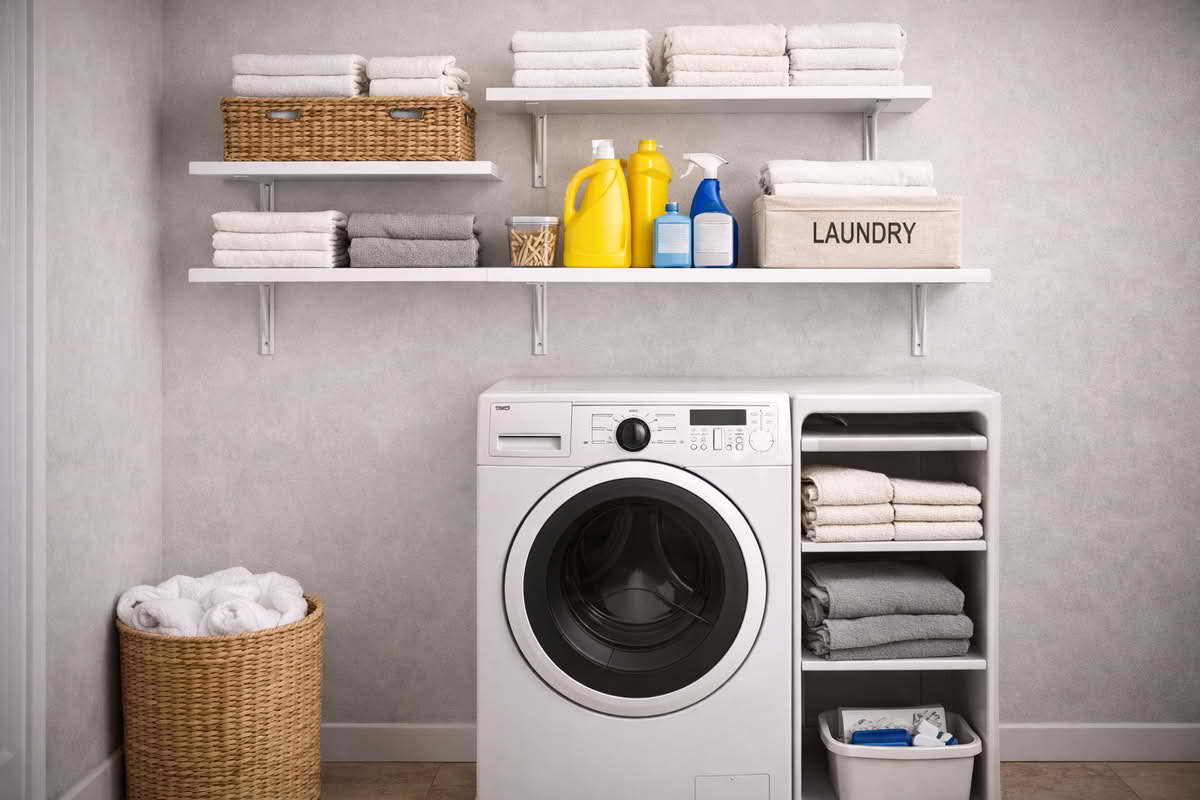
Side storage towers and narrow utility shelves create a different version of the same problem. They can work extremely well in underused corners or beside machines, but only when they do not intrude on the path needed for loading, unloading, and moving baskets through the room. In smaller laundry spaces, even a shelf that steals only a few inches of walkway comfort can make the room feel much more irritating. That is why measuring the appliances is only the beginning. The real question is how the shelving affects movement once laundry is in motion.
Choose laundry shelving only after accounting for lid height, door swing, hose clearance, and how appliances are actually used.
Choose over-washer units that keep daily supplies reachable without crowding the machines below.
Choose side shelving that preserves walkway comfort, because laundry storage that narrows the room too much becomes a constant annoyance.
Another overlooked issue is room variation. Some laundry zones are dedicated rooms with enough depth for more substantial storage. Others are closets, alcoves, utility corners, or pass-through spaces where every inch matters. A shelving unit that works beautifully in a broad laundry room may feel oversized in a stacked-appliance closet or in a hallway-adjacent laundry niche. The right product category depends on whether the room needs genuine storage expansion or simply a more disciplined use of a few available vertical zones.
It also helps to think in terms of what should live near the machines at all. Daily-use detergent, dryer sheets, stain removers, and a few laundry tools usually deserve close access. Backup supplies, bulk paper products, and less-used utility items may not. Many laundry storage disappointments happen because the shelving is asked to hold too much unrelated household overflow. The area around the machines works best when it is reserved mainly for what supports laundry and nearby utility functions, not for every extra item the home does not know where to put.
Laundry shelving should fit around the real movement of the machines, not just the measurements of the open wall above them.
Storage Type, Access, and Load Planning Decide Whether the Shelving Helps
Once the fit is believable, the next question is what the shelving is supposed to hold and how often those items need to be reached. This is where product type starts to matter. Open shelving is often strong in laundry spaces because it makes detergents, bins, towels, and cleaning supplies visible at a glance. That can reduce rummaging and keep the room feeling more functional. The downside is that open storage also displays clutter immediately when categories are unmanaged. If the household tends to accumulate half-used bottles, miscellaneous cleaning items, and random baskets near the washer, open shelves will expose that rather than solve it.
Over-washer rack systems are useful when the main problem is lack of vertical utility storage directly above the appliances. They can provide just enough room for detergents, dryer balls, baskets, and folded overflow without introducing full furniture-scale storage into the room. Their weakness is that they can tempt buyers to load too much weight above vibrating machines or to place heavier items higher than is comfortable. These systems are often best when reserved for lighter and medium-weight laundry necessities rather than for dense bulk storage.
Freestanding storage towers and narrow utility shelves can be more versatile because they often offer deeper shelves and more separated tiers. That makes them useful for laundry supplies, baskets, towels, cleaning caddies, and nearby utility categories. But deeper shelves come with their own tradeoff. They can easily turn into catchall storage where items get pushed backward and forgotten. In laundry spaces, that often means duplicate supplies, scattered paper goods, or backup items that are theoretically organized but hard to track. Slightly shallower, better-zoned shelving often performs better than deep shelves that hold more in theory but much less clearly in practice.
Choose open shelves when visibility and quick access matter more than concealment.
Choose over-washer racks when the room needs modest vertical storage above machines rather than a large standalone furniture piece.
Choose utility towers when the room has enough space for fuller organization and the categories justify more shelf depth and separation.
Load planning is important here because laundry shelving often ends up holding heavier items than buyers first imagine. Large detergent containers, stacked towels, bins full of cloths, cleaning chemicals, and bulk supplies add weight quickly. A shelf that feels adequate for decorative baskets may feel much less reassuring under dense everyday-use products. Better shelf systems match their most-used tier heights to the items people reach often and keep heavier storage at lower, more stable levels whenever possible.
It also matters whether the room needs shelves alone or a broader system of bins, baskets, and category containers. Shelving rarely solves disorder by itself. It performs best when it supports grouping. One bin for stain treatment and fabric care, one area for folded cloths, one zone for backup paper products, one shelf for immediate laundry supplies. Without that logic, even a well-fitted laundry shelf can become a vertical version of countertop clutter.
Another subtle issue is accessibility during real laundry tasks. Shelves may look tidy when the machines are off, but the true test is whether you can reach what you need while holding a laundry basket, bending over a washer, or moving quickly through the room. A shelf system that requires constant stretching, stooping, or repositioning of nearby items may still be technically organized but will feel poorly designed in daily use.
Laundry storage works better when shelves are organized by use frequency and weight instead of simply filling every tier with whatever fits.
Stability, Cleaning, and Long-Term Use Matter More Than Adding Extra Tiers
Laundry areas place unusual demands on storage because they combine moisture, vibrations, dust, and repetitive utility use. That makes stability one of the most important but least glamorous parts of the buying decision. A shelf that feels acceptable in a static room may perform differently next to machines that move and hum regularly. Freestanding over-washer systems in particular should be chosen with realistic expectations about how they will feel once the appliances are in use. The best units feel planted and predictable rather than slightly unsettled every time a heavy spin cycle runs.
Cleaning matters almost as much. Laundry rooms gather lint, dust, detergent residue, and occasional drips, so storage should be easy to wipe down and easy to clean around. Shelves with too many tight corners, decorative details, or awkward lower bars can quietly become maintenance problems. This is especially true when shelving is placed close to machines, where hoses, cords, and narrow gaps can already make the room harder to keep tidy. Simple, accessible storage often ages better than more elaborate shelving that looks more finished but complicates cleanup.
Material choice changes the long-term experience too. Metal shelving can feel sturdy and utility-oriented, which makes it a good fit for many laundry and utility spaces. Resin or coated shelving may be easier to clean in damp-adjacent rooms and can work well when loads are moderate. Wood-look or furniture-style pieces may suit visible laundry rooms better, but they should still be judged by moisture tolerance, wipeability, and structural honesty. A laundry room is a work zone first. The storage should be chosen accordingly, even if appearance still matters.
Choose shelving with enough stability for use near vibrating appliances instead of assuming all freestanding units will behave the same.
Choose easy-clean shelf surfaces and simpler designs when lint, residue, and daily utility use are part of the room.
Choose materials that suit both the room's moisture conditions and the weight of the items stored most often.
Long-term success also depends on whether the shelving supports restraint. Laundry storage is one of the easiest zones in the home to overfill because the categories feel practical and justified. Extra detergent, backup cleaners, spare towels, cloths, paper products, lost socks, and random utility overflow all seem like they belong there. A shelf system that offers many tiers can unintentionally encourage category creep. The result is a room that technically has more storage but feels much less calm. Good shelving should help clarify what belongs there, not just make it easier to accumulate more.
Visual calm matters here too, especially in laundry rooms that connect to kitchens, mudrooms, or hallways. Open storage can still look controlled if baskets, labels, and repeated container formats are used thoughtfully. Without that discipline, even a structurally good shelf can make the space feel busier than before. This does not mean closed cabinetry is always necessary. It means open laundry storage works best when its contents are grouped and limited enough that the room still reads as organized at a glance.
In the long run, the best laundry shelving decisions are the ones that respect both the machines and the people using them. They fit cleanly, support real reach patterns, survive everyday wear, and hold the supplies the room genuinely needs without becoming a vertical junk zone. When those conditions line up, laundry shelving stops being a desperate attempt to add storage and becomes part of a room that actually works better.
Final Recommendations — Choosing Laundry Shelving With Less Regret Later
The right laundry shelving or over-washer storage is the system that fits the machines, the room, and the household routine without crowding daily tasks. Buyers usually get the best result when they choose storage around clearance, use frequency, and realistic weight instead of simply maximizing the number of tiers they can fit into the space.
Choose over-washer shelving when you need efficient vertical storage above machines and the unit preserves comfortable appliance access.
Choose narrow utility shelves or towers when the room has side space that can support fuller category-based organization.
Choose shallower, easier-reach storage when everyday laundry supplies need to stay visible and quick to access.
Choose simpler, sturdier designs when long-term stability, cleaning ease, and believable daily use matter more than decorative complexity.
A low-regret laundry storage setup should make the room easier to move through, easier to reset, and easier to work in when life is busy. When fit, access, and stability all align, laundry shelving becomes real utility infrastructure instead of one more awkward attempt to store too much in too little space.